Japan presents a fascinating, sometimes contradictory picture when it comes to disability inclusion. On one hand, you have world-leading assistive technology, meticulous legal frameworks, and a genuine push for universal design. On the other, there's a lingering social hesitancy, an unspoken pressure to conform, and infrastructure gaps that persist in older areas. The reality isn't a simple "good" or "bad." It's a society in active, sometimes awkward, transition. If you're planning a trip, moving for work, or just curious about social policy, understanding this nuance is key. This guide cuts through the surface to show you how Japan truly supports—and sometimes struggles to support—its citizens and visitors with disabilities.
What You'll Discover in This Guide
How Does Japanese Law Protect Disability Rights?
Japan's legal framework is robust, at least on paper. The cornerstone is the Act on the Elimination of Discrimination against Persons with Disabilities, enforced in 2016. This law mandates "reasonable accommodation"—a crucial term. It means businesses and public entities must make necessary modifications unless it imposes an "undue burden." That last part is where interpretation varies wildly. A major train station can easily install a elevator. A tiny, decades-old izakaya (pub) on a second floor? The burden argument gets murky.
Before that, the 2006 Services and Supports for Persons with Disabilities Act shifted focus from institutional care to community-based living. It introduced a certification system for disabilities, linking it to support services. The government's Basic Programme for Persons with Disabilities sets five-year targets. The latest plan heavily emphasizes employment and social participation.
Here's the expert nuance many miss: enforcement often relies on complaint-based mediation, not proactive inspection. The Japan Disability Forum and various NGOs play a critical watchdog role, pushing boundaries where the law is vague. For daily impact, the law's real power is in setting a national standard that new construction and public services must follow.
Daily Life in Japan with a Disability: The On-the-Ground View
Walk through a modern Tokyo district like Odaiba or a newly built Shinkansen station, and accessibility feels seamless. Venture into the historic streets of Kyoto or a rural town, and the experience changes.
Public Transportation: A Tale of Two Systems
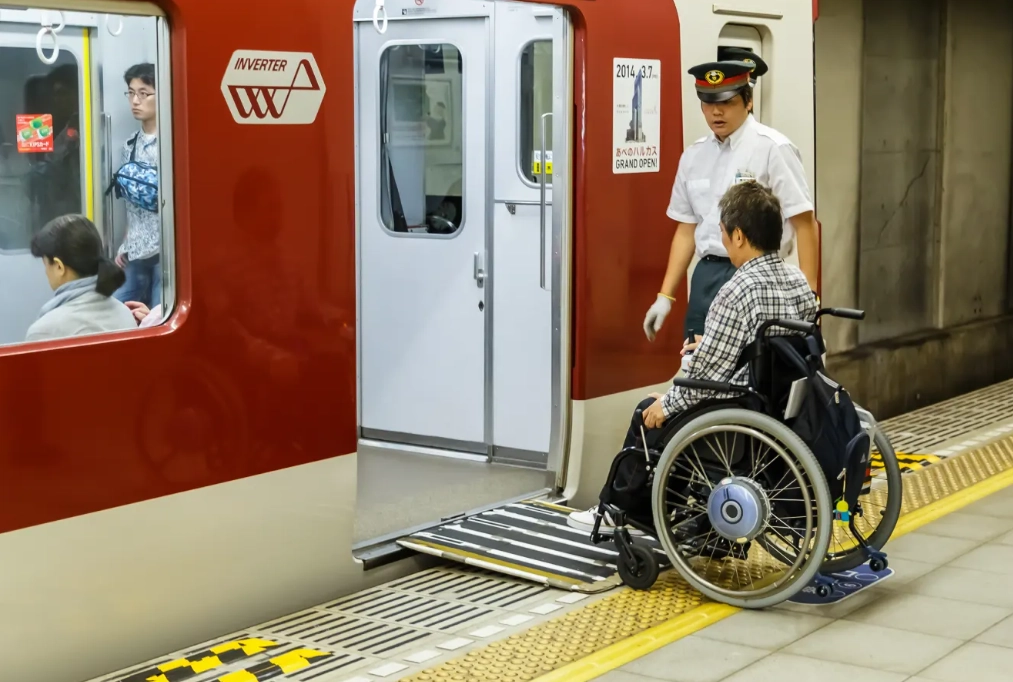
Major urban rail networks (Tokyo Metro, JR East in Tokyo, Osaka Metro) are generally excellent. Look for the universal access symbol. Stations have tactile guiding blocks (yellow lines with bumps), wheelchair-accessible gates, and platform gaps that are minimal. You can book assistance in advance through station offices. The real challenge? Older stations, especially on private railway lines or in suburbs, may only have stairs. Buses are a mixed bag. New models are low-floor, but not all routes have them. Drivers are trained to assist, but the pace can be rushed.
Here’s a practical comparison for navigating key cities:
| City / Transport Mode | Accessibility Level | Key Tip for Travelers |
|---|---|---|
| Tokyo Metro / JR Yamanote Line | High. Most major stations have elevators, accessible toilets. | Use the "Station Facility" search on the Tokyo Metro website. It shows elevator locations precisely. |
| Kyoto City Buses | Medium. Low-floor buses are common but not universal on all routes. | Target buses with the wheelchair symbol on the schedule. Board at the rear door where the ramp deploys. |
| Osaka Subway | High. Modern system with good access. | Download the "Osaka Metro Accessible Guide" PDF. It's detailed and has station-by-station maps. |
| Rural / Local Trains | Low to Variable. Many stations are stairs-only. | Always call the station master's office ahead of your journey. They can arrange a portable ramp, but need notice. |
Technology and Innovation: Japan's Strength
This is where Japan shines. From advanced hearing aids and voice-operated home systems to robots that assist with mobility or communication, the tech is cutting-edge. Panasonic and Toyota, for instance, have developed wearable robotic suits that help people with lower-body weakness walk and climb stairs. For the visually impaired, smartphone apps with highly detailed audio navigation for indoor spaces (like malls and stations) are becoming more common.
Planning an Accessible Trip to Japan: A Realistic Guide
Can you enjoy Japan with a mobility, visual, or hearing impairment? Absolutely. But it requires more planning than a typical trip. The goal isn't to avoid Japan, but to navigate it smartly.
Accommodation: Don't just filter for "accessible" on booking sites. That tag is used loosely. Email the hotel directly. Ask specific questions: "What is the exact width of the bathroom door?" "Is there a roll-in shower with a seat, or just a bathtub with handrails?" "Is there a step at the entrance to the room?" International chains usually have reliable, standardized rooms. Traditional ryokans (inns) are famously difficult due to tatami floors, sunken genkan entrances, and shared baths.
Attractions: Major sites like Tokyo Skytree, Fushimi Inari (the lower paths), and Hiroshima Peace Memorial Museum are very accessible. Castles and ancient temples? Often not. Many have steep stone steps, uneven gravel paths, and narrow corridors. Call ahead or check their official English website. Some, like Himeji Castle, offer video tours of the inaccessible upper floors for wheelchair users.
Getting Help: The Japan Accessible Tourism Center is a valuable resource. Carry a small communication card in Japanese explaining your needs (e.g., "I use a wheelchair, please guide me to the elevator"). People are overwhelmingly helpful, even if they seem shy at first.
The Cultural Context: Wa, Harmony, and Invisible Barriers
This is the layer many analyses skip. Japanese culture values wa (harmony) and not causing meiwaku(trouble to others). For a person with a disability, this can create an internal pressure to minimize their needs, to "blend in." The visible courtesy and helpfulness are genuine, but they can sometimes mask a discomfort with open discussion about disability.
Employment reflects this. Quotas exist (2.3% for public sector, 2.2% for large private companies), and many companies meet them. But the jobs are too often segregated, low-responsibility roles. True career advancement remains a significant hurdle. The cultural preference for homogeneity means invisible disabilities (mental health conditions, chronic pain, learning differences) face an even steeper climb for understanding and accommodation.
Change is coming from the young. University disability support offices are more active. Younger generations are more open to diversity. But the shift from a welfare model (taking care of) to a rights-based model (empowering) is a work in progress.
Your Questions on Disability in Japan Answered
Japan's journey with disability inclusion is ongoing. It's a place where you'll encounter breathtakingly thoughtful design next to an impassable staircase, profound kindness alongside unspoken social distance. The laws provide a strong foundation, technology offers incredible tools, and a younger generation is pushing for a more inclusive "wa." For visitors and residents alike, success lies in research, specific planning, and a mindset that anticipates both the seamless efficiency and the occasional, frustrating barrier. The experience, with all its complexity, is ultimately a revealing lens into modern Japan itself.




Share Your Thoughts