Quick Guide
- Why Temple Gates in Kyoto Are So Important
- The Main Types of Gates You'll See in Kyoto Temples
- A Closer Look at Kyoto's Must-See Temple Gates
- How to Visit and Photograph Kyoto Temple Gates Like a Pro
- Beyond the Obvious: The Deeper Symbolism
- Common Questions Answered (Stuff You Might Be Wondering)
- Final Thoughts: Making It Your Own
Let's be honest. When you think of Kyoto, you probably picture those iconic red gates, right? The ones that seem to go on forever at Fushimi Inari. Or maybe you imagine a massive, imposing wooden structure guarding the entrance to a serene Zen garden. I did too. But on my first trip, I rushed past them. I was so focused on getting to the main hall, the gardens, the famous view, that I barely gave these incredible entrances a second glance. Big mistake.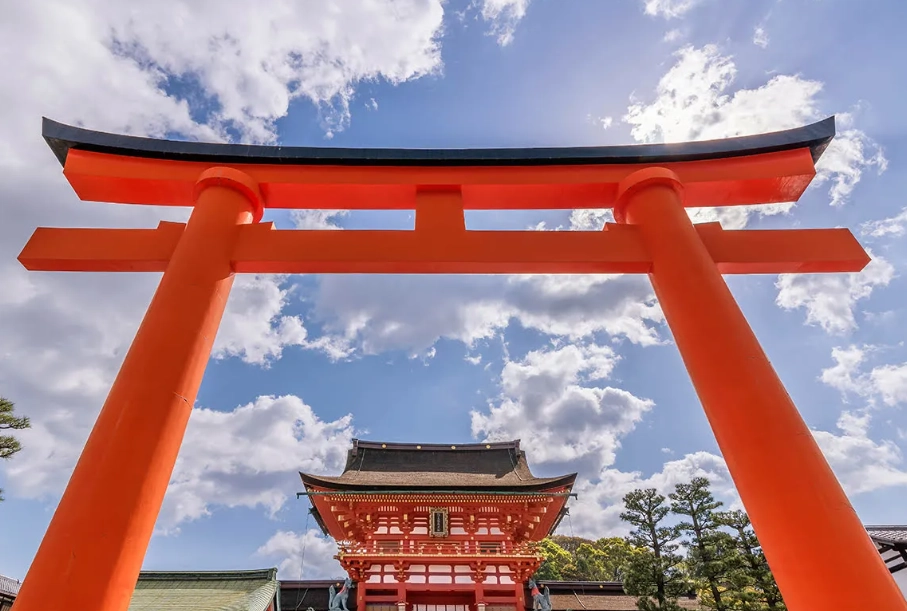
It was on a quieter, later visit, stuck waiting for a friend at Kiyomizu-dera, that I really started to look at the Niōmon gate. The two fierce guardian kings stared down, muscles straining, and it hit me. This wasn't just an entrance; it was a statement. A boundary. A transition from the chaotic, modern world outside into a space meant for something else entirely. That's when my fascination with Kyoto temple gates really began.
Think of a temple gate as the opening chapter of a book. It sets the tone, introduces the themes, and prepares you for the story inside. Skip it, and you miss a crucial part of the narrative.
So, I started paying attention. I talked to guides, read what I could find (which, in English, wasn't as much as I'd hoped), and just observed. I learned that these structures have names, specific architectural styles, and deep symbolic meanings. They're categorized. Some are for defense, some for purification, and some are purely symbolic, representing the passage from the secular to the sacred.
This guide is what I wish I'd had before my first visit. It's not just a list of the prettiest gates. It's a deep dive into why they matter, how to "read" them, and which ones are truly worth seeking out—even if it means going a little off the beaten path. We'll cover the famous ones, of course, but also some hidden gems where you can actually enjoy the moment without a crowd.
Why Temple Gates in Kyoto Are So Important
You don't just walk through a Kyoto temple gate. You pass through it. There's a difference. In Japanese Buddhism and Shinto, gates, or mon, are fundamental. They mark a sacred boundary. The world outside is soto (outside, profane). The world inside is uchi (inside, sacred). The gate is the liminal space in between.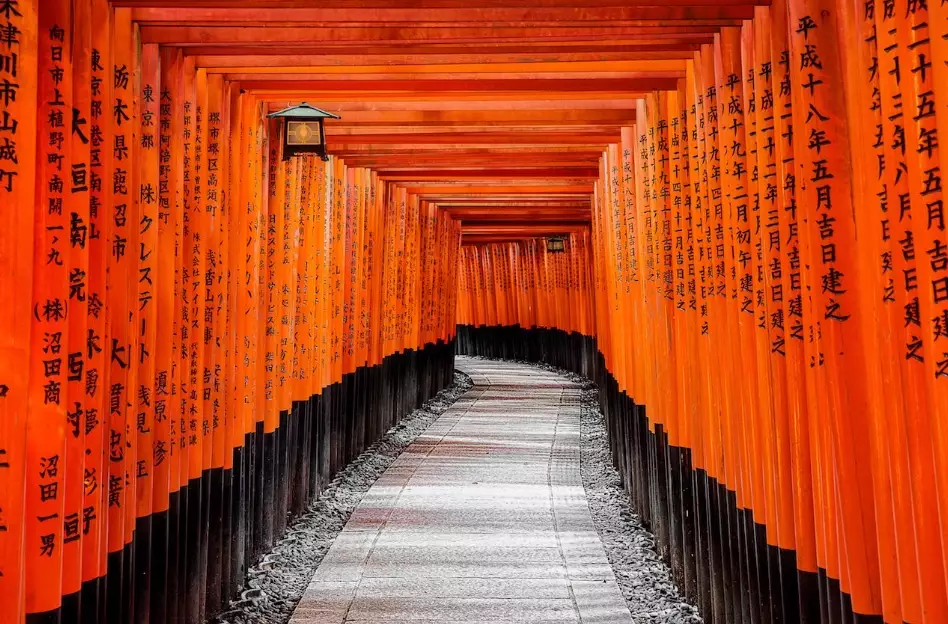
It's a physical and spiritual checkpoint. Historically, some gates were defensive structures. But more importantly, they are purifying barriers. They keep out malevolent spirits and impurities. This is why you'll often see statues of guardians (Niō or Komainu) on either side. They're the bouncers of the spiritual world.
For visitors, understanding this changes the experience. It's why there's often a ritual associated with entering. You might see a water basin (chōzuya) just inside for purifying your hands and mouth. The act of passing under the gate's central beam is, in itself, a small ritual of transition. You're meant to slow down, to become present, and to shed the hustle of the city before you enter the temple's main grounds.
I remember at Tōfuku-ji, the Sanmon gate is so vast and empty underneath. The space feels heavy, quiet. Tourists chatter outside, but under that gate, voices drop to a whisper almost automatically. The architecture forces a kind of reverence. That's the power of a well-designed temple gate in Kyoto.
The Main Types of Gates You'll See in Kyoto Temples
Not all gates are created equal. Once you know the basic types, you can start to identify them and guess what kind of temple lies ahead. Here’s a quick breakdown of the most common styles.
Sanmon (三門 or 山門): The Mountain Gate
This is the big one. Literally. Sanmon can mean "Mountain Gate" (山門) or "Three Liberations Gate" (三門), referring to freedom from greed, hatred, and ignorance. These are the colossal, two-story gates you see at major Zen temples. They're not just for show; the upper chamber often houses statues and was sometimes used for important ceremonies.
Personal take: The Sanmon at Chion-in is ridiculously massive. It feels like it was built for giants. It's impressive, sure, but almost too big to feel intimate. The one at Nanzen-ji, with its classic Zen simplicity and the view of the aqueduct behind it, has more character in my book.
These gates symbolize the entrance to the sacred mountain, the abode of the Buddha. Passing through is the first step on the path to enlightenment. You'll find some of Kyoto's most famous temple gates in this category.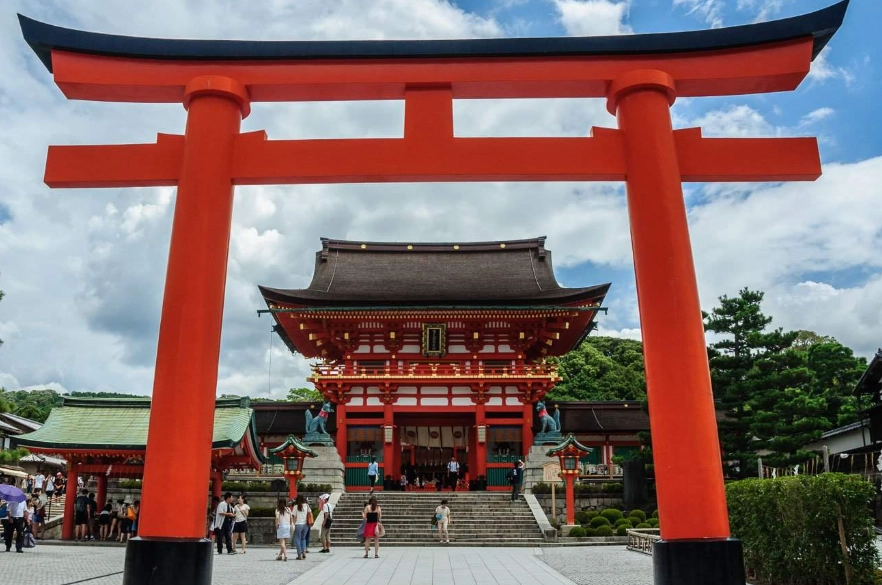
Niōmon (仁王門): The Guardian King Gate
This is my favorite type to photograph. A Niōmon is a two-story gate that houses two fierce-looking wooden statues called Niō (Benevolent Kings). One has an open mouth (pronouncing "Ah," the first sound), the other a closed mouth (pronouncing "Un," the last sound). Together, they represent the beginning and end of all things.
They're incredibly dynamic statues, full of movement and power. The gate itself acts as their shrine. Kiyomizu-dera's main gate is a perfect example. The guardians are so detailed you can see the tendons in their feet. It's a powerful reminder that you're entering a protected space.
Rōmon (楼門): The Tower Gate
Similar to a Sanmon but often associated with Shinto shrines, though you'll see them at Buddhist temples too (like at Kiyomizu-dera, confusingly). They are multi-storied, pavilion-style gates. They can be painted in vibrant vermillion (shu) or left in natural wood. The one at Heian Jingū is a classic, bright red Rōmon that sets the tone for the whole shrine's grand scale.
Torii (鳥居): The Classic Shinto Arch
While strictly Shinto, no discussion of gates in Kyoto is complete without the torii. They mark the entrance to a shrine's sacred area. The Fushimi Inari path of thousands of vermillion torii is the world-famous example. But you'll also find them at Buddhist temple complexes that have absorbed Shinto elements, which is very common in Japan.
The color is significant. Vermillion is believed to ward off evil spirits and symbolizes the sun and life force. Walking under a torii, you should bow slightly before entering to show respect.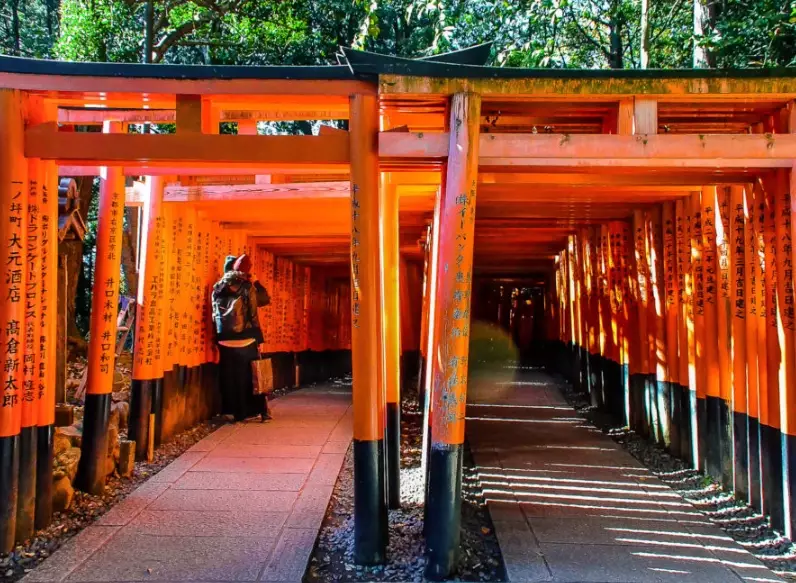
A Closer Look at Kyoto's Must-See Temple Gates
Okay, let's get specific. Here are some of the most significant, beautiful, or interesting Kyoto temples gates you should consider visiting. I've tried to include a mix of the heavy hitters and some less crowded options.
The Unmissable Icons
These are the gates you've likely seen in photos. They're popular for a reason.
Sanmon at Tōfuku-ji: Often called the oldest and greatest of Kyoto's Sanmon gates. Built in 1425. It's a masterpiece of Muromachi-period Zen architecture. The view from the top (yes, you can go up for a small fee) is one of the best in Kyoto, especially in autumn. The wooden structure, all dark and imposing, is breathtaking in its simplicity and scale.
Sanmon at Nanzen-ji: Built in 1628. Its clean lines and massive roof are the epitome of Zen elegance. What makes it uniquely photogenic is the contrast with the large red-brick Meiji-era aqueduct that runs right behind it. It’s a fascinating clash of eras right in one frame.
Niōmon at Kiyomizu-dera: The vibrant red gate at the end of Sannenzaka slope. It's your first real taste of the temple's grandeur. The Niō statues inside are spectacular. Pro tip: Get here right at opening time to see it without the wall of people.
The Torii Gates of Fushimi Inari Taisha: Obviously. It's an entire experience, not just a single gate. The Senbon Torii (thousands of gates) path is a hike through tunnels of vibrant red. Go early, or go late. Midday is a parade. For a different vibe, explore some of the smaller, parallel paths that branch off.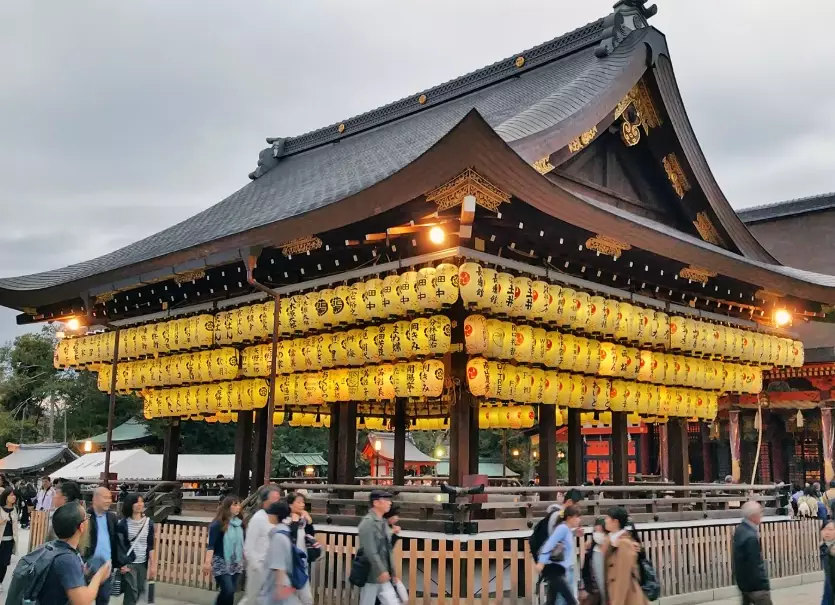
The Hidden Gems & Personal Favorites
These might not be on every tour bus itinerary, but they offer incredible atmosphere.
The Gate at Shinnyo-dō: This temple is a quiet treasure near the Philosopher's Path. Its Rōmon gate is a stunning, deep vermillion. Because the temple is less crowded, you can actually stand and appreciate the gate's details, the guardian statues, and the framed view of the beautiful main hall through it. It feels more intimate.
Chōhō-ji's Gate (Rakan-ji): A tiny, hidden temple known for its 500 Rakan statues. The approach is up a steep, narrow lane. The gate itself is small, old, and worn. But passing through it feels like discovering a secret. It sets the perfect mood for the quirky, slightly eerie collection of statues inside.
The Red Gate (Akamon) of Shōren-in (Awata Palace): Shōren-in is a subtemple often bypassed by crowds rushing to nearby Chion-in. Its main gate is a simple but elegant red Rōmon that leads directly into a stunning garden vista. It's a perfect example of a gate acting as a picture frame for the beauty within.
| Gate Name & Temple | Type | Key Feature | Best For |
|---|---|---|---|
| Sanmon, Tōfuku-ji | Sanmon (Mountain Gate) | Oldest surviving Zen Sanmon, climbable for views | Architecture buffs, autumn colors |
| Niōmon, Kiyomizu-dera | Niōmon (Guardian Gate) | Vibrant red color, fierce Niō statues, iconic approach | First-time visitors, photography |
| Rōmon, Shinnyo-dō | Rōmon (Tower Gate) | Deep vermillion color, peaceful & less crowded | A quiet, contemplative experience |
| Senbon Torii, Fushimi Inari | Torii (Shinto Arch) | Thousands of gates forming tunnels, unique hike | A unique cultural walk, iconic photos |
How to Visit and Photograph Kyoto Temple Gates Like a Pro
Seeing these gates is one thing. Really experiencing them is another. Here are some hard-won tips from multiple trips, some failed photos, and a lot of observation.
Timing is Everything
The golden hour (just after sunrise or before sunset) is magic for photography. The warm light hits the vermillion gates or the aged wood perfectly. But more importantly, visiting early or late means fewer people. A massive gate like Chion-in's feels completely different when you're not sharing it with a hundred other tourists. For Fushimi Inari, sunrise is a near-spiritual experience, and the gates are empty.
Rainy days? Don't dismiss them. The dark, wet stone paving leading up to a gate, the wood glistening, the colors saturated—it can be incredibly atmospheric. The crowds thin out dramatically.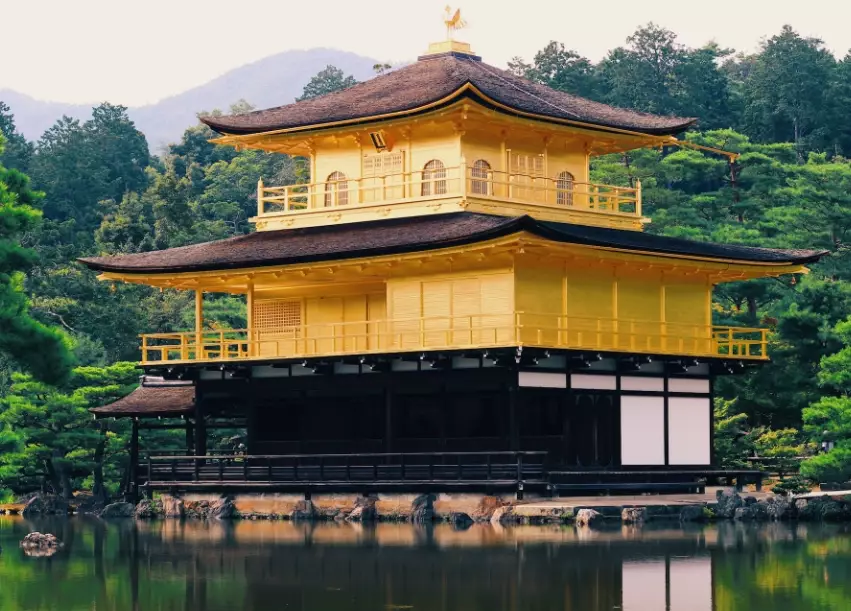
Photography Tips That Go Beyond the Snapshot
Everyone takes the front-facing shot. Try something different.
- Look up: The underside of a massive Sanmon, with its complex network of interlocking beams and brackets (tokyō), is an architectural marvel. Frame a shot looking straight up.
- Frame through the gate: Use the gate itself to frame the temple hall or pagoda behind it. This creates layers and depth, telling the story of the entrance leading you in.
- Details matter: Zoom in on the guardian statues' faces, the metalwork on the doors, the carved transoms (ranma). These details are artworks in themselves.
- Respect the space: If there's a ceremony or people praying, put the camera down. Be mindful of signs that say "no photography" inside certain gates where statues are housed.
I learned the "look up" lesson at Tōfuku-ji. I was so busy looking at the front, I almost missed the incredible ceiling structure. Now it's one of my favorite angles.
Etiquette: Do's and Don'ts
This is sacred architecture, not just a photo op.
- Do bow slightly before passing under a torii or through a major temple gate. It's a simple, respectful gesture.
- Do not walk through the center of a gate if you see a raised threshold or a closed central door. The center is often reserved for the divine or for high-ranking monks. Use the side passages.
- Do be quiet. The gate area is a transitional space. Loud talking and laughter are out of place. Let others have their moment of transition too.
- Do check for a purification fountain (chōzuya) just inside. If present, it's good practice to use it.
Beyond the Obvious: The Deeper Symbolism
Once you start seeing gates as symbolic, your whole visit deepens. The two-story Sanmon represents the world of form (lower level) and the world of formlessness (upper level). Passing through it symbolizes rising above earthly desires.
The guardians (Niō) aren't just scary; they represent the potential for violence to be harnessed for protection and compassion. They scare away the inner demons of greed and anger as much as the outer ones.
Even the construction is symbolic. The joinery uses no nails, representing interdependence. The massive, often cypress wood pillars symbolize strength and longevity. When you see a gate like the one at Nanzen-ji, a designated National Treasure, you're looking at centuries of craft and philosophical thought made physical. The Kyoto City official page lists it as an Important Cultural Property, which gives you a sense of its recognized historical value.
Is it overwhelming? Sometimes. But you don't need a PhD to appreciate it. Just knowing there's more than meets the eye makes the experience richer.
Common Questions Answered (Stuff You Might Be Wondering)
Final Thoughts: Making It Your Own
In the end, the best advice I can give is to slow down. Pick one or two gates you're genuinely curious about, not the ten on some checklist. Get there early. Sit on a bench nearby for a few minutes and just watch the light change on the wood. Observe how people interact with it. Does it make them pause? Do they just walk through?
The gates of Kyoto's temples are more than pretty facades. They are teachers in wood and stone. They teach about boundaries, transition, and respect. They teach about the power of architecture to shape feeling. On my last trip, I spent an hour just at Shinnyo-dō's gate, sketching it badly in a notebook. It was one of the most memorable hours of the trip.
So, when you're planning your Kyoto itinerary, don't just schedule the gates as waypoints between the big attractions. Give them their due. Let them be the attraction. You might find, as I did, that they become the most enduring memory of all—the quiet, powerful thresholds that prepared you for everything you found within.
Want to explore the official designations and history of some of these structures? The Agency for Cultural Affairs website is a fantastic resource for understanding Japan's system of designating National Treasures and Important Cultural Properties, which many of these gates are.


Share Your Thoughts