Let's cut to the chase. You have one week in Japan. You want to see Tokyo's neon buzz, Kyoto's timeless temples, and Osaka's food paradise. The classic "Golden Route." But every guide out there makes it sound simple, then leaves you scrambling to figure out the train times, the realistic walking distances, and where to actually eat. After half a dozen trips to Japan, I've refined this route down to a science. This isn't just a list of places; it's a tactical plan with specific morning/afternoon splits, transport hacks, and my personal hits (and occasional misses) to help you build the perfect 7-day Japan itinerary.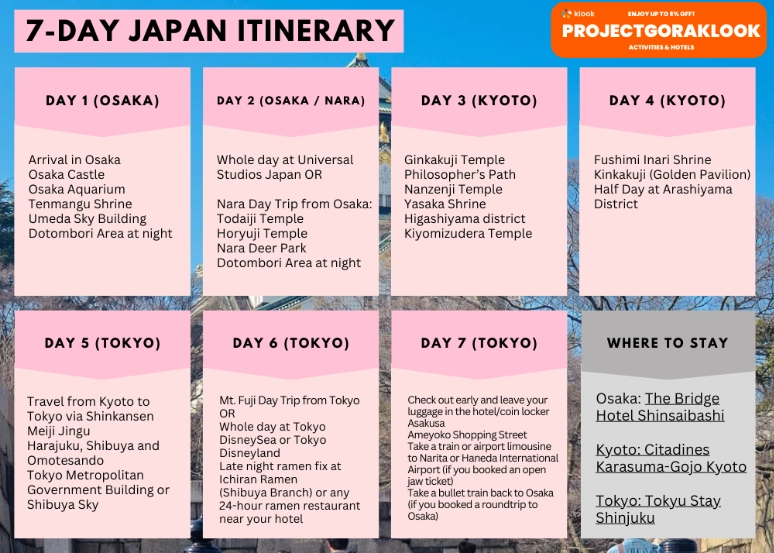
Your Japan Trip at a Glance
- A Realistic 7-Day Japan Itinerary Overview
- Day 1: Arrival & Modern Tokyo (Shinjuku/Shibuya)
- Day 2: Traditional Tokyo & Pop Culture (Asakusa/Akihabara)
- Day 3: Bullet Train to Kyoto & Southern Higashiyama
- Day 4: Kyoto's Northern Higashiyama & The Philosopher's Path
- Day 5: Fushimi Inari & Evening Train to Osaka
- Day 6: Osaka's Food & Castle Day
- Day 7: Last-Minute Souvenirs & Departure
- Essential Logistics: Passes, Budget & Getting Around
- Your Japan Itinerary Questions Answered
A Realistic 7-Day Japan Itinerary Overview
Most first-timers try to cram in too much. Hiroshima, Nara, Hakone... on a 7-day Japan travel itinerary, adding more cities means more time on trains and less time actually experiencing places. The Tokyo-Kyoto-Osaka triangle is the sweet spot. You get a balanced taste of ultra-modern, deeply traditional, and unabashedly fun.
Here’s the core structure. We're minimizing hotel changes (just two: Tokyo and Kyoto/Osaka) and grouping sights logically to save your feet.
| Day | Base City | Theme & Highlights | Overnight |
|---|---|---|---|
| 1 | Tokyo | Arrival, Shinjuku, Shibuya Scramble | Tokyo |
| 2 | Tokyo | Asakusa (Senso-ji), Akihabara | Tokyo |
| 3 | Tokyo → Kyoto | Shinkansen to Kyoto, Kiyomizu-dera, Gion | Kyoto |
| 4 | Kyoto | Kinkaku-ji, Philosopher's Path, Nanzen-ji | Kyoto |
| 5 | Kyoto → Osaka | Fushimi Inari, train to Osaka, Dotonbori | Osaka |
| 6 | Osaka | Osaka Castle, Shinsekai, Kuromon Market | Osaka |
| 7 | Osaka | Last-minute shopping, departure from KIX/ITM | – |
A crucial tip most blogs miss: Book your Tokyo hotel near Shinjuku or Tokyo Station, and your Kyoto hotel near Kyoto Station. It makes arrival/departure and Shinkansen transfers painless. I once stayed in a "quaint" part of Kyoto and wasted an hour daily just getting to the station.
Day 1: Arrival & Modern Tokyo (Shinjuku/Shibuya)
You'll likely land at Narita (NRT) or Haneda (HND) in the afternoon. The goal today is simple: beat jet lag, activate your rail pass if you have one, and soak in the overwhelming energy of modern Tokyo.
Insider Tip: Use the JR East website to check Narita Express (N'EX) or Tokyo Monorail times. Buy a Suica/Pasmo card at the airport station – it's the contactless card for all subways and buses.
Evening in Shinjuku & Shibuya
Check into your hotel, then head out. Don't be tempted by the hotel restaurant.
Shinjuku: Exit the station's East Exit. The Metropolitan Government Building offers a free panoramic view of the city until 9:30 PM (last entry 9:00 PM). It's a perfect, cost-free introduction. Address: 2-8-1 Nishishinjuku, Shinjuku City. Afterwards, wander through the maze of tiny bars and restaurants in Omoide Yokocho ("Memory Lane").
Shibuya Crossing: Take the JR Yamanote Line (it's a loop line, any direction works) from Shinjuku to Shibuya (about 5-7 minutes). Experience the famous scramble. For the best view, go to the second-floor Starbucks in the Tsutaya building (it's always crowded) or the free viewing corridor in Shibuya Scramble Square.
Dinner Idea: Uobei Shibuya Dogenzaka (2-29-16 Dogenzaka). It's a conveyor belt sushi chain, but super fun and efficient. You order via tablet, and your sushi zooms down a track to your seat. A meal costs about ¥1,500-¥2,500 per person. Open until 11 PM.
Day 2: Traditional Tokyo & Pop Culture (Asakusa/Akihabara)
Today contrasts old and new Tokyo.
Morning: Asakusa and Senso-ji
Take the Ginza Line to Asakusa Station. The moment you walk out, you'll see Kaminarimon, the Thunder Gate. Walk down Nakamise-dori, a street packed with souvenir stalls selling everything from rice crackers to wooden combs. It's touristy, but the energy is great.
Senso-ji Temple is Tokyo's oldest. It's free to enter the main grounds. Take your time, cleanse your hands at the fountain (there are instructions), and soak in the atmosphere. Address: 2-3-1 Asakusa, Taito City. Open 6:00 AM to 5:00 PM (hours vary slightly).
For a fantastic, cheap lunch, walk 5 minutes to Sometaro (2-2-2 Nishi-Asakusa). This okonomiyaki (savory pancake) restaurant has you cook it yourself on a hotplate at your table. A unique experience for about ¥1,000 per person.
Afternoon: Electric Town - Akihabara
From Asakusa, take the Tsukuba Express line to Akihabara (about 5 minutes). This is the epicenter of anime, manga, and electronics.
Don't just wander aimlessly. Pick a focus: Yodobashi Camera (a massive electronics department store), Super Potato (for retro video games), or the myriad anime figure shops. If you're into arcades, try a rhythm game at a Taito Station or Sega arcade – they're an experience.
I find Akihabara overwhelming after 2-3 hours. If you're drained, head back to your hotel. If you have energy, return to Shinjuku for a more relaxed dinner in the Kabukicho area (stick to well-lit main streets).
Day 3: Bullet Train to Kyoto & Southern Higashiyama
Travel day. Check out of your Tokyo hotel, store your luggage at Tokyo Station's coin lockers (¥600-¥800 for a large locker), and grab a bento box (ekiben) from one of the station shops.
Insider Tip: Book your Shinkansen seat on the right side (Seat E if using the JR Pass) for a potential view of Mount Fuji about 40-50 minutes after leaving Tokyo, weather permitting.
The Nozomi or Hikari train will get you to Kyoto Station in about 2 hours 15 minutes. Drop your bags at your Kyoto hotel (choose one near the station, like Hotel Granvia Kyoto or a nearby business hotel). Don't waste time fully checking in yet.
Afternoon: Kiyomizu-dera and Gion
Take bus #100 or #206 from Kyoto Station to the Gojo-zaka or Kiyomizu-michi stop. You're heading to Kiyomizu-dera, the iconic temple built on wooden stilts. The main hall is under renovation until 2024, but the site is still open and offers incredible views. Admission: ¥400. Open 6:00 AM to 6:00 PM.
Walk down the historic Sannen-zaka and Ninen-zaka stone lanes. These preserved streets are full of tea houses and shops. Resist buying heavy souvenirs here—you have to carry them.
Your walk will lead you towards Gion, the geisha district. Be respectful; don't chase geiko or maiko for photos. For dinner, try Gion Kappa (not a fixed address, it's a tiny standing bar alley—ask a local for "Kappa Sushi" in Gion). It's cramped, smoky, and utterly authentic. A set of skewers and a beer will run ¥2,000-¥3,000.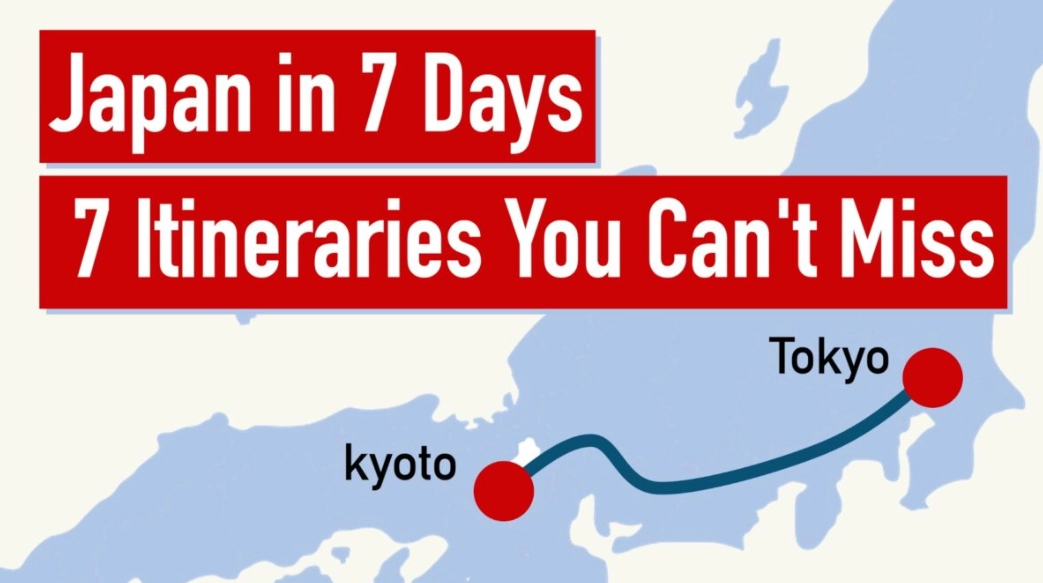
Day 4: Kyoto's Northern Higashiyama & The Philosopher's Path
Start early. I mean it. 8:00 AM at the latest. Crowds in Kyoto are no joke.
Morning: Kinkaku-ji (The Golden Pavilion)
Take bus #101 or #205 from Kyoto Station directly to Kinkaku-ji. This Zen temple covered in gold leaf is stunning. It's also one of Kyoto's most popular spots. Getting there at opening (9:00 AM) helps. It's a relatively quick visit—you follow a set path around the garden. Admission: ¥400. Address: 1 Kinkakujicho, Kita Ward.
Afternoon: The Philosopher's Path & Nanzen-ji
From Kinkaku-ji, take bus #102, #204, or #205 to "Ginkaku-ji Michi." You're not going to Ginkaku-ji (the Silver Pavilion, which is lovely but often crowded). Instead, walk the Philosopher's Path (Tetsugaku-no-michi), a peaceful stone path along a canal lined with cherry trees (bloom in April) and cute cafes.
Walk south for about 30 minutes. You'll end up near Nanzen-ji, a massive Zen temple complex. The Sanmon gate is impressive, and the aqueduct in the grounds is an interesting blend of old and Meiji-era industrial. Parts of the garden require an admission fee (¥500), but just wandering the grounds is free and a nice respite.
For dinner, head to the area around Kyoto Station. The 10th floor of the station building, called "The Cube," and the adjacent Isetan department store's basement food hall (depachika) are fantastic for a wide variety of ready-to-eat gourmet meals.
Day 5: Fushimi Inari & Evening Train to Osaka
Another early start. Check out of your Kyoto hotel, leave bags at the front desk or in a station locker.
Morning: Fushimi Inari Taisha
Take the JR Nara Line from Kyoto Station to Inari Station (just 5 minutes, covered by the JR Pass). Fushimi Inari is famous for its thousands of vermilion torii gates. It's open 24/7 and is free. To beat the crowds, you need to be on the path by 7:30 AM. Most tourists cluster at the base. Keep walking. The higher you go, the thinner the crowd. The full hike takes about 2-3 hours round-trip, but you can turn back after 30-45 minutes for a great experience.
Address: 68 Fukakusa Yabunouchicho, Fushimi Ward.
Afternoon/Evening: Travel to Osaka & Dotonbori
Retrieve your bags and take the JR Kyoto Line rapid train from Kyoto Station to Osaka Station. It's only about 25 minutes. Check into your Osaka hotel. I recommend staying near Namba or Shin-Osaka stations for convenience.
Tonight is for Dotonbori. This is Osaka's kitchen, a sensory overload of giant neon signs (the Glico Running Man, the Kani Doraku crab), sizzling takoyaki stands, and the smell of okonomiyaki. Don't just look—eat.
Dinner Must-Do: Kani Doraku (1-6-18 Dotonbori). Yes, it's a chain under the giant moving crab. It's touristy, but the crab kaiseki (multi-course) meal is a memorable Osaka splurge. Expect ¥6,000-¥12,000 per person. For a more local (and cheaper) vibe, queue at Takoyaki Wanaka for some of the city's best octopus balls.
Day 6: Osaka's Food & Castle Day
Osaka is about eating and unapologetic fun.
Morning: Kuromon Ichiba Market & Osaka Castle
Start at Kuromon Ichiba Market ("Osaka's Kitchen"). Come hungry. Try fresh tuna sashimi, grilled scallops, and tamagoyaki (sweet omelet). It gets packed by 11 AM. Address: 2-4-1 Nipponbashi, Chuo Ward. Many stalls open around 9 AM.
Then, take the subway to Osaka Castle. A word of advice: don't go inside the modern concrete museum tower unless you love dioramas. The grounds and the castle's exterior are the real highlight, especially from the Nishinomaru Garden (¥200, especially beautiful during cherry blossom season). The castle is a reconstruction, but the scale is impressive. Address: 1-1 Osakajo, Chuo Ward. Grounds are always open; castle keep 9 AM-5 PM.
Afternoon: Shinsekai & Tsutenkaku Tower
Take the subway to Ebisucho Station. You've entered Shinsekai, a retro-futuristic district from the early 1900s. It has a grittier, more local feel. The landmark is Tsutenkaku Tower. Ride up for a view (¥900). The real attraction here is kushikatsu—deep-fried skewers. The rule: no double-dipping your skewer in the shared sauce! Daruma is a famous, bustling kushikatsu joint here.
Spend your last evening revisiting Dotonbori for any street food you missed or doing last-minute shopping in Shinsaibashi-suji shopping arcade.
Day 7: Last-Minute Souvenirs & Departure
Your flight is likely in the afternoon or evening. Use the morning wisely.
If you need souvenirs, Don Quijote (Donki) is a chaotic, multi-floor discount store perfect for everything from Kit Kats to samurai swords. There's one in Dotonbori open 24/7.
For a calm final experience, visit Shitenno-ji Temple near Tennoji Station (Osaka's oldest temple) or simply enjoy a slow coffee.
Depart from Kansai International Airport (KIX) via the Nankai Railway or Haruka express, or from Itami Airport (ITM) via monorail or limousine bus. Leave at least 3 hours before your flight for KIX.
Essential Logistics: Passes, Budget & Getting Around
The JR Pass: For this specific 7-day Japan itinerary (Tokyo-Kyoto-Osaka round-trip on the Shinkansen), a 7-day nationwide JR Pass usually just about pays off. Do the math: a Tokyo-Kyoto one-way Shinkansen ticket is around ¥13,000. The round-trip is ¥26,000. The 7-day JR Pass is about ¥50,000. Add in the N'EX from Narita (¥3,000) and local JR trains in cities, and you're likely slightly ahead. But if you fly into Tokyo and out of Osaka (an "open-jaw" ticket), a 7-day pass often doesn't pay. Use the official Japan Rail Pass calculator.
Budget (per person, excluding flights):
- Mid-range: ¥12,000-¥18,000 per day. This covers business hotels (¥7,000-¥10,000/night), meals at casual/sit-down restaurants, local transport, and temple entry fees.
- Budget: ¥8,000-¥12,000 per day. Capsule hotels/hostels, convenience store meals (which are excellent), and focusing on free sights.
- Always carry cash. Many smaller restaurants, temples, and markets are cash-only.
Getting Around: Google Maps is your best friend for real-time train and bus schedules in Japan. It's incredibly accurate. The Suica/Pasmo IC card works in all three cities.
Your Japan Itinerary Questions Answered
Is 7 days in Japan enough for Tokyo, Kyoto, and Osaka?
It's enough for a compelling first taste, which is the goal. You won't see every corner, but you'll experience the core identity of each city. The pace is brisk but manageable if you follow a logical plan like the one above. Trying to add a fourth major destination (like Hiroshima) would make it a stressful checklist rather than an enjoyable trip.
What's the biggest mistake people make when planning a Japan itinerary for 7 days?
Underestimating travel time within cities. They see that Kyoto Station to Kinkaku-ji is only 4 km on a map and think it's a short walk. It's a 40-minute bus ride in traffic. Or they try to see Asakusa, Tsukiji, and Odaiba all in one Tokyo morning—it's geographically impossible without spending half the day on trains. Group sights by district and budget 1.5x the time Google Maps suggests.
Should I get a pocket Wi-Fi or a SIM card?
SIM card. Every time. Pocket Wi-Fi devices are another gadget to charge, can overheat, and have range limits if you separate from the group. Pick up a data-only SIM at the airport arrivals hall (companies like Sakura Mobile or Mobal). Pop it in your phone, and you're connected instantly. It's one less thing to worry about.
I'm a foodie. What one reservation should I make?
For this itinerary, try to book a lunch at a high-end tempura or soba restaurant in Tokyo. Dinner at top places is fiercely competitive and expensive. Lunch offers a similar standard at a fraction of the price. Use your hotel concierge or a service like Pocket Concierge. If you can't get a reservation, don't stress—some of my best meals in Japan have been at random, packed izakayas with no English menu.
Is it worth going to Nara as a day trip from Kyoto or Osaka?
On a strict 7-day schedule, I'd say no, unless you are particularly passionate about deer or the Todai-ji Buddha. It takes half a day (travel + visit). That half-day is better spent delving deeper into Kyoto's neighborhoods or Osaka's food scene. If you have 8 or 9 days, then Nara becomes a wonderful, relaxed addition. The deer are pushy, by the way.
Share Your Thoughts