You step off a noisy street, pass through a simple gate, and the world changes. The air feels cooler, cleaner. Sound fades to a whisper of wind and water. Your eyes relax, drawn not to one grand spectacle, but to a hundred small, perfect details: the curve of a mossy stone, the deliberate gap in a bamboo fence, the single red maple leaf floating on a dark pond. This is the magic of a Japanese garden landscape. It’s not a display of control over nature, but a profound conversation with it. Forget the checklist mentality of "see the top 10 sights." To experience a Japanese garden is to engage in a form of active, mindful walking. This guide cuts through the postcard imagery. We’ll break down the philosophy that shapes every stone and branch, show you where to find the most authentic examples, and give you the tools to not just see, but truly feel these living works of art.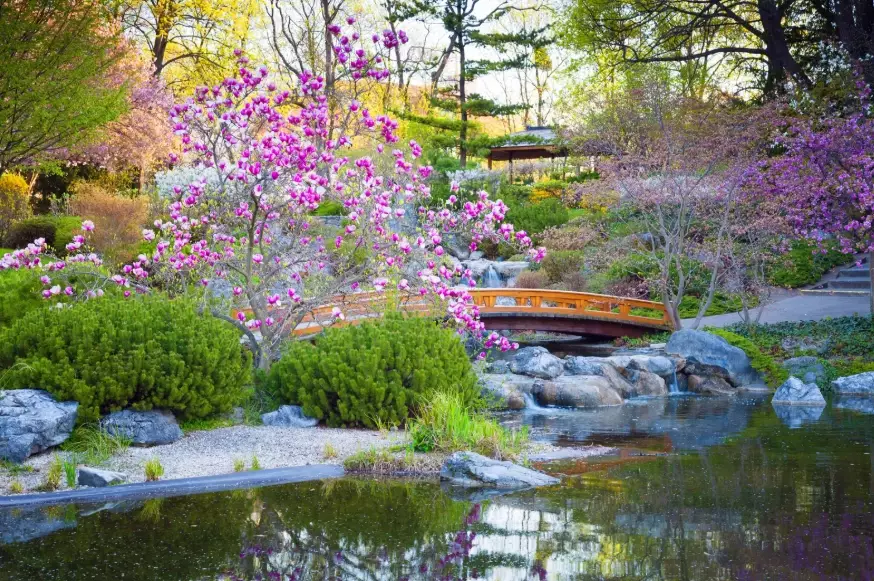
Your Quick Navigation Guide
What is a Japanese Garden? The Core Design Principles
Most people see rocks, water, and pruned trees. An expert sees a coded language. Japanese garden design follows principles developed over a thousand years, blending Shinto reverence for nature, Buddhist concepts of impermanence, and Daoist ideas of balance. It’s a 3D poem. If you understand a few key ideas, your visit transforms from a stroll to a deep reading.
Asymmetry (Fukinsei) is rule number one. Perfect symmetry feels dead, manufactured. Look for odd-number groupings of stones (three, five, seven), irregular pond shapes, and paths that meander unexpectedly. It mimics the wild, imperfect beauty of the natural world.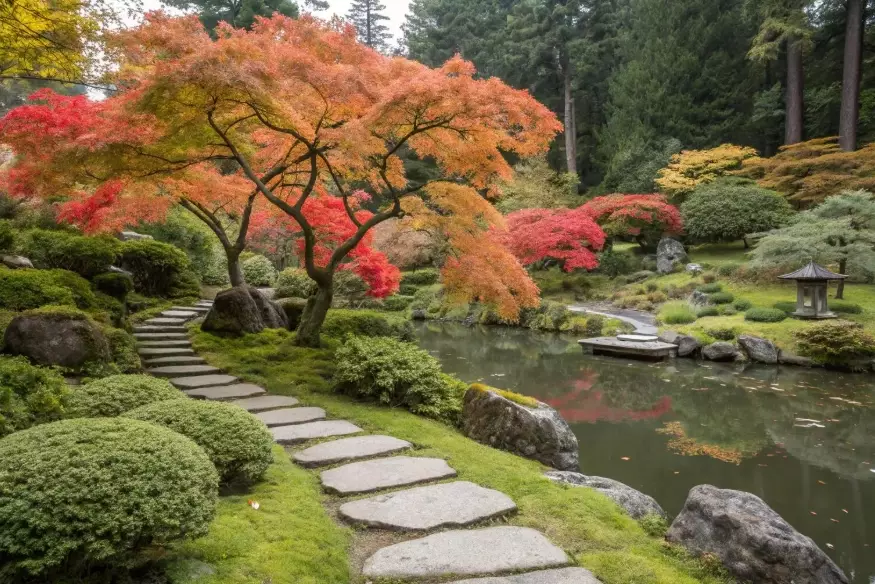
Miniaturization and Borrowed Scenery (Shakkei). A great garden creates a vast world in a small space. A cluster of rocks becomes a mountain range. A raked gravel sea surrounds mossy "islands." And clever designers never build a wall if they can "borrow" a distant hill or temple roof as a backdrop, seamlessly blending the garden with its larger environment. It’s an illusion of infinite space.
A Common Mistake Beginners Make: They rush to find the "perfect" photo spot, often the classic view of a bridge or lantern. They miss the point. The garden is designed to be experienced in motion, with views unfolding step by step. The most profound moments often come from the overlooked corner—the pattern of shadows on a stone wall, the sound of your feet on different path materials (stepping stones, gravel, earth). Slow down. Look down. Listen.
Essential Garden Types:
Karesansui (Dry Landscape): The famous Zen rock gardens. Gravel is raked into patterns representing water, rocks symbolize islands or mountains. No water, no flowers. It’s pure abstraction, meant for seated meditation, not walking. Ryoan-ji in Kyoto is the ultimate example.
Tsukiyama (Hill Garden): These are the "stroll gardens" with ponds, hills, bridges, and winding paths. They create idealized landscapes for leisurely walking contemplation. Kenroku-en is a masterpiece of this style.
Chaniwa (Tea Garden): A functional path leading to a tea house. It’s a transition space to leave the mundane world behind. You’ll notice a stone water basin (tsukubai) for ritual cleansing and low, simple gates.
How to Visit a Japanese Garden: Etiquette and Photography Tips
You’re not in a park. You’re a guest in a carefully composed work of art. A little awareness goes a long way.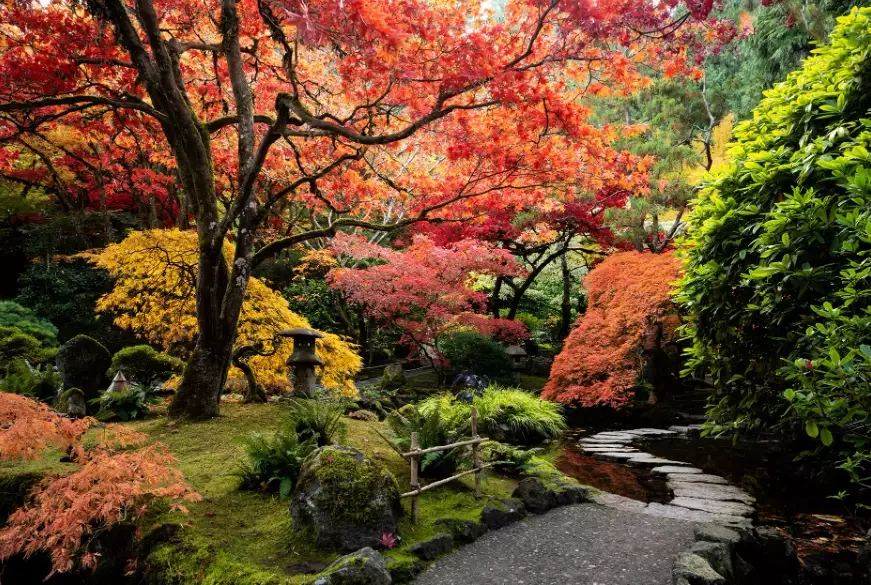
Timing is Everything. Sunrise or opening time is golden. You get soft light, fewer crowds, and often see gardeners at their meticulous work. The hour before closing is also quiet. Seasons radically change a garden. Autumn’s red maples (koyo) are famous, but I have a soft spot for early summer’s vibrant green moss and the quiet drama of a light snow dusting a rock garden in winter. Rain? Don’t cancel. A garden in the rain, with glistening stones and intensified colors, is breathtaking.
Photography Without Being "That Person." Yes, get your shots. But first, put the camera down for five minutes. Just be there. When you shoot, think like the gardener. Look for frames within frames—a view through a window, an arch of a branch. Capture textures: rough stone against smooth moss, the grain of weathered wood. Avoid the wide-angle "everything" shot. A tight composition of a single lantern and a maple leaf often holds more of the garden’s spirit. And for heaven’s sake, never step off the path to get a better angle. You’re damaging the composition it took years to create.
General etiquette is simple: speak quietly, stay on designated paths, don’t touch the moss or rocks, and never smoke or eat outside designated areas. It’s about shared respect.
Three Must-Visit Japanese Gardens for First-Timers
Japan has thousands of gardens. These three offer a perfect primer, each showcasing a different style and philosophy. Treat this not as a checklist, but as a tasting menu of the art form.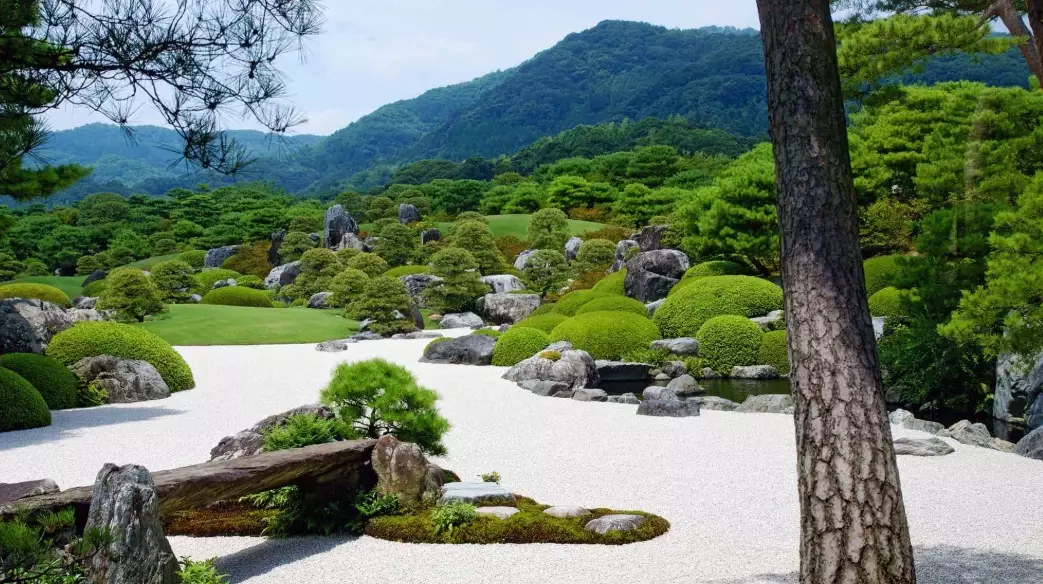
1. Kenroku-en Garden (Kanazawa)
Kenroku-en: The "Garden of the Six Sublimities"
This is the grand stroll garden, considered one of Japan’s Three Great Gardens. The name refers to six essential attributes: spaciousness, seclusion, artifice, antiquity, water, and panoramas. It has them all.
What to Feel: The sheer scale and variety. One moment you’re by a large pond with a classic wooden umbrella-handled lantern (kotojitoro), the next you’re in a secluded grove of ancient pines. In winter, they use yukitsuri—ropes tied in conical shapes to protect tree branches from snow—which become stunning sculptures.
Practical Info: Address: 1 Kenrokumachi, Kanazawa, Ishikawa 920-0936. Hours: 7:00 AM - 6:00 PM (Mar-Oct), 8:00 AM - 5:00 PM (Nov-Feb). Hours extend for special illuminations. Admission: ¥320 (about $3 USD) for adults. A steal. Getting There: A 20-30 minute walk from Kanazawa Station, or take the Kanazawa Loop Bus to the "Kenrokuen-shita" stop. Pair it with a visit to the adjacent Kanazawa Castle Park.
2. Ryoan-ji Temple Rock Garden (Kyoto)
Ryoan-ji: The Zen Enigma
This is the world’s most famous karesansui (dry landscape) garden. A rectangular plot of raked white gravel with 15 moss-covered rocks, arranged in five groups, surrounded by a clay wall. That’s it. No explanation. No signs. You sit on the veranda and… look.
What to Feel: The intense quiet and the puzzle. No matter where you sit, you can only see 14 of the 15 rocks. The design forces introspection. It’s not about "solving" it. It’s about the mental space the mystery creates. The longer you sit, the more you notice—the texture of the wall, the way the light changes. It can feel underwhelming for five minutes, profound for twenty.
Practical Info: Address: 13 Ryoanji Goryonoshitacho, Ukyo Ward, Kyoto, 616-8001. Hours: 8:30 AM - 5:00 PM (Mar-Nov), 8:30 AM - 4:30 PM (Dec-Feb). Admission: ¥600 (about $5.50 USD) for adults. Getting There: Take Kyoto City Bus #59 from Kyoto Station to "Ryoanji-mae" stop. Go early. Midday brings tour groups that can shatter the silence. The surrounding temple grounds with a lovely pond garden are also worth your time.
3. Katsura Imperial Villa Garden (Kyoto)
Katsura: The Pinnacle of Stroll Garden Design
This is the holy grail for garden enthusiasts. Built in the 17th century, it represents the purest integration of architecture (the villa) and landscape. Visiting requires planning—you must apply for a guided tour through the Imperial Household Agency in advance.
What to Feel: The genius of the walking path. It’s designed so that every twist and turn reveals a completely new, perfectly composed view, each named like a painting. The use of "borrowed scenery" is masterful. The tour is strict (no wandering), but it’s a masterclass in controlled vision and revelation.
Practical Info: Address: Katsuramisono, Kyoto, 615-8014. Tours: Must book in advance via the Imperial Household Agency website. Tours are in Japanese, but excellent audio guides are available in English. Admission: Free, but the advance reservation is mandatory. Getting There: A short taxi ride from Katsura Station on the Hankyu Line. The process is part of the experience—it feels like a privileged access to a secret world.
Your Japanese Garden Questions, Answered
Can I visit a Japanese garden in winter, or are they all closed?
Not only are they open, winter is a secret season for connoisseurs. Evergreens like pine take center stage, their forms highlighted against snow. The stark beauty of a karesansui (rock garden) under a dusting of snow is unforgettable. Many major gardens, like Kenroku-en, have special winter attractions like yukitsuri (rope snow guards). Just check for reduced hours, dress warmly, and enjoy the profound silence you won’t find in busier seasons.
What’s the biggest mistake tourists make when visiting these gardens?
Speed. They treat it like a box to tick. The garden’s effect is cumulative and subtle. If you have an hour, spend the first ten minutes just sitting still in one spot. Let your eyes adjust. Notice how the sound of the city fades. Watch how other visitors move through the space—they become part of the living composition. The goal isn’t to cover ground; it’s to let the ground cover you.
Are there any good Japanese gardens outside of Japan I can visit?
Absolutely, and visiting a non-Japanese garden is a great way to test your eye. Look for gardens designed by or in deep consultation with Japanese masters. The Portland Japanese Garden in Oregon, USA, is widely considered the most authentic outside Japan. The Cowra Japanese Garden in Australia is another massive, stunning example. In the UK, the Japanese Garden at Tatton Park is a classic. The key is to look for that sense of layered, asymmetrical composition, not just a collection of lanterns and maple trees.
How do I take good photos without a professional camera?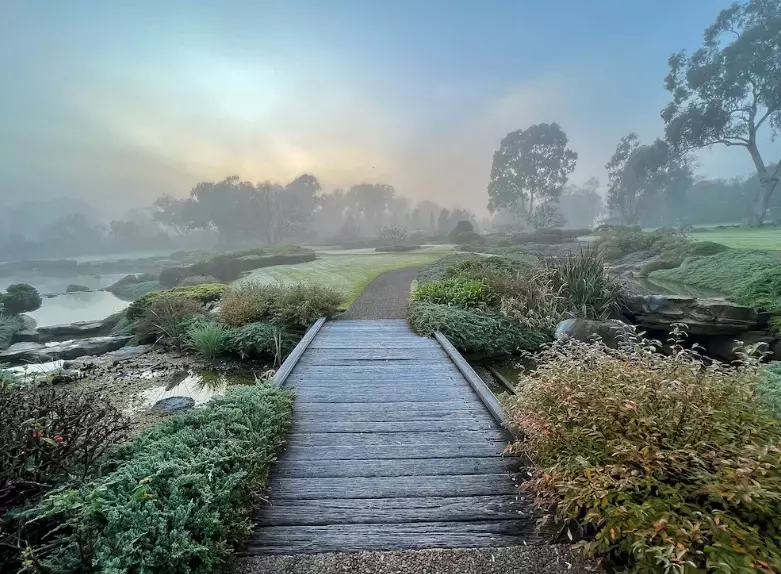
Your smartphone is perfect. Turn off the flash. Get close. Instead of shooting the whole pond, focus on the reflection of a single branch in one corner of the water. Use the "rule of thirds" grid on your phone—place key elements where the lines intersect. Most importantly, shoot in the "golden hours" just after sunrise or before sunset. The long shadows and warm light will do more for your photo than any expensive lens. And remember, sometimes the best photo is the one you don’t take.



Share Your Thoughts