In This Guide
- Why is this the temple everyone talks about?
- Breaking down the Golden Pavilion: More than just a shiny facade
- Your practical guide to visiting Kinkaku-ji (without the headache)
- What else is there to see at Kinkaku-ji? (Most people miss this)
- Frequently Asked Questions (Stuff You're Actually Wondering)
- Beyond the Pavilion: Pairing your visit with nearby spots
Let's clear this up right at the start. If you've ever seen a picture of a breathtaking, gold-leaf-covered temple perfectly reflected in a still pond, surrounded by lush greenery, that's the one. The answer to "What is the famous temple in Kyoto called?" is almost always Kinkaku-ji (金閣寺), literally "Temple of the Golden Pavilion." Most people just call it the Golden Pavilion. It's the poster child for Kyoto, the image on a million postcards, and for good reason.
But here's the thing a lot of quick guides don't tell you. Visiting Kinkaku-ji is a bit of a paradox. It's stunningly beautiful, yes. It's also often packed with visitors, the path is a one-way route, and you can't actually go inside the building itself. I remember my first visit, shuffling along with the crowd, feeling a bit like I was on a cultural conveyor belt. For a second, I wondered if it was overrated.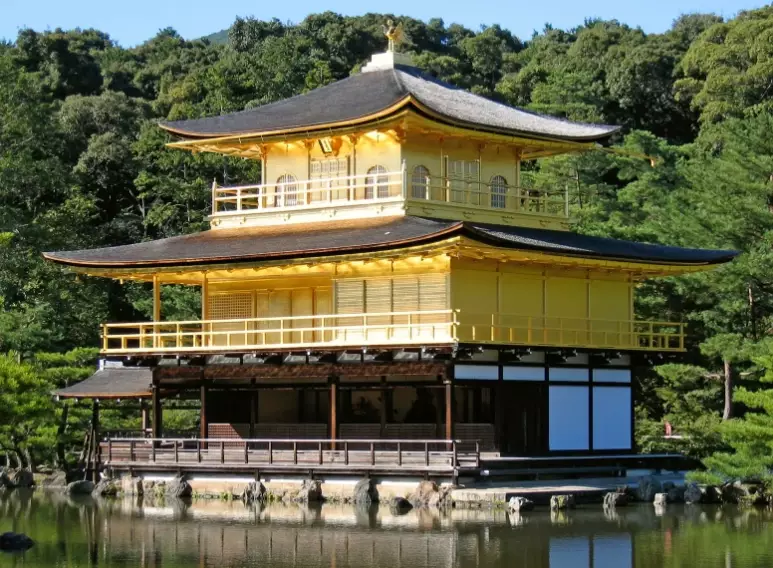
Then I saw it properly, framed by pine trees, the gold shimmering even on a cloudy day. The crowd hushed for a moment. And I got it. The magic isn't in a slow, solitary contemplation (you won't get much of that here). The magic is in the sheer, audacious beauty of the thing itself—a Zen Buddhist temple literally wrapped in gold, built for a shogun obsessed with luxury, now existing as a symbol of something much deeper. It's a complex piece of history, not just a pretty picture.
So, what is Kinkaku-ji? It's a Zen Buddhist temple in northern Kyoto. Its top two floors are completely covered in pure gold leaf. It was originally built in 1397 as a retirement villa for the powerful shogun Ashikaga Yoshimitsu. After his death, his son converted it into a Zen temple, in accordance with his will. The building you see today is a meticulous reconstruction from 1955, after a tragic arson attack by a young monk in 1950—a story that inspired Yukio Mishima's famous novel, The Temple of the Golden Pavilion.
Why is this the temple everyone talks about?
Look, Kyoto has over 1,600 temples. You've got the massive gate of Chion-in, the thousand red torii gates of Fushimi Inari, the serene stone garden of Ryoan-ji. So why does everyone, from first-time tourists to seasoned Japanophiles, zero in on the famous temple in Kyoto called Kinkaku-ji?
It's the gold. Pure and simple. It's visually unique and unbelievably photogenic. In a city of dark wood, stone gardens, and vermilion gates, a sparkling gold temple stands out. It represents the pinnacle of the Kitayama culture period, a time when the shogunate blended aristocratic elegance with samurai power. The temple is a physical manifestation of the Buddhist Pure Land (Jodo) on Earth, designed to inspire awe and spiritual reflection.
I think another reason it's so famous is its accessibility. The concept is instantly understandable. You don't need to know anything about Zen koans or esoteric Buddhism to appreciate a golden building over a pond. It hits you right in the senses.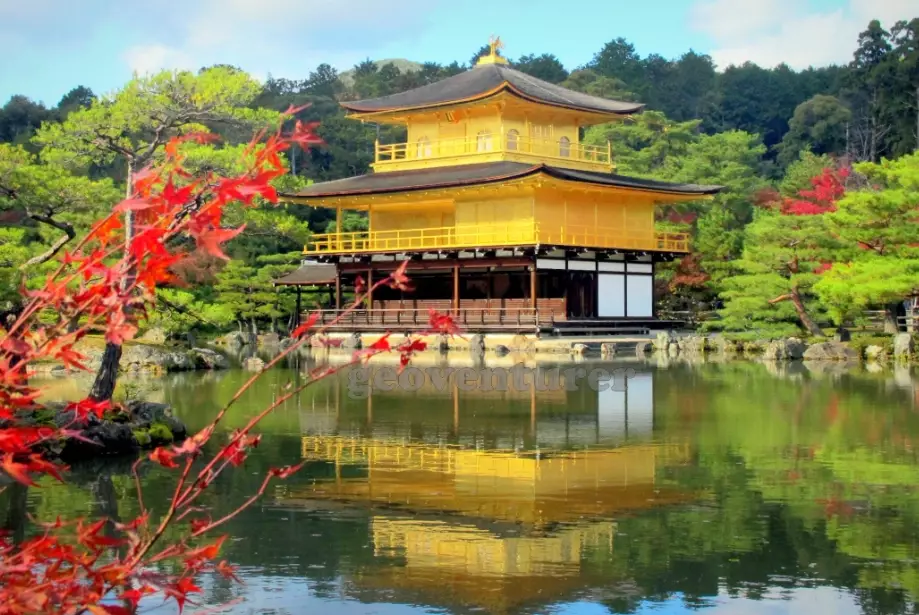
Breaking down the Golden Pavilion: More than just a shiny facade
If you just snap a photo and leave, you're missing half the story. The pavilion's architecture is a deliberate, three-story sermon.
The Three Distinct Architectural Styles
Each floor represents a different architectural style, which in turn symbolizes a different realm of existence. This is the kind of detail that answers the deeper question behind "What is the famous temple in Kyoto called?"—it's not just a name, it's a philosophy in wood and gold.
- The First Floor (Hōsui-in): This is the Shinden-zukuri style, used for Heian-period aristocratic palaces. It's built of plain wood and white plaster, with open verandas. It houses a statue of the Shaka Buddha and Yoshimitsu himself. This represents the world of everyday human life.
- The Second Floor (Chō-on-dō): Here we switch to Bukke-zukuri, the style of samurai houses. It's closed off with sliding wooden doors (shōji) and enshrines a Kannon Bodhisattva. This floor symbolizes the world of warriors and the path of the samurai.
- The Third Floor & The Phoenix: The top floor is a Chinese Zen hall (Zenshū-butsuden-zukuri). It's completely gold-leafed inside and out, with lattice windows. It holds relics of the Buddha and represents the highest, purest realm of the Buddha himself. Perched on the roof is a golden Chinese phoenix (hōō), a symbol of immortality and imperial authority, watching over everything.
The whole structure, reflected in the mirror pond (Kyōko-chi), is meant to create a harmony between heaven and earth, between the different spheres of life. It's genius, really. A retired shogun living in a building that subtly declares he mastered all aspects of the world—the courtly, the martial, and the divine.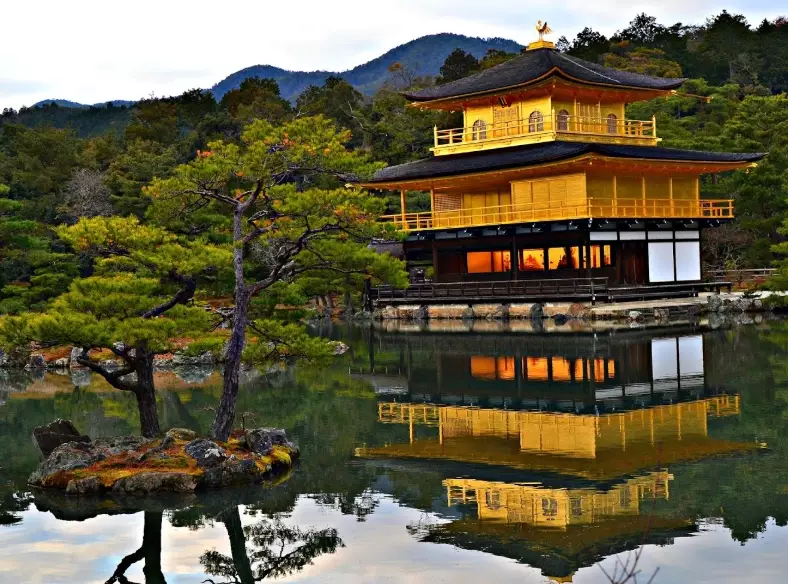
Your practical guide to visiting Kinkaku-ji (without the headache)
Okay, so you're convinced. You want to see this iconic place. Here's the real-world advice I wish I'd had before my first visit, stuff that goes beyond the basic opening hours.
Top 3 Tips for a Better Visit: 1) Go as soon as it opens. I mean it. The first 30 minutes are golden (pun intended) for light and smaller crowds. 2) Be ready for the one-way path. You enter, you walk the set route around the pond, you see the pavilion from several designated angles, and you exit through the garden. There's no doubling back. 3) Look beyond the main shot. Everyone crowds the first viewpoint. The views from the far side of the pond, with the small islands and pine trees in the foreground, are often more compositionally interesting.
| Essential Info | Details | Personal Note/Why It Matters |
|---|---|---|
| Official Name | Rokuon-ji (Deer Garden Temple). Kinkaku-ji refers specifically to the golden pavilion building. | This is a common point of confusion! The temple complex is Rokuon-ji, but nobody calls it that. Everyone asks for Kinkaku-ji. |
| Address | 1 Kinkakujicho, Kita Ward, Kyoto, 603-8361 | It's in the northwest part of the city. Not really walkable from downtown; you'll need transport. |
| Opening Hours | 9:00 AM to 5:00 PM, 365 days a year. | No closing days is a huge plus for itinerary planning. The hours are shorter than some other sites. |
| Admission Fee | Adults: 500 yen, Children: 300 yen. | Very reasonable for a UNESCO World Heritage site. You get a beautiful paper entry ticket that's a nice keepsake. |
| Best Time to Visit | Morning (right at opening) or late afternoon (last entry). Avoid midday weekends/holidays. | Morning light is soft. Late afternoon can give a warm glow. Midday sun can cause harsh glare on the gold and water. |
| Seasonal Highlights | Snow (rare, magical), Autumn (vibrant red maples), Spring (cherry blossoms in the garden). | A dusting of snow transforms it into a fairy tale. But it's stunning year-round—don't skip it if you're not there in "peak" season. |
Getting there is straightforward. The most common way is to take the Kyoto City Bus number 101 or 205 from Kyoto Station. It takes about 40 minutes and costs 230 yen. The "Raku" sightseeing buses (like Raku Bus 101) are also a good option. Just be prepared for potential traffic. A taxi from central Kyoto (like Gion) will cost around 2,500-3,500 yen and take 20-30 minutes, which can be worth it for a small group to save time.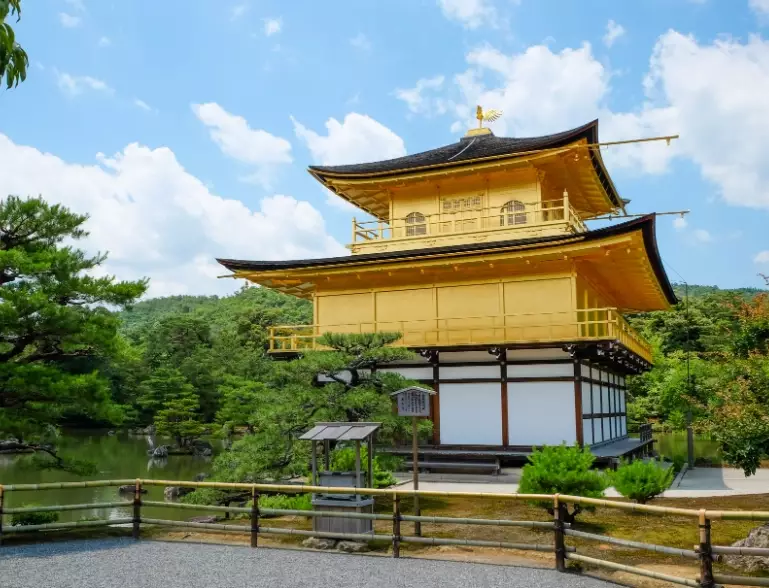
A word on the crowd: It's inevitable. Breathe, be patient, and don't expect a silent retreat. The temple manages the flow well, but it's a major attraction.
What else is there to see at Kinkaku-ji? (Most people miss this)
After you've taken your classic photo of the pavilion, the path leads you up and behind it into the temple's spacious gardens. This is where you can finally escape the densest part of the crowd and find some peace. The gardens are designated as a National Special Historic Site and Special Place of Scenic Beauty.
You'll walk past the Anmintaku Pond, which is said never to dry up, and see a collection of stone pagodas. Keep an eye out for the Fudo Hall (Fudodo), a small sub-temple tucked away, which is much quieter. The path culminates at the Sekkatei Teahouse, a simple, elegant tea house built in the later Edo period. From its veranda, you can enjoy a different, more elevated view back towards the Golden Pavilion peeking through the trees.
This garden walk is an essential part of the experience. It allows the initial visual shock of the gold to settle and invites a more contemplative mood. It's the second act of the visit.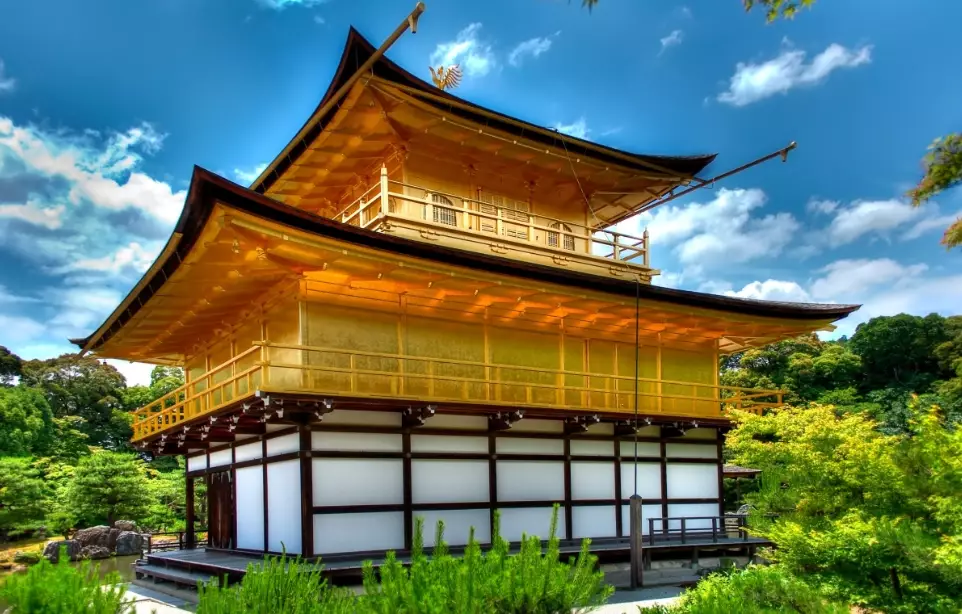
Frequently Asked Questions (Stuff You're Actually Wondering)
Can you go inside the Golden Pavilion?
No. The interior of the Kinkaku-ji building is not open to the public. The visit is an exterior circuit. You view it from across the pond and from various angles in the garden. Some people find this disappointing, but protecting the fragile gold-leaf interior is a priority. You can, however, see detailed models and photos of the interior at the Kyoto National Museum if you're curious.
Is it better to visit Kinkaku-ji (Golden Pavilion) or Ginkaku-ji (Silver Pavilion)?
Ah, the eternal Kyoto question. They're very different. Kinkaku-ji is about opulent, in-your-face beauty. Ginkaku-ji (which, ironically, was never actually covered in silver) is about subtle, understated aesthetics—the beauty of moss, raked sand, and restrained design. If you have time, see both—they represent two sides of Japanese culture. If you must choose, Kinkaku-ji is the more iconic and unique visual statement. Ginkaku-ji offers a more traditionally "Zen" and peaceful atmosphere. Personally, I'd lean towards Kinkaku-ji for a first visit because it's so singular.
How much gold is on Kinkaku-ji?
The top two floors are covered in pure gold leaf. The gold leaf was applied using a traditional technique. During the 1986-87 restoration, about 20 kilograms of gold leaf (each sheet is incredibly thin) were used to re-cover the structure. That's a lot of gold! It's regularly maintained to keep its brilliant shine.
What's the connection to UNESCO?
Kinkaku-ji, as part of the Rokuon-ji temple, is one of the 17 sites that collectively form the "Historic Monuments of Ancient Kyoto" UNESCO World Heritage designation. This means it's recognized as a place of outstanding cultural value to all humanity. You can read more about this designation and the criteria on the official UNESCO World Heritage Centre page for Kyoto.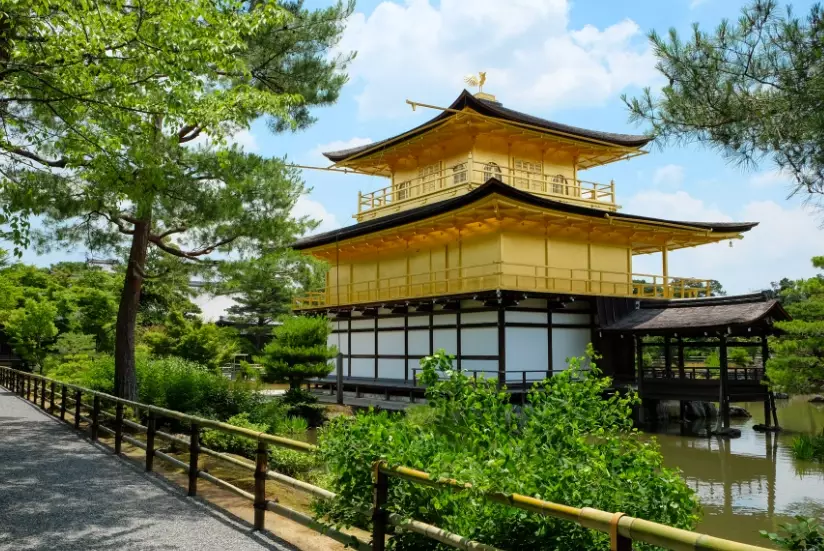
Wait, so what *is* the famous temple in Kyoto called if I'm looking for official info?
For the most accurate and official information, like specific event cancellations or detailed historical data, you should refer to the temple's listing on the Kyoto Prefecture official website or the Japan National Tourism Organization (JNTO) page on Kyoto's World Heritage sites. These are authoritative sources that are regularly updated.
Beyond the Pavilion: Pairing your visit with nearby spots
Kinkaku-ji is in a cluster of great northern Kyoto temples. Making a half-day itinerary here is smart to maximize your time. After you exit (the path spits you out near a souvenir street with some good matcha soft serve, by the way), consider heading to one of these:
- Ryoan-ji Temple: A 10-15 minute bus ride (or a 30-minute walk) away. This is home to Japan's most famous karesansui (dry landscape) rock garden. The ultimate exercise in minimalist Zen contemplation. The stark contrast with the opulent gold next door is fascinating.
- Ninna-ji Temple: Another UNESCO site, known for its beautiful five-story pagoda and extensive grove of late-blooming cherry trees (called Omuro cherries). It has a more spacious, imperial feel.
- Myoshin-ji Temple Complex: A huge head temple of the Rinzai Zen school, with over 50 sub-temples within its walls. It's less crowded and you can sometimes enter some of the sub-temples for a more intimate experience.
Trying to see all of these in one go might be temple overload. I'd pick one companion for Kinkaku-ji. My vote is usually Ryoan-ji for the perfect cultural one-two punch: extravagant beauty followed by austere mystery.
So, there you have it.
When someone asks, "What is the famous temple in Kyoto called?" you now know it's Kinkaku-ji, the Golden Pavilion. But more than that, you know it's a story of a shogun's dream, a lesson in Buddhist cosmology told in architecture, a survivor of tragedy, and a place that manages to be both overwhelmingly crowded and deeply moving at the same time.
Is it touristy? Absolutely. Is it still worth it? Without a doubt. Just go with the right expectations—see the gold, but then take your time in the garden, learn the layers of meaning, and let it be more than just a checkbox on your Kyoto list. It's famous for a reason that goes way beyond the glitter.


Share Your Thoughts