Let's be honest. If you're reading this, you're probably not looking for just another list of Japan's top tourist spots. You're interested in history, specifically the kind you can stand on. Sekigahara is that place. It's a quiet town in Gifu Prefecture where, on a single foggy morning in 1600, the fate of Japan was decided. Today, it's an open-air museum for one of the world's most significant battles. This guide isn't just about facts; it's about how to experience Sekigahara, from getting off the train to understanding the ground beneath your feet.
Your Sekigahara Trip at a Glance
Why Sekigahara Matters: More Than Just a Field
You might know the basics: Tokugawa Ieyasu's Eastern Army defeated Ishida Mitsunari's Western Army, leading to 250 years of Tokugawa shogunate peace. But being there changes it. The geography is the strategy. The narrow pass, the surrounding hills—they weren't just a backdrop; they were the key players. Walking the "History Trail," you realize how communication failures and last-minute betrayals unfolded in real space. It's a masterclass in how terrain dictates history. For military history buffs, it's a pilgrimage. For casual travelers, it's a surprisingly poignant lesson in how one day can echo for centuries.
A Quick Battle Context
The Battle of Sekigahara (関ヶ原の戦い) was the climax of a power struggle following the death of Toyotomi Hideyoshi. Over 160,000 samurai clashed. The victory allowed Tokugawa Ieyasu to consolidate power, be appointed Shogun three years later, and move the capital to Edo (Tokyo). The peace that followed, the Edo Period, defined traditional Japanese culture as we know it.
Planning Your Visit: Getting There and Around
Sekigahara is rural. That's part of its charm and its main logistical point. You won't find swarms of tourists, but you also need a plan.
How to Get to Sekigahara Station
The town is served by JR Sekigahara Station on the Tokaido Main Line. Here are your main access points:
- From Nagoya: This is the most straightforward route. Take the JR Tokaido Line local train from Nagoya Station towards Maibara. The trip takes about 65-70 minutes. Cost is around 1,140 yen. No shinkansen needed.
- From Kyoto/Osaka: Take the Tokaido-Sanyo Shinkansen to Maibara Station (about 20 mins from Kyoto, 50 mins from Shin-Osaka). Then, transfer to a local JR Tokaido Line train heading back towards Nagoya for one stop to Sekigahara (10 minutes).
JR Pass Tip: If you're using a Japan Rail Pass, the route from Kyoto/Osaka via Maibara is fully covered. The direct train from Nagoya is also covered. It makes Sekigahara a very cost-effective day trip.
Getting Around the Battlefield Sites
This is crucial. The key sites are spread over a 3-4 km area. You have three options:
- Rental Bicycle: The best choice. You can rent bicycles right outside Sekigahara Station. Cost is typically 500-800 yen for the day. The terrain is mostly flat with dedicated paths.
- Local Bus: There is a seasonal "Sekigahara Battlefield Bus" that loops around major sites, but service is infrequent (maybe 4-5 rounds a day). Don't rely on it for tight scheduling. Check the latest timetable at the station's tourist information counter.
- Walking: Possible if you're fit and have 5-6 hours. The main "Rekishi Kaido" (History Trail) is well-signposted but can be tiring in summer heat or rain.
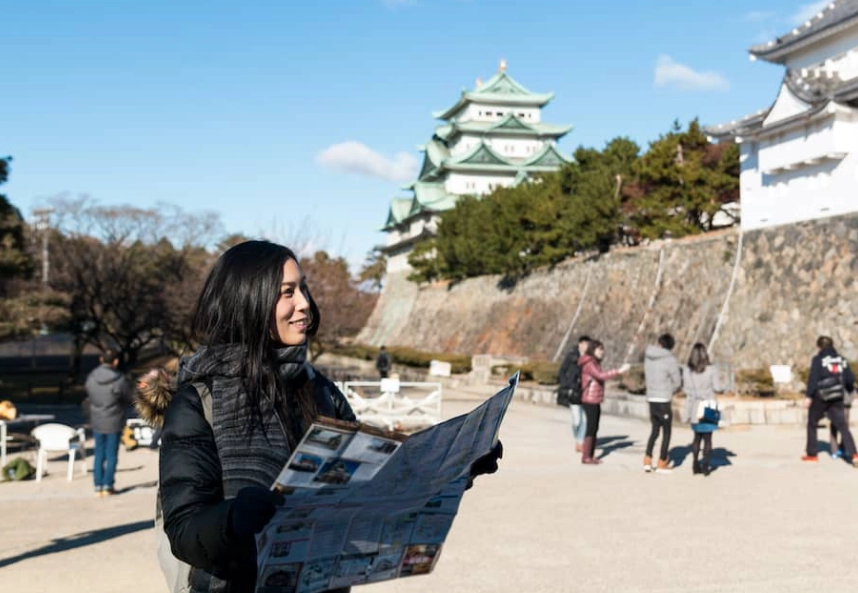
The tourist information center at the station has excellent free maps in English. Grab one.
Top Things to See on the Sekigahara Battlefield
Don't try to see every single monument. Focus on these core sites to get the full story.
| Site Name | What It Is | Key Info (Address, Hours, Cost) |
|---|---|---|
| Sekigahara Battlefield Memorial Museum (関ヶ原町歴史民俗資料館) | Start here. It provides the essential overview with models, armor, and maps. The diorama of the battle is particularly helpful for visualizing troop movements. | Address: 894-28 Sekigahara, Fuwa District, Gifu. A 15-min walk from the station. Hours: 9:00 AM - 5:00 PM (last entry 4:30 PM). Closed Mondays & day after nat'l holidays. Cost: 500 yen for adults. |
| Mount Sasao (笹尾山) & Ieyasu's Final Position | The hill where Tokugawa Ieyasu commanded the battle. The view is the point. You can see the entire central plain where the main forces clashed. It makes the battle's scale tangible. | Free, open area. Accessible via a path from the main road. A short, moderately steep walk up. |
| Mount Nangu (南宮山) Observation Area | The vantage point of the inactive Western Army contingent under Kobayakawa Hideaki, whose betrayal was decisive. Gives the "other side" perspective. | Free. Further east, best accessed by bicycle. The observation platform offers a panoramic view back towards Mt. Sasao. |
| Kuroda Nagamasa's Position (黒田長政陣跡) | One of the best-preserved and clearly marked army positions. Stone markers and banners give a sense of how a unit was arrayed on the ground. | Free. Located near the town center, easily combined with a walk or bike ride. |
| Gokoku Shrine (関ヶ原護国神社) | A shrine dedicated to the spirits of all who fell in the battle. A quiet, solemn place to reflect. The approach is lined with stone lanterns donated by descendants of the participating clans. | Free. Open during daylight hours. |
My personal take? The museum is worth the entry fee to set the stage. But the real magic is free—standing on Mt. Sasao. On a clear day, you can almost hear the silence that followed the chaos. Many visitors rush through, but spend at least 20 minutes there. Look towards Mt. Nangu and imagine the uncertainty.
A Realistic One-Day Sekigahara Itinerary
Here’s a workable schedule based on arriving from Nagoya. Adjust if coming from Kyoto.
- 9:00 AM: Arrive at Sekigahara Station. Rent a bicycle at the shop outside (opens around 8:30-9:00). Pick up maps from the tourist info.
- 9:30 AM: Cycle 15 minutes to the Sekigahara Battlefield Memorial Museum. Spend 60-75 minutes here.
- 11:00 AM: Cycle to the base of Mount Sasao. Walk up, explore, and take in the view. (30-40 mins)
- 12:00 PM: Cycle back towards the town center for lunch. Try a local soba or katsu restaurant.
- 1:30 PM: Visit Kuroda Nagamasa's Position and then cycle east to the Mount Nangu observation area. (This is the longest cycle leg, about 20-25 mins each way).
- 3:00 PM: Cycle back, stopping at Gokoku Shrine for a moment of quiet.
- 3:45 PM: Return bicycles to the station.
- 4:15 PM: Catch a train back to Nagoya (or to Maibara for Shinkansen connections).
This gives you a solid, unhurried experience without missing the core elements.
Beyond the Battlefield: Food and Nearby Stops
Sekigahara isn't a culinary destination, but you won't go hungry. Look for simple, hearty local fare.
What to Eat: The area is known for Hida beef (from northern Gifu) and soba (buckwheat noodles). A popular spot for tourists is the restaurant "Waraku" near the station, which serves a "Sekigahara Battle Bento"—a lunch box divided into East and West Army sides. It's a bit gimmicky, but the food is decent. For a more local feel, just wander the main street and pop into any place that looks busy.
Combine Your Trip: Since you're in the area, consider pairing Sekigahara with:
- Ogaki: A castle town 20 minutes by train towards Nagoya. Ogaki Castle has a museum with more artifacts related to the battle.
- Maibara: If you have a Shinkansen stop here, you can quickly visit Maibara Castle, a modern reconstruction with good views of Lake Biwa.
Sekigahara Travel FAQ: Your Questions Answered
Sekigahara doesn't shout. It whispers. You go for the history, but you leave with a feeling—a connection to a pivotal moment frozen in the Japanese countryside. With a bike, a map, and a little curiosity, you can unlock it all.



Share Your Thoughts