Your Quick Guide to Tokyo Flea Market Payments
So, you're planning a trip to Tokyo and want to hit the flea markets? Let me cut to the chase: no, Tokyo flea markets aren't all cash-only, but if you show up with just a credit card, you might end up empty-handed. I've been exploring these markets for years, and trust me, understanding the payment landscape is key to scoring those vintage kimono or quirky antiques.
Here's the thing: Japan is famously cash-based, but things are changing. According to the Japan Tourism Agency, cashless payments are on the rise, yet flea markets remain a mixed bag. In this guide, I'll break down exactly where you can use cards, where cash is non-negotiable, and share some hard-earned tips to make your shopping smooth.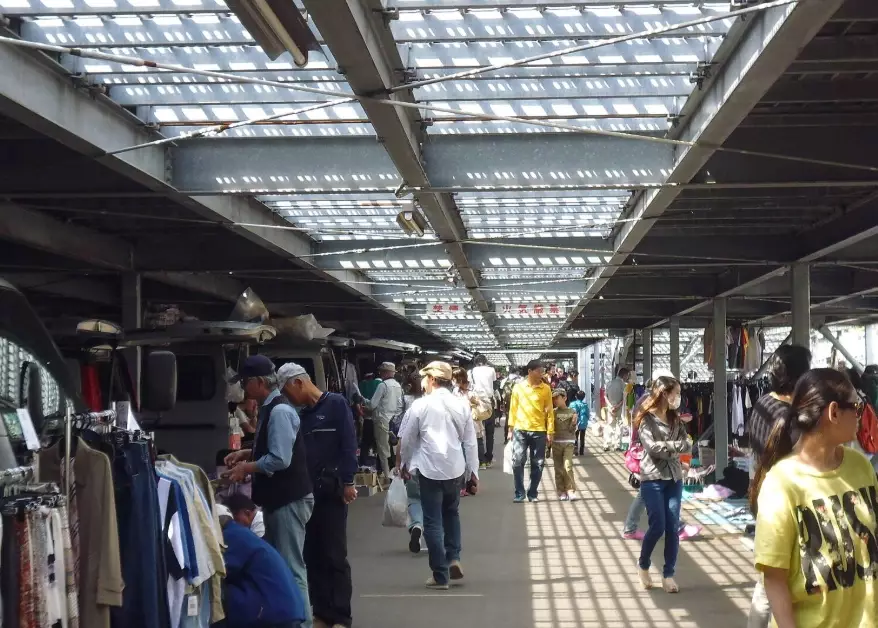
Are Tokyo Flea Markets Cash Only? The Straight Answer
Short answer: it depends on the market and the vendor. Longer answer: you need a strategy. Most Tokyo flea markets operate on a vendor-by-vendor basis. Larger, organized markets like Tokyo City Flea Market have embraced cards and digital payments, but smaller, traditional spots like Togo Shrine Flea Market? Cash is king, and I mean 100% yen bills.
I remember my first visit to Setagaya Boroichi—I brought only a credit card, thinking I was prepared. Big mistake. Half the stalls shrugged when I pulled out my Visa, and I missed out on a gorgeous ceramic vase. Lesson learned: always carry cash as your primary, with cards as backup.
This isn't just about convenience; it's about culture. Many vendors are older individuals or small-scale artisans who prefer cash to avoid transaction fees. Plus, in crowded markets, cash transactions are faster, which matters when there's a line behind you.
Top Tokyo Flea Markets and Their Payment Methods
Let's get specific. Tokyo has dozens of flea markets, but these are the ones you're likely hitting. I've put together a table with the essentials—address, hours, transport, and most importantly, payment details. Use this to plan your day.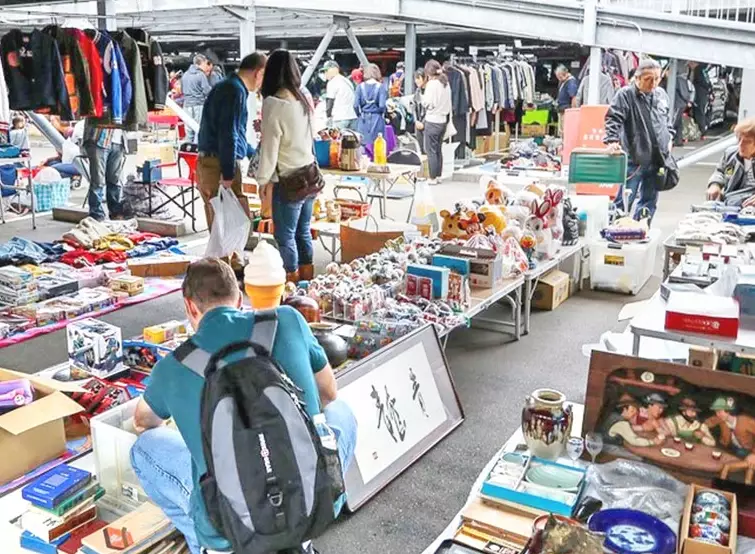
| Market Name | Address | Hours | Nearest Station | Payment Methods |
|---|---|---|---|---|
| Tokyo City Flea Market | Ohi Racecourse, Shinagawa | 9 AM - 3 PM (weekends) | Ohi Racecourse Station | Cash, Credit Cards (Visa/MC), PayPay |
| Setagaya Boroichi Flea Market | Setagaya, Tokyo | 9 AM - 8 PM (Dec 15-16 only) | Setagaya Station | Mostly cash, some cards at larger stalls |
| Togo Shrine Flea Market | Harajuku, Shibuya | Sunrise to sunset (Sundays) | Harajuku Station | Cash only |
| Oedo Antique Market | Tokyo International Forum | 9 AM - 4 PM (1st/3rd Sundays) | Yurakucho Station | Cash, some vendors accept cards |
Notice a pattern? The more touristy or modern the market, the better your card chances. But even at Tokyo City Flea Market, don't assume every stall takes cards. I'd estimate 70% do, but that 30% cash-only could have the best stuff.
Tokyo City Flea Market: A Case Study
This is Tokyo's biggest flea market, held at Ohi Racecourse. It's a paradise for vintage clothing and furniture. Payment-wise, it's relatively advanced. Most vendors display signs for PayPay or credit cards, but here's a pro tip: bring small bills. Even if they accept cards, for purchases under 1,000 yen, cash is faster and often appreciated.
Transport is easy: take the Keikyu Line to Ohi Racecourse Station, exit directly into the market. Admission is free, but arrive early—it gets packed by 10 AM. I once snagged a 1970s leather jacket for 5,000 yen using my Suica card, but I've also seen tourists turned away for trying to pay with large 10,000 yen notes.
Setagaya Boroichi: The Traditional Experience
Setagaya Boroichi is historic, dating back to the Edo period. It runs only two days a year in December, so timing is everything. Payment here is trickier. While the official website (from the Setagaya Ward Office) mentions some card acceptance, in practice, cash dominates. I'd say 90% of stalls are cash-only, especially for food items like grilled mochi.
Get off at Setagaya Station on the Setagaya Line, and it's a short walk. Hours are long, but go in the morning for the best selection. Last time I went, I withdrew 30,000 yen from a 7-Eleven ATM nearby—it was enough for gifts and snacks, but I wished I'd brought more small change.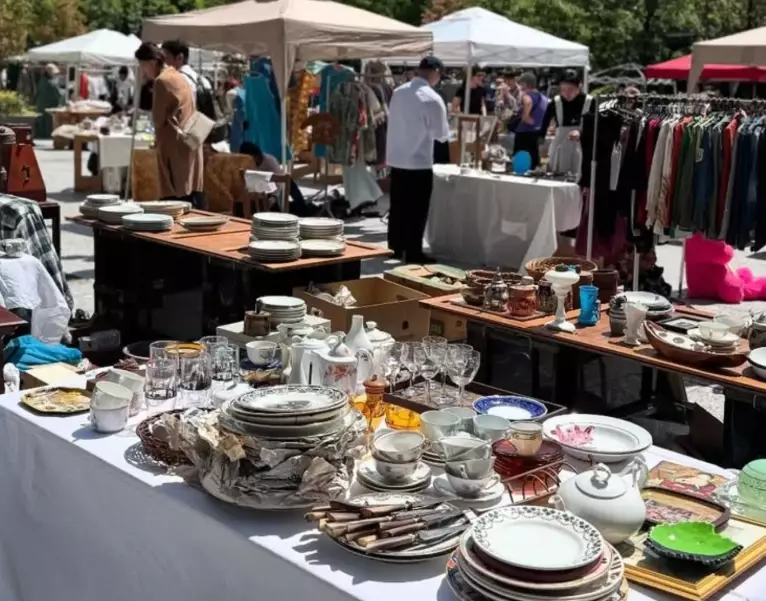
Why Cash is Still King at Many Flea Markets
You might wonder, in a tech-savvy city like Tokyo, why the cash reliance? It's not just tradition; there are practical reasons. First, transaction fees: credit card companies charge vendors around 2-4%, which eats into their slim margins. For a small-time seller offering handmade pottery, that's a big deal.
Second, speed. Flea markets are chaotic, with hundreds of shoppers buzzing around. Cash transactions are instant—no waiting for card readers to connect, no signature required. I've seen vendors get frustrated when tourists fumble with cards during peak hours.
Third, tax considerations. Some vendors operate informally, and cash keeps things simple. This isn't to say it's shady; it's just how many local markets function. A vendor once told me, "Cash is honest—I know exactly what I've earned."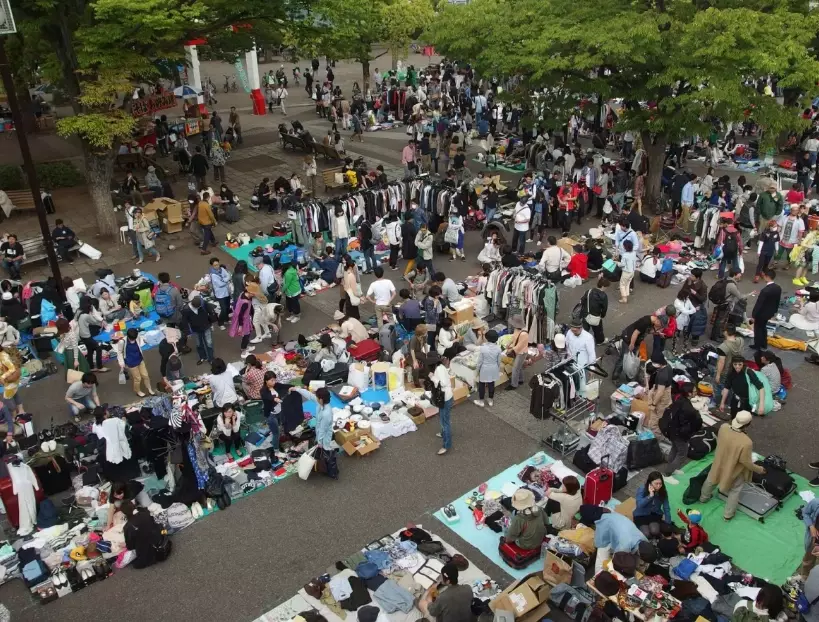
How to Plan Your Payment Strategy: Expert Tips
Based on my years of flea market hopping, here's a foolproof plan. Think of it as a layered approach: cash first, cards second, digital as a bonus.
Step 1: Withdraw Cash in Advance. Don't rely on ATMs at the market. They exist, but lines can be long, and some might not accept foreign cards. Hit a 7-Eleven or Japan Post Bank ATM the day before—they're everywhere and work with international cards. Withdraw in multiples of 10,000 yen, but ask for smaller bills. I usually get 20,000 yen with a mix of 1,000 and 5,000 yen notes.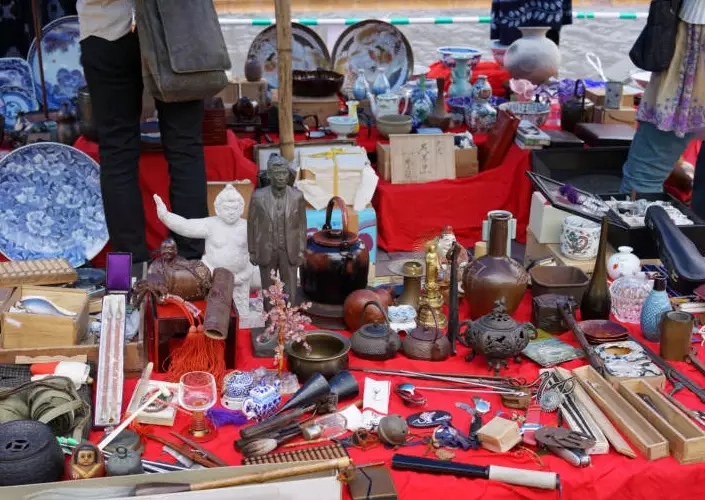
Step 2: Bring a Credit Card with No Foreign Fees. Visa and Mastercard are widely accepted where cards are taken. American Express? Less so. Use it for bigger purchases, like that vintage record player for 15,000 yen. But always ask first—"Kurejitto kaado de daijoubu desu ka?" (Is credit card okay?)—to avoid awkwardness.
Step 3: Set Up a Digital Payment App. Apps like PayPay are huge in Japan. They're QR-code based and super fast. Some younger vendors prefer them. Download PayPay before your trip, link it to your credit card, and test it with a small purchase. I've used it at Tokyo City Flea Market, and it felt like magic—scan, done, no cash needed.
Step 4: Budget Smart. Flea markets are tempting, so set a cash limit. I recommend 30,000-50,000 yen per market day, depending on your shopping goals. Keep it in a secure wallet or money belt; pickpocketing is rare, but crowds are dense.
Personal story: On a rainy Sunday at Togo Shrine, I saw a tourist trying to bargain with a vendor using a credit card. The vendor just shook his head—cash only, no exceptions. The tourist walked away disappointed, while I snagged the item with the yen I had. Moral: preparation pays off.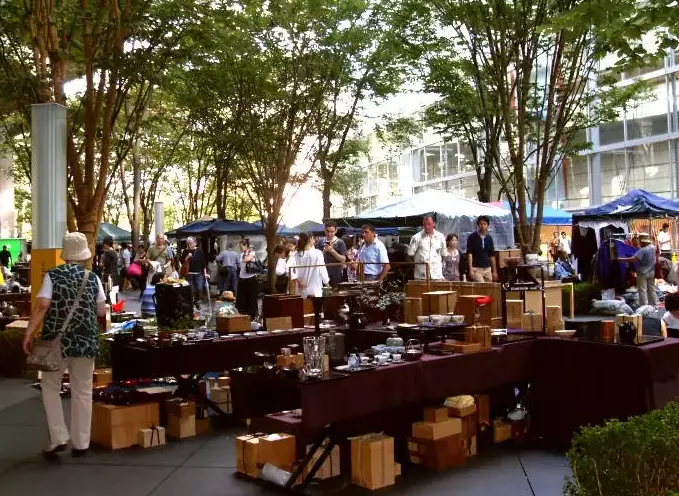
Frequently Asked Questions
Wrapping up, Tokyo flea markets are a treasure trove, but your payment method can make or break the experience. Cash is your best friend, cards are a handy sidekick, and digital payments are the new kid on the block. Plan ahead, stay flexible, and you'll leave with more than just souvenirs—you'll have stories to tell. Happy hunting!



Share Your Thoughts