I used to think you needed a sprawling estate to build a proper Japanese garden. Then I moved into a city apartment with a concrete balcony the size of a postage stamp. The desire for a quiet, green corner felt urgent, but the space said otherwise. That's when I dove deep into adapting Japanese garden design principles for tiny footprints. What I learned wasn't about shrinking a grand garden, but about distilling its essence. A small space Japanese garden isn't a compromise; it's an intense, focused meditation on nature.
The core idea is to capture a feeling, a landscape in miniature. You're not building a park. You're creating a controlled view of nature that encourages stillness. For balconies, courtyards, patios, or even a bright corner indoors, the principles hold true. It's about illusion, balance, and meticulous choice.
What You’ll Discover
The Non-Negotiable Principles for Tiny Gardens
Forget copying photos exactly. If you just plop a lantern and some gravel in a pot, it'll feel like a souvenir, not a sanctuary. The magic lies in understanding why traditional gardens work and applying that logic to your 50 square feet.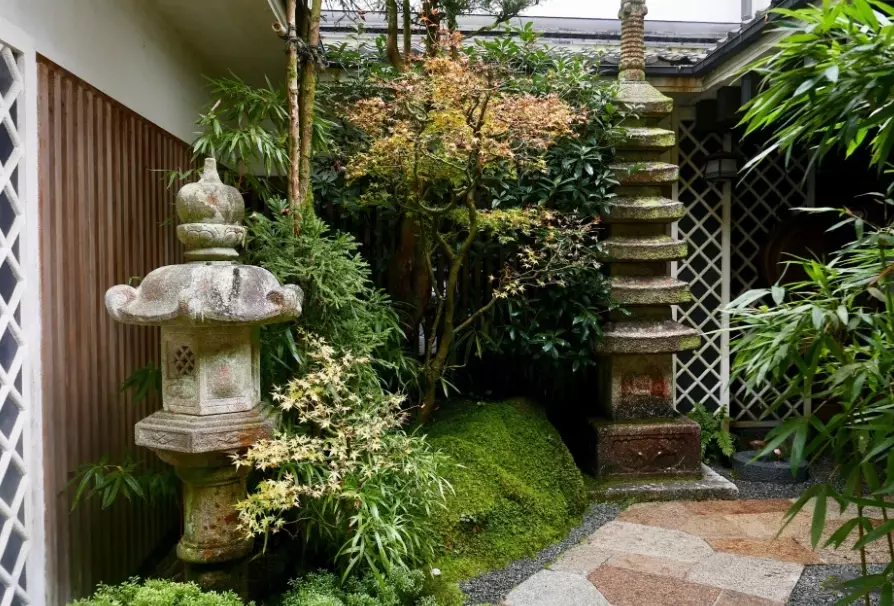
Wabi-Sabi Isn't Just an Aesthetic, It's a Maintenance Strategy
Everyone talks about wabi-sabi (the beauty of imperfection and transience), but in a small garden, it's your best friend. A mossy stone, a weathered clay pot, a Japanese maple with one elegantly crooked branch—these elements bring depth and require you to do less. In a confined area, fussy, perfectly manicured plants look tense. Choose materials that age gracefully. A common mistake is using shiny, new river rocks. Instead, seek out stones with lichen or a rough texture. Let leaf litter gather slightly in a corner. It tells a story.
"Borrowed Scenery" (Shakkei) is Your Secret Weapon
This is the master principle for small spaces. Shakkei means incorporating the view outside your garden's boundaries into the composition. Your garden doesn't end at your fence. Is there a distant tree, a rooftop, a slice of sky? Frame it. Position your key elements—a pruned plant, a stone basin—so they guide the eye toward that borrowed view. On my balcony, I placed a slender bamboo screen not to block the neighboring building, but to create a vertical frame that directs attention upward to the sky, making the space feel taller.
Asymmetry and Balance Over Symmetry
Symmetry feels formal and static. Japanese gardens thrive on dynamic balance. Think of a three-point arrangement: a large element (a focal stone), a medium element (a shrub), and a small element (a ground cover). They form an imaginary, uneven triangle. This creates visual interest and movement in a still scene. In a tiny garden, this triangle might be just 18 inches across, formed by a stone, a small azalea, and a patch of moss in a shallow tray.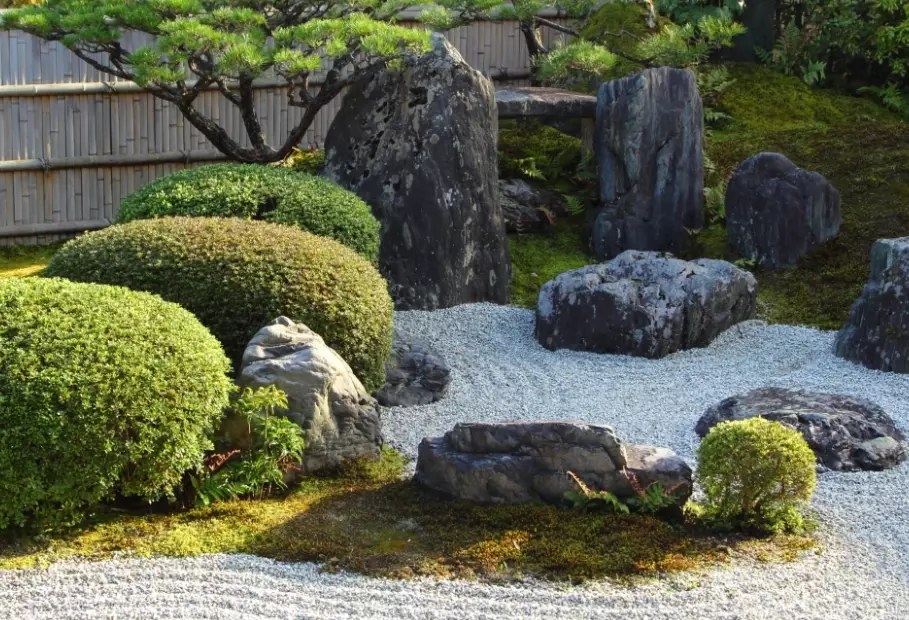
Expert Tip: The biggest error I see? Overcrowding. The urge to include "one of everything"—a lantern, a bridge, a pond, a pagoda—is strong. In a small space, this creates visual noise, not peace. Pick one or two strong symbolic elements and let them breathe. A single, well-chosen stone can represent a mountain range. A shallow bowl of water can be the ocean.
Your Small Space Japanese Garden Design Toolbox
Here’s a breakdown of the elements you can actually use, scaled for apartments and small yards. This isn't a shopping list; it's a palette to mix and match.
| Element Category | Small-Scale Options & Materials | Key Plants (Choose 2-3 max) | Decorative Accents |
|---|---|---|---|
| Ground Plane (Represents land & water) |
Fine gravel ("Shirakawa-suna" or pea gravel), moss sheets, slate chips, sand, smooth river stones for "dry stream" beds. | Moss (for shade), dwarf mondo grass, Irish moss, sedum stonecrop. | Raking patterns in gravel (simulates water), strategically placed stepping stones ("tobi-ishi"). |
| Vertical Structure (Represents trees & hills) |
Dwarf Japanese maple (Acer palmatum), pruned pine (Pinus mugo), azalea, bamboo (use clumping varieties in pots), ferns. | Japanese forest grass (Hakonechloa), boxwood (Buxus microphylla), dwarf hinoki cypress. | Bamboo fencing or screens ("sudare"), a simple wooden trellis, a stone lantern ("Tōrō") or water basin ("Tsukubai"). |
| Focal Points (Creates story & depth) |
A single, interestingly shaped stone (the "main stone" or Shuseki), a shallow ceramic or stone water basin, a minimalist sculpture. | A specimen plant in a beautiful container, like a trained pine or a single iris. | Keep it to ONE major focal point in a very small space. Let it be the star. |
| Boundaries & Enclosure (Defines the space) |
Bamboo rolls, wooden lattice panels, evergreen hedges in long planters, sheer outdoor curtains. | Clumping bamboo, tall grasses like miscanthus, evergreen shrubs in tall, narrow pots. | The boundary should feel like a gentle frame, not a solid wall. It's about hinting at separation, not total isolation. |
Notice the emphasis on dwarf and slow-growing plants. A standard Japanese maple will outgrow a balcony in three years, leading to heartbreak. Research the mature size. The Royal Botanic Gardens, Kew has excellent online resources for selecting small-space trees. For authentic stone and element ideas, looking at the portfolio of the Japanese Garden Society can provide inspiration, though their projects are large-scale.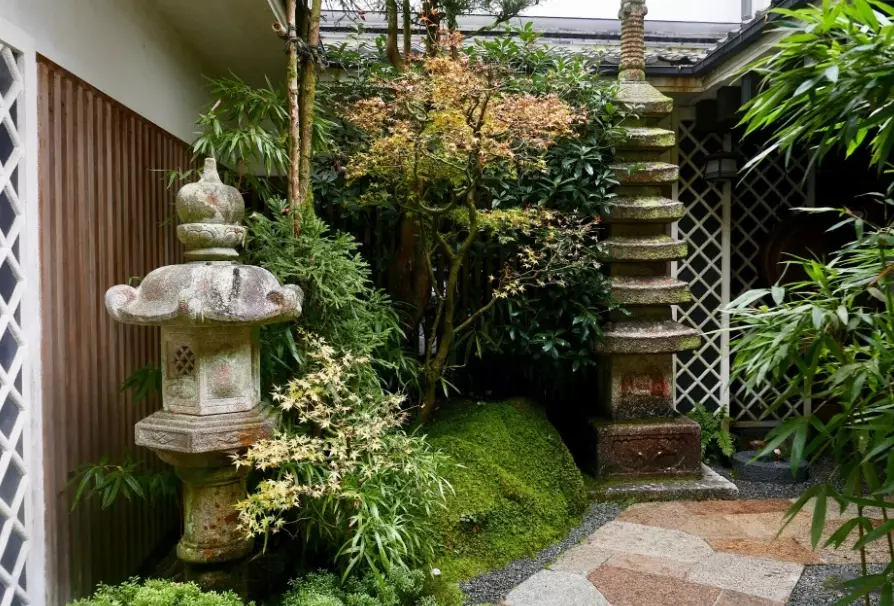
Actionable Ideas for Your Specific Small Space
Let's get concrete. How do these principles and tools translate to your actual square footage?
The Balcony Zen Corner (30-50 sq ft)
This is about creating a viewing corner, not filling the whole balcony. Use the floor-to-ceiling space.
Container Layering: Don't use pots of the same height. Get a tall, narrow pot for a dwarf bamboo or small tree to create the "back layer." Use a medium-sized, wide, shallow pot for a ground cover like moss or sedum, with a focal stone placed off-center. A low bowl with water or gravel can sit on a small stool for a third height level.
Vertical Screen: Attach a bamboo screen to the railing or wall. It instantly creates a textured backdrop, provides privacy, and allows you to hang small, lightweight elements like a simple wind chime or a kokedama (moss ball).
Flooring Trick: Use outdoor deck tiles (wood or composite) over half the balcony floor. On the other half, create a "dry area" with a layer of fine, light-colored gravel contained by a small wooden border. This simple contrast defines zones and adds texture.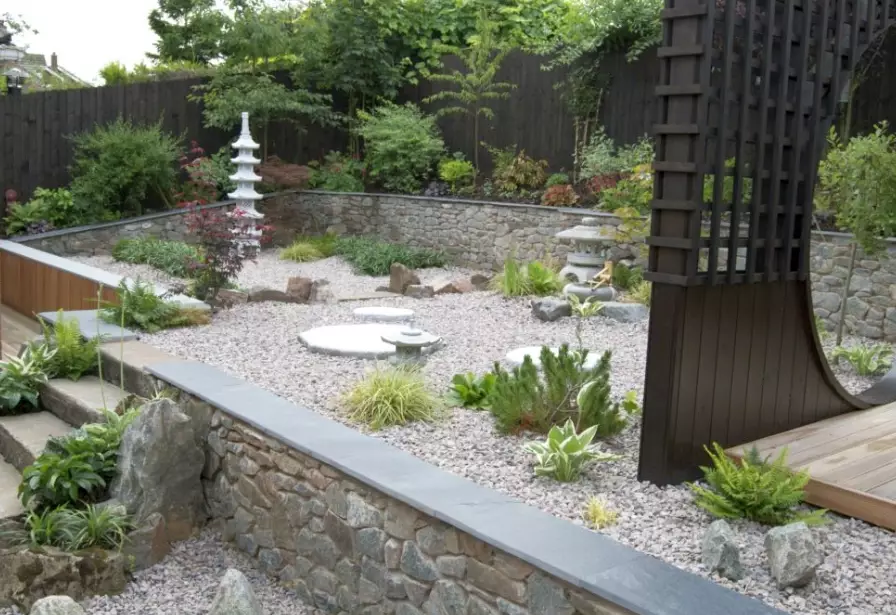
The Courtyard or Tiny Patio (50-100 sq ft)
Here you have more ground to play with, but the risk of clutter is higher.
Create a Journey: Even a 10-foot path can feel like a walk. Use irregular stepping stones (not in a straight line) through a sea of raked gravel or moss. The act of stepping from stone to stone forces a slower pace and mindfulness.
The Miniature Dry Landscape (Karesansui): This is the classic "Zen rock garden." In a 3ft x 5ft area, build a low wooden frame, line it, and fill it with 2-3 inches of fine, light-colored gravel or sand. Place three to five stones in an asymmetrical grouping (odd numbers work best). Rake swirling or straight-line patterns around them. This is pure meditation and requires almost no watering.
Water Feature Solution: A full pond is impossible. Use a shishi-odoshi (deer scarer) bamboo fountain that recirculates water from a hidden reservoir, or a simple stone basin (chōzubachi) that you fill manually. The sound and reflection are what matter.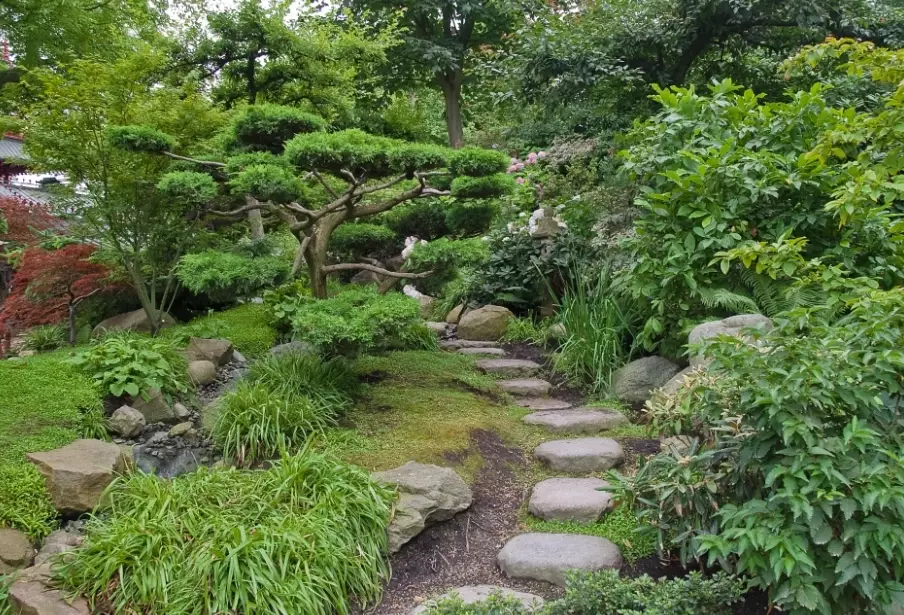
A Step-by-Step Plan: Sarah's Balcony Transformation
Let's follow a hypothetical but realistic scenario. Sarah has a north-facing balcony, 6 feet by 8 feet, in an urban area. It gets morning sun only.
Week 1: Assessment & Purge. Sarah clears everything off. She notes the sunlight pattern (4 hours of direct morning light). She measures precisely. She decides one corner will be the garden, leaving space for a small chair.
Week 2: The Base Layer. She lays down interlocking wooden deck tiles over the entire floor for a warm, unified base. She builds a simple L-shaped wooden planter box (18" high, 3ft long on each side) and places it in the chosen corner against the walls.
Week 3: Structure & Planting. In the back of the planter box, she plants a single Dwarf Japanese Maple 'Shaina' (tolerates part sun). In front of it, she plants three Dwarf Mondo Grass clumps. In the remaining soil pockets, she lays patches of sheet moss she ordered online. She attaches a 4ft x 6ft bamboo screen to the wall behind the planter.
Week 4: The Finishing Touches. She places a smooth, dark river stone (about the size of a football) off-center among the mondo grass. She fills a shallow, black glazed ceramic bowl with water and places it on a small, flat stone next to the planter. She adds one small, stone lantern (no candle, just for form) nestled near the maple's base. She stops here.
The result? A layered, textured scene with a clear focal point (the maple and stone), contrasting textures (moss, grass, wood, stone, water), and a sense of enclosure from the screen. It's maintainable, scale-appropriate, and deeply calming.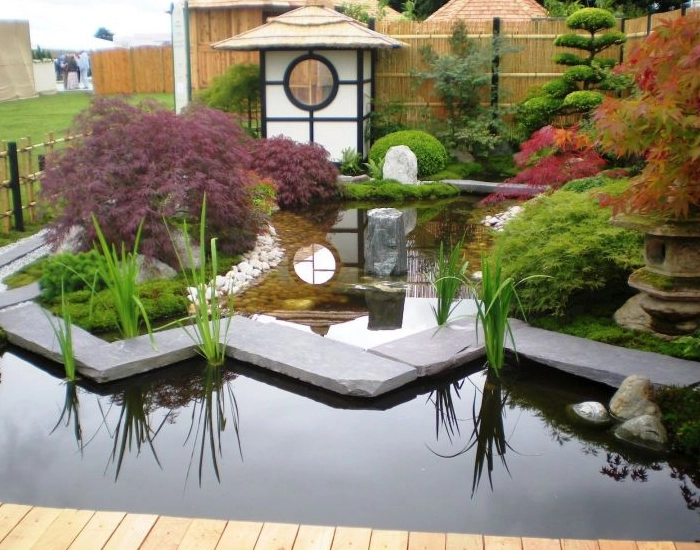
Answers to Your Tricky Small Garden Questions
Probably not a traditional red-leafed one—they need more sun to thrive and color up. You'll set yourself up for a weak, leggy plant. This is where adaptation is key. Shift your plant palette to shade-loving species that still give that layered, textured feel. A dwarf Japanese Holly (Ilex crenata) can be pruned into a beautiful, small cloud-like form. Azaleas and Rhododendrons (Satsuki varieties are prized in Japan) love acidic soil and partial shade. Ferns like the Japanese painted fern add delicate, arching structure. The principle of a dominant vertical element remains; you just change the actor.
Forcing real moss in full sun is a battle you'll lose. It's a classic mistake. Instead, use moss as an accent only in the shadiest, dampest micro-climate of your setup (perhaps under the overhang of your tree). For the majority of your "ground cover," use substitutes that give a similar lush, carpeted effect but are drought-tolerant. Dwarf Mondo Grass (Ophiopogon japonicus 'Nana') is the number one alternative—it's tough, evergreen, and looks like dark green grass. Sedum (Stonecrop) varieties like 'Angelina' or 'Blue Spruce' offer fantastic texture and color, spreading slowly and needing minimal water. Irish Moss (Sagina subulata) is another good option for partial shade areas that get some moisture.
I'd advise against it. The material matters immensely for wabi-sabi. Plastic and shiny resin look fake and will degrade poorly under UV light, becoming brittle and discolored. They break the illusion of natural, enduring materials. If your budget is tight, invest in one good, small element made of real stone, cast concrete, or ceramic. A single, beautiful, hand-forged iron kakehi (water ladle) resting on a real stone has more presence than a dozen plastic ornaments. Alternatively, let a beautifully shaped natural stone or a carefully pruned plant be your sculpture. Authenticity in materials, even if you only have one or two, trumps quantity every time in a small Japanese garden.

Share Your Thoughts