Quick Guide
- The Core Cost: Breaking Down the Mount Fuji Climbing Pass
- Beyond the Pass: The Real Total Cost of Climbing Mount Fuji
- How to Actually Pay the Mount Fuji Hiking Fee & Make Reservations
- Common Questions & Misconceptions About the Fee
- How to Make the Most of Your Mount Fuji Hiking Fee
- Budgeting Tips & Saving Money on Your Climb
- Final Thoughts: Is the Mount Fuji Hiking Fee Worth It?
Let's be honest, planning a climb up Mount Fuji involves more than just buying a good pair of boots. Among the logistics, one question pops up for every first-timer and even some seasoned hikers: what's the deal with the Mount Fuji hiking fee? Is it one flat rate? Do I pay at the trailhead? Can I just show up and walk?
I remember my first time planning the trip. I scoured forums and blogs, and the information was all over the place. Some said it was a donation, others called it a mandatory fee, and nobody could agree on the exact amount. It was frustrating. So, I've put together this guide to cut through the noise. We'll break down exactly what you're paying for, how much it costs for the 2024 season (and why it changed), where the money goes, and the step-by-step process to secure your pass. Consider this your one-stop shop for all things related to the cost of climbing Japan's most iconic peak.
The Core Cost: Breaking Down the Mount Fuji Climbing Pass
Okay, let's get straight to the heart of it. The Mount Fuji hiking fee isn't a single, universal ticket. The system differs depending on which of the four main trails you choose to ascend. The biggest change in recent years is the move from a voluntary donation to a mandatory charge on the most popular trail.
Here’s the current lay of the land for the official climbing season (typically early July to early September, but always check official sources as dates can shift slightly).
| Trail Name (Prefecture) | Fee Type | Amount (Yen) | Payment Point & Notes |
|---|---|---|---|
| Yoshida Trail (Yamanashi) | Mandatory Climbing Pass | 2,000 | Paid online in advance via official reservation system. A limited number of same-day passes may be available at the 5th Station, but booking ahead is strongly recommended to guarantee entry. |
| Subashiri, Gotemba, Fujinomiya Trails (Shizuoka) | Voluntary Conservation Donation | 1,000 (suggested) | Collected at donation boxes at each trail's 5th Station. While termed "voluntary," contributing is highly encouraged to support trail maintenance and conservation. |
See the key difference? The Yamanashi side (managing the Yoshida Trail, which is the easiest to access from Tokyo) has implemented a strict, pre-booked pass system. The Shizuoka side trails still operate on the older donation model, but don't let the word "voluntary" fool you—every climber should budget for this cost. Think of it as your direct contribution to keeping the mountain clean and safe.
Why Did the Mount Fuji Hiking Fee Become Mandatory?
This is a fair question. For years, it was a donation. Why the change? The short answer is overwhelming popularity and the resulting strain on the environment. Mount Fuji faced what many call "overtourism" during the climbing season. Crowds led to trail erosion, significant litter problems (despite the best efforts of volunteer clean-up groups), and safety concerns with unprepared climbers causing bottlenecks, especially near the summit for sunrise.
The local governments of Yamanashi and Shizuoka prefectures needed a more effective tool to manage visitor flow and fund essential services. Making the fee mandatory on the Yoshida Trail allows for:
- Crowd Control: The online reservation system caps daily climbers, spreading out traffic and improving the experience (and safety) for everyone.
- Dedicated Funding: The revenue is directly earmarked for trail maintenance, toilet facilities (which are another separate cost during the climb, by the way), shuttle buses, and conservation projects.
- Promoting Responsibility: It formalizes the climber's contribution to the mountain's upkeep.
Honestly, I think it's a necessary step. Having climbed it both before and after the stricter system was proposed, the difference in planning is worth it if it means a better-preserved mountain. You can read about the official rationale and the broader "Mount Fuji Climbing Rules" on the Yamanashi Prefectural Government website. The Shizuoka Prefectural Government site also has detailed information on their approach to trail management.
Beyond the Pass: The Real Total Cost of Climbing Mount Fuji
If you think your budget ends with the 2000 yen pass, I've got some news for you. The mandatory Mount Fuji climbing pass cost is just the entry point (pun intended). To plan accurately, you need to consider the whole financial picture. Let's build your total cost from the ground up.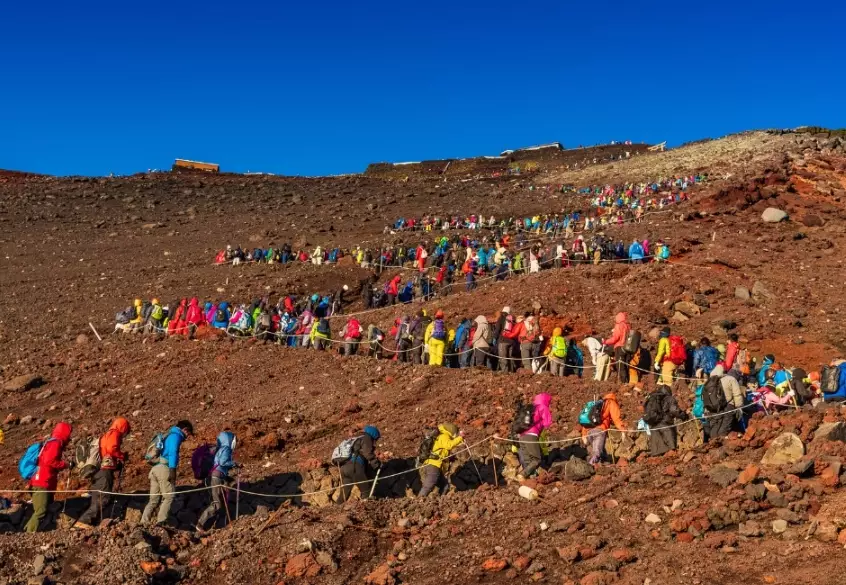
The Complete Cost Breakdown
- The Climbing Pass/Donation: 1,000 - 2,000 Yen. Your non-negotiable base fee.
- Transportation to the 5th Station: This is often the biggest variable. A round-trip bus from Tokyo (Shinjuku) to the Fuji Subaru Line 5th Station (Yoshida Trail) can cost between 3,500 to 4,500 yen. If you're driving, there's a hefty parking fee (around 2,000-3,000 yen per night) and you often need to book parking in advance during peak season.
- Mountain Hut Stay (Optional but Highly Recommended): If you're doing the classic sunset-ascent/sunrise-summit climb, you'll want to rest at a hut. A basic spot on a shared bunk (with two small meals) ranges from 8,000 to 12,000 yen. Booking these is separate from your climbing pass and fills up fast.
- On-Mountain Toilets: Yes, you pay to use the toilets on the trails. Each use costs 200-300 yen. Bring a lot of 100 yen coins! Budget at least 500-1000 yen for this.
- Food & Water: You must carry your own. Water bottles at the huts are expensive (500+ yen). Bringing supplies from below is cheaper but adds weight. Budget 1,500-2,500 yen if buying mostly on the mountain.
- Gear Rental: No proper gear? Add 10,000 - 20,000 yen for boots, rainwear, headlamp, and backpack rentals in Kawaguchiko or online.
- Insurance & Souvenirs: Travel insurance is wise. A summit stamp (goshuin) or a walking stick with brandings from stations are popular (and costly) souvenirs.
Add it all up, and a comfortable, well-planned 2-day climb can easily cost 25,000 to 40,000 yen per person from Tokyo, excluding gear rentals. The Mount Fuji hiking fee itself is a small fraction of that, but it's the essential first piece of the puzzle.
How to Actually Pay the Mount Fuji Hiking Fee & Make Reservations
This is where people get tripped up. The process isn't difficult, but you need to know where to go. Let's split it by trail.
For the Yoshida Trail (Mandatory Pass)
The system is entirely online. You cannot buy the annual pass at a convenience store in Japan like you can for some other things. The official reservation portal is managed by Yamanashi Prefecture. You'll need to:
- Visit the official Mount Fuji Climbing website (search for "Fuji Mountain Trail Reservation System"). Be careful of unofficial third-party sites that may charge extra.
- Select your desired climbing date and time slot (they use time slots to manage flow).
- Enter your details (name, number of people, contact info).
- Pay the 2000 yen per person fee by credit card.
- You'll receive a QR code via email. Bring this code (printed or on your phone) to the 5th Station on your climb day. They will scan it and give you a physical pass.
For the Shizuoka Trails (Voluntary Donation)
This is simpler in process but requires more personal responsibility. There is no advance booking for the donation itself. When you arrive at the 5th Station of your chosen trail (Subashiri, Gotemba, or Fujinomiya), you will find clearly marked donation boxes or counters.
You put 1000 yen per person into the envelope provided, fill out your details (often just nationality and group size for statistics), and drop it in the box. Some stations may have staff to assist. You'll usually receive a small token like a badge or a sticker as a thank you. Have the cash ready.
Common Questions & Misconceptions About the Fee
I've seen these questions pop up again and again in hiking groups and comments sections. Let's clear them up.
How to Make the Most of Your Mount Fuji Hiking Fee
Since you're paying, you might as well understand what it funds and how to be a responsible user of those services.
- Use the Maintained Trails: Stay on the marked path. The fee pays for the upkeep of that specific route. Straying causes erosion and damages fragile vegetation.
- Utilize (and Pay for) the Toilets: Never relieve yourself off-trail. It's a major pollutant. The fee helps maintain the bio-toilet systems, but the 300 yen you pay at each use covers the immediate operating cost. Always carry coins.
- Take Your Trash Down: This is the golden rule. There are no trash cans on the mountain. Everything you bring up, you must bring down. The fee funds education and clean-up crews, but they shouldn't be cleaning up after your snack wrappers.
- Respect the Capacity Limits: By booking your slot, you're part of the solution to overcrowding. Stick to your planned schedule if possible.
Honestly, seeing a piece of litter on the trail after knowing what the fee is for is particularly frustrating. We're all guests on this sacred mountain.
Budgeting Tips & Saving Money on Your Climb
The Mount Fuji climbing cost can add up, but you can be smart about it.
Top Money-Saving Strategies
- Avoid Peak Season: Climb in early July (right as the season opens) or in early September. The weather can be riskier, but crowds and hut prices are lower.
- Day Hike (If You're Fit): Skip the mountain hut entirely. Take an early bus up, climb to the summit, and descend all in one long, strenuous day. This saves 10,000+ yen but requires excellent fitness and an early start. Check bus schedules meticulously.
- Bring All Food and Water: Stock up at a supermarket in Kawaguchiko or Gotemba. A 2-liter bottle of water costs 150 yen at a Lawson vs. 500+ yen at the 7th Station.
- Car Pool or Use Discount Buses: Look for package deals from bus companies that include round-trip transport and the climbing pass. Sometimes they're cheaper than booking separately.
- Choose a Shizuoka Trail: The voluntary 1000 yen donation is half the cost of the Yoshida pass. The trails can be steeper and less crowded, offering a different, often more rugged experience. Research which one suits your fitness level.
Remember, the cheapest option isn't always the safest or most enjoyable. Don't skimp on proper clothing or attempt a climb without a headlamp just to save money. The mountain demands respect.
Final Thoughts: Is the Mount Fuji Hiking Fee Worth It?
Absolutely, yes. But not for the reason you might think.
It's not a transactional "fee for a view." The sunrise from the summit is priceless, but that's not what you're buying. You're contributing to the preservation of a UNESCO World Heritage site. You're funding the toilets you'll desperately need at 3 AM. You're paying the salaries of the rangers who might help you if you get into trouble. You're investing in the trail under your feet so that future generations can also have this incredible experience.
When you look at it that way, 2000 yen (about 13 USD or 12 EUR as of this writing) is a small ask. The real cost of climbing Mount Fuji is in the preparation, the travel, and the gear. The Mount Fuji hiking fee itself is the most meaningful part of that cost—it's your direct link to being a responsible climber, not just a tourist.
So, plan ahead, book your pass early, budget for the whole trip, and go with the mindset that you're a steward for the day. The mountain will thank you for it, and your experience will be all the better for it. Now that you're armed with all the facts on the cost, you can focus on the fun part: the training and the anticipation of standing on top of Japan.



Share Your Thoughts