Quick Navigation
Let's be honest. You search for "top 10 temples in Kyoto" and you get a dozen lists that all look the same. Kinkaku-ji, Kiyomizu-dera, Fushimi Inari... check, check, check. It feels like everyone just copies from each other. But having spent more time than I care to admit wandering Kyoto's backstreets and temple paths (sometimes getting gloriously lost), I think there's more to the story.
The truth is, picking the "best" temples is a bit subjective. What are you after? Instagram gold? Deep spiritual peace away from the crowds? Stunning gardens that make you forget the city outside? A history lesson that comes to life?
So this isn't just another regurgitated list. This is my attempt to give you a useful, balanced guide to the top 10 temples in Kyoto. I've factored in not just fame, but the actual experience. I'll tell you which ones are worth braving the tour groups for, and which hidden gems might just become the highlight of your trip. I'll even throw in a few that didn't quite make my personal top ten but are still fantastic, because choices are hard.
How I Chose This List (And Why You Might Disagree)
Before we dive in, let me explain my method. This is crucial. If you're just looking for the most famous postcard spots, you'll find them here. But I also wanted to include temples that offer something unique—a special atmosphere, an incredible view, a niche piece of history.
My criteria were a mix of the objective and the totally personal:
- Cultural & Historical Significance: Is it a UNESCO site? Did something major happen here?
- Architectural & Artistic Beauty: From the main hall to the rock gardens.
- The Overall Visitor Experience: This is the big one. Crowds, accessibility, the "feel" of the place.
- Variety: I wanted this guide to the top 10 temples in Kyoto to cover different types—Zen gardens, mountain hikes, golden pavilions, moss paradises.
Okay, enough preamble. Let's get to it.
The Definitive List: Top 10 Temples in Kyoto
Here they are, ranked from the absolute must-see (even with the crowds) to the wonderfully underrated. Think of this as your priority list.
Kinkaku-ji (The Golden Pavilion)
Let's get the obvious one out of the way first. Yes, it's crowded. Yes, it's a bit of a tourist conveyor belt. You follow a set path, it's over quickly. So why is it number one on almost every list of the top 10 temples in Kyoto, including mine?
Because when you turn that corner and see the Golden Pavilion (Rokuon-ji is its real name) reflecting in the pond, it's genuinely breathtaking. The photos don't do it justice. The gold leaf shimmers against the green pines and the blue sky. It's surreal. It's the postcard come to life.
Best for: That iconic, jaw-dropping photo. First-time visitors.
Skip if: You hate crowds and prefer a slow, meditative experience.
My Tip: Visit on a sunny day. The gold doesn't pop as much when it's overcast. Also, the stroll through the lovely garden after the pavilion is often overlooked. Take your time there.
Kiyomizu-dera
Perched on the side of Mount Otowa, Kiyomizu-dera is a beast of a temple complex. The main hall's wooden stage, jutting out over the hillside, is an engineering marvel built without a single nail. The view over Kyoto is spectacular, especially during cherry blossom or autumn foliage season.
But here's the thing—Kiyomizu-dera is more than a viewpoint. The approach up the historic Sannenzaka and Ninenzaka slopes is half the fun (and lined with shops selling pickles, pottery, and matcha soft-serve). The complex itself is vast. Most people see the stage and leave. Big mistake.
Wander to the Jishu Shrine (for love fortunes), the Otowa Waterfall where you drink for health or wisdom (use the sanitized cups, please!), and the quieter sub-temples in the back. You can easily spend half a day here.
Fushimi Inari Taisha
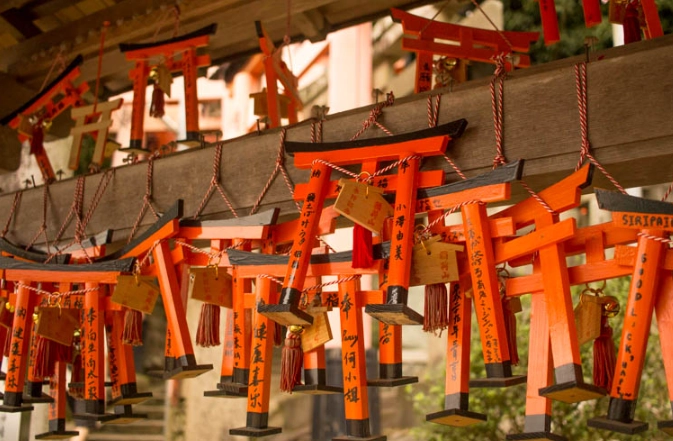
This is arguably the most iconic image among the top 10 temples in Kyoto: thousands of vibrant orange torii gates winding up a forested mountain. It's a Shinto shrine, not a Buddhist temple, but no Kyoto list is complete without it.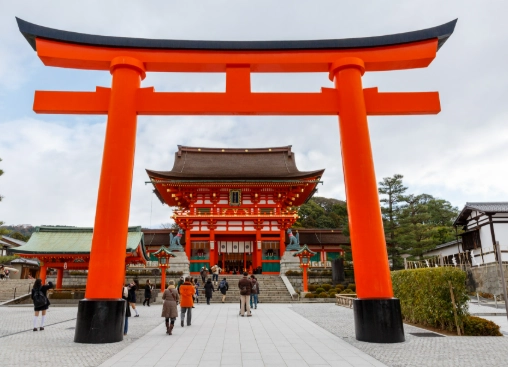
The key to enjoying Fushimi Inari is to walk past the first crowded section. Everyone clusters at the base, takes the same photo, and leaves. The path splits into a loop up the mountain. The higher you go, the thinner the crowd. You'll find quiet, mossy paths and smaller gates donated by individuals.
The full hike takes 2-3 hours round-trip to the summit. You don't need to go all the way for a great experience. Just going 30 minutes up gets you to some beautiful, peaceful spots.
Pro Tip: Visit very early in the morning (before 7 AM) or later in the evening (it's open 24 hours). The gates are lit up at night, creating an entirely different, magical atmosphere.
Ryoan-ji
This is where Kyoto's Zen heart beats. Ryoan-ji is world-famous for its karesansui (dry landscape) rock garden. Fifteen rocks arranged on raked white gravel, surrounded by a clay wall. That's it. No trees, no water.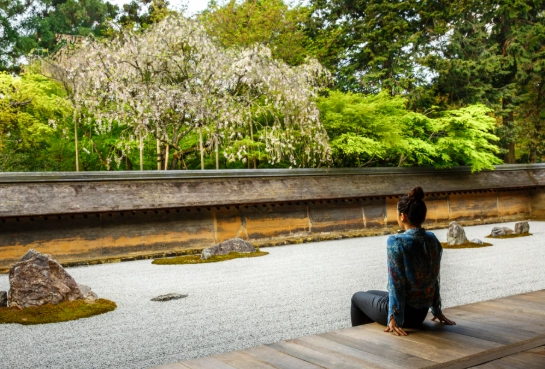
You sit on the veranda and just... look. The design is such that you can never see all fifteen rocks from any single vantage point. It's a meditation on imperfection and perspective. Some people find it profoundly peaceful. Others (and I've heard this) think it's "just a bunch of rocks." I'm in the former camp. There's a reason it's a UNESCO World Heritage site and a pillar of any serious top 10 temples in Kyoto list.
Don't miss the rest of the grounds, though. The large pond garden (Kyoyochi Pond) is a beautiful, leafy contrast to the austerity of the rock garden.
Ginkaku-ji (The Silver Pavilion)
Kinkaku-ji's often-overlooked cousin. It was never actually covered in silver, but the intended effect was to reflect moonlight. What it lacks in metallic sheen, it more than makes up for in sublime garden design.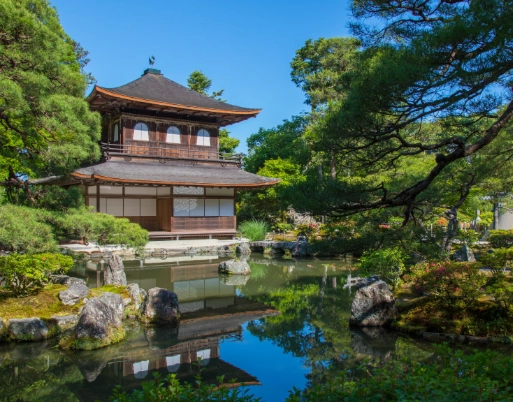
The stroll garden here is a masterpiece. You walk a path past the elegant pavilion, beside a perfect, raked sand cone called the "Moon Viewing Platform," and up a hillside through meticulously maintained moss and trees. The view back down over the entire complex is one of the most composed, picture-perfect scenes in Kyoto.
It feels more intimate and contemplative than Kinkaku-ji. The Philosopher's Path starts right outside the gate, so you can easily combine the two.
Tenryu-ji
Located in the Arashiyama district, Tenryu-ji is often the first stop on an Arashiyama day. And for good reason. Its garden, designed by the legendary master Muso Soseki, is a classic "shakkei" (borrowed scenery) garden. It seamlessly incorporates the backdrop of the Arashiyama mountains into its design, making the garden feel infinitely larger.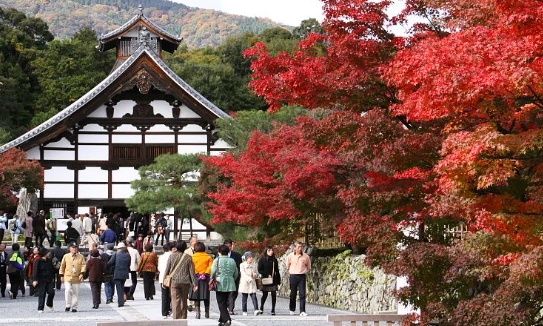
Sitting on the veranda of the main hall, looking out over the pond with the weeping cherries and the distant hills, is a masterclass in tranquility. The temple buildings themselves are also impressive (though largely reconstructions after fires).
Nanzen-ji
This massive Zen temple complex at the base of the Higashiyama mountains feels more like a peaceful district than a single temple. The entrance is dominated by a huge, incongruous red-brick aqueduct built during the Meiji period—a weird but cool blend of old and new.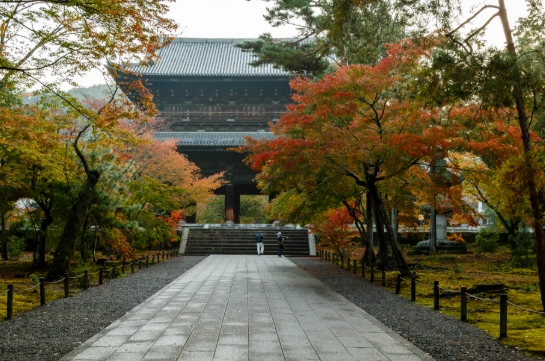
What I love about Nanzen-ji is the scale and the options. The main hall (Hojo) has another superb rock garden. But you can also pay small separate admission fees to enter several of its sub-temples (tatchu), each with its own character.
Konchi-in has a beautiful, compact garden with a crane and turtle island design. Tenjuan is famous for its pond garden and spectacular autumn illuminations. You can pick and choose based on your interest.
It's less of a tourist magnet than some others, so it often feels more spacious and calm, making it a true contender for the top 10 temples in Kyoto for those seeking depth.
Saiho-ji (The Moss Temple)
Also known as Kokedera, Saiho-ji is the trickiest one on this list to visit, and that's part of its appeal. You cannot just walk in. You must apply for a reservation in advance by sending a return postcard (yes, snail mail) or, more recently, through an online reservation system on their official website. There's a significant admission fee (around 4000 yen).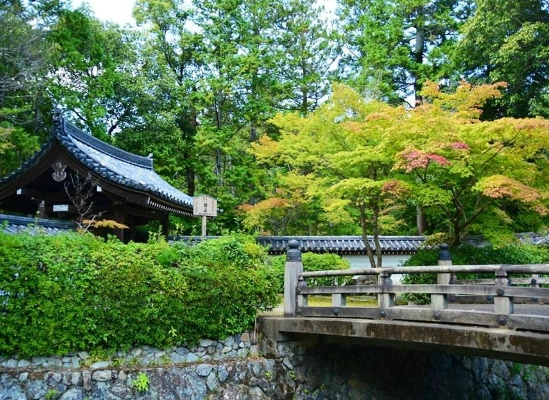
Why the hassle? To protect the moss. The garden is a surreal, ethereal world of over 120 varieties of moss covering the ground like a vibrant green carpet. The visit includes a period of sutra copying (shakyo) as a form of meditation before you are allowed to walk the circular path around the garden's heart-shaped pond.
Is it worth it? If you love unique, tranquil gardens and don't mind the procedure and cost, absolutely. It's an experience, not just a sightseeing stop. The silence, broken only by birdsong, is profound.
Byodo-in (in Uji)
Okay, this one is technically in Uji, a short train ride south of Kyoto. But it's so important and so stunning that it earns a spot on any extended top 10 temples in Kyoto list. You might recognize it—it's on the back of the 10-yen coin.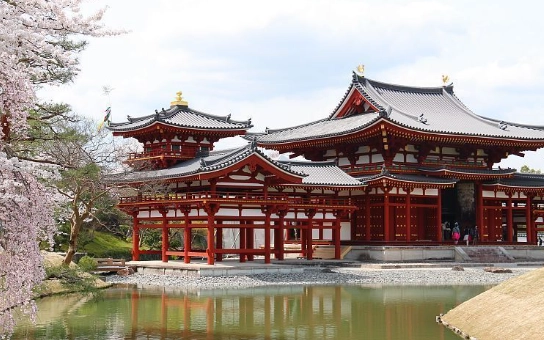
The Phoenix Hall (Hoo-do) appears to float on a large pond. Its elegant, winged shape is a pinnacle of Heian-period architecture. The interior houses sublime statues of Amida Buddha and celestial beings. Due to preservation, you can only enter the Phoenix Hall on a timed, guided tour (extra fee), but seeing it from the garden is the main event.
Uji is also famous for its high-quality matcha. Pair a visit to Byodo-in with a matcha tasting at one of the historic tea houses along the river for a perfect half-day trip.
For more on Uji's cultural significance, the Uji City official website has excellent historical resources.
Tofuku-ji
I'm ending this list of the top 10 temples in Kyoto with a temple that is arguably home to the most dramatic autumn foliage view in the city. The Tsutenkyo Bridge, a covered walkway that spans a valley of maple trees, is absolutely engulfed in red and orange in late November.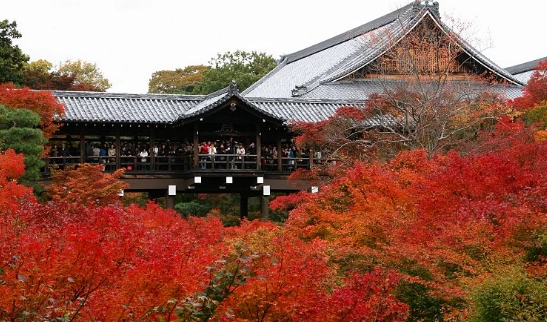
But Tofuku-ji is great year-round. It has several modern rock gardens in the Hojo (head priest's quarters), designed in the 20th century. One is a checkerboard of moss and stone. Another uses just stones and gravel to represent the Big Dipper. They offer a fascinating contrast to the ancient garden at Ryoan-ji.
It's a bit farther south, so it gets fewer crowds than the Higashiyama giants, except during the peak of koyo (autumn colors). Then, it's packed—but for a very good reason.
Planning Your Temple Run: A Practical Comparison
Okay, you've seen the list. But how do you actually plan your days? You can't see all ten in one go. Here’s a breakdown to help you choose based on location and vibe.
| Temple | Best Season | Crowd Level | Nearest Area / Combo Tip | Time Needed |
|---|---|---|---|---|
| Kinkaku-ji | Sunny winter day (snow is magical), Spring | Very High | Northwest Kyoto. Pair with Ryoan-ji (they're close). | 45-60 min |
| Kiyomizu-dera | Autumn (foliage), Spring (cherry blossoms), Early morning any time | Very High | Higashiyama. Start here, walk down Sannenzaka to Gion. | 2-3 hours |
| Fushimi Inari | Early morning or evening, Any season | High at base, Low on trail | Southern Kyoto. A standalone trip. | 1-3 hours (flexible) |
| Ryoan-ji | Any time, quiet weekdays | Medium | Northwest Kyoto. Easy combo with Kinkaku-ji. | 45-60 min |
| Ginkaku-ji | Spring, Autumn | Medium-High | Higashiyama. Start of the Philosopher's Path (walk to Nanzen-ji). | 60 min |
| Tenryu-ji | Spring, Autumn | High | Arashiyama. Gate leads to Bamboo Grove. | 60 min |
| Nanzen-ji | Autumn (Tenjuan illuminations) | Medium | Higashiyama. End of Philosopher's Path. | 1-2 hours (flexible) |
| Saiho-ji | Rainy season (moss is lush), June | Low (by reservation only) | Western Kyoto. A dedicated visit. | 90 min (fixed) |
| Byodo-in | Spring, Autumn | Medium | Uji (day trip). Combine with matcha and Ujigami Shrine. | 90 min |
| Tofuku-ji | Late November (autumn) | Very High in autumn, Low otherwise | Southern Higashiyama. Can walk to Fushimi Inari (long walk). | 60-90 min |
Honorable Mentions (The "Next 5")
Kyoto has over 1600 temples. Limiting a guide to the top 10 temples in Kyoto feels almost cruel. Here are five more that could easily swap in depending on your taste:
- Daitoku-ji: A huge walled complex of Zen sub-temples. It's quiet, serious, and you can explore several different small temple gardens (like Daisen-in and Koto-in) at your own pace. A haven for garden lovers.
- Kodai-ji: In Higashiyama, near Kiyomizu-dera. Famous for its beautiful bamboo groves (smaller but atmospheric), night illuminations, and a modern sand and moss garden.
- Nishi Hongan-ji & Higashi Hongan-ji: These two massive Jodo Shinshu sect temples near Kyoto Station are free to enter. They showcase overwhelming scale and grandeur—some of the largest wooden structures in the world. A great option if you're short on time or money.
- Shoren-in: Known as the "Awadachi Palace," it feels more like an aristocratic villa than a temple. The garden is lovely, and you can sit on the veranda overlooking it. It's rarely crowded and has a very relaxed, intimate feel.
- Enko-ji: A small, stunning temple in northern Kyoto. Its hilltop garden offers one of the best panoramic views of the city, especially in autumn. It's a local favorite for a reason.
Answers to Questions You're Probably Asking (FAQ)
What should I wear to Kyoto temples?
Comfortable shoes are non-negotiable. You will walk on stone, gravel, and uneven paths. Some temples require you to remove your shoes to enter the main halls (they provide slippers, but your own socks are a good idea). Dress modestly out of respect—avoid super short shorts or tank tops. Layers are good; temples can be cool inside even on a hot day.
Is the Japan Rail Pass useful for getting to these temples?
For most temples within central Kyoto, no. The JR Pass is great for shinkansen travel between cities. In Kyoto itself, you'll primarily use city buses, the subway, and private train lines (like Keifuku or Randen). A one-day bus pass or a rechargeable IC card (Suica/Pasmo) is far more useful. The JR Pass can get you to Uji for Byodo-in (on the JR Nara Line) and to Fushimi Inari (also on the JR Nara Line). For official transport info, the JR West website and Kyoto City Transportation Bureau are reliable sources.
How many temples should I visit in one day?
Two, maybe three max. Temple fatigue is real. They start to blur together. Better to deeply experience two than rush through five. Pick one "major" one (like Kiyomizu-dera) and one smaller/quieter one (like Nanzen-ji or a sub-temple) for a balanced day. Combine with a stroll through a historic district, a good lunch, and a garden.
Are there combined tickets or passes?
Not really for the major temples. Each temple manages its own admission (usually 300-1000 yen, except special cases like Saiho-ji). There is a "Kyoto World Heritage Site" stamp rally booklet, but it doesn't give discounts. The best "pass" is planning your route efficiently to save on transport time.
What's the single best piece of advice for visiting the top 10 temples in Kyoto?
Go early.
Or go late.
Seriously, the difference between 8:30 AM and 11:00 AM at Kiyomizu-dera or Kinkaku-ji is the difference between a postcard and a crowded subway platform. For temples that open early or are open 24/7 (like Fushimi Inari), sunrise is a magical, quiet time. For evening illuminations (common in spring and autumn), you get a completely different, often less crowded, perspective.
Final Thoughts: Making Your Own Top 10
Look, my list of the top 10 temples in Kyoto is just a starting point. You might visit Ryoan-ji and find it boring. You might fall in love with a tiny sub-temple no one has heard of. That's the joy of Kyoto.
Use this guide to prioritize, but leave room for discovery. Get lost down a side street. Pop into a small temple that catches your eye. That unplanned moment might be what you remember most.
Kyoto's temples aren't just attractions; they are living pieces of art, history, and spirituality. Take your time, be respectful, and soak it in. And wear good shoes.

Share Your Thoughts