Quick Guide to This Article
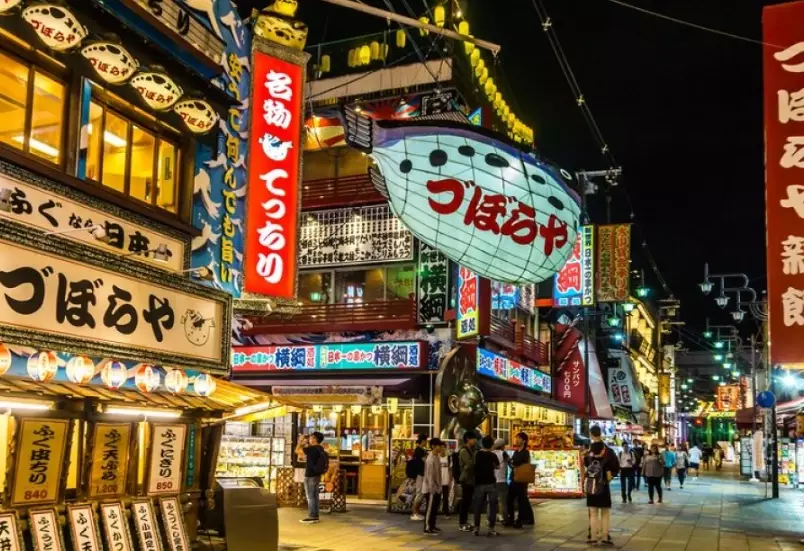
Let's be real. When you think of Osaka, you think of food. And when you think of food in Osaka, your mind probably jumps straight to those chaotic, neon-lit streets packed with tiny stalls and restaurants, each one screaming for your attention with giant plastic crabs, pufferfish lanterns, and the most incredible smells imaginable. That's the Osaka famous food street experience in a nutshell. It's overwhelming, it's glorious, and if you don't have a bit of a plan, you might just eat yourself into a stupor at the first stall you see.
I've spent a ridiculous amount of time wandering these streets, making both glorious discoveries and regrettable, overpriced mistakes. So I'm writing this to save you from the latter. This isn't just a list of places to eat. It's a survival guide. We're going to break down the main battlegrounds—the iconic Dotonbori, the bustling Kuromon Ichiba Market—and then we're going to dive into the local secrets, the back alleys where Osakans actually go to eat. We'll talk budget, etiquette, and how to navigate the sheer volume of options without getting a stress-induced stomachache before you even take a bite.
Because that's the real challenge, isn't it? With so much choice on every Osaka famous food street, how do you know where to start?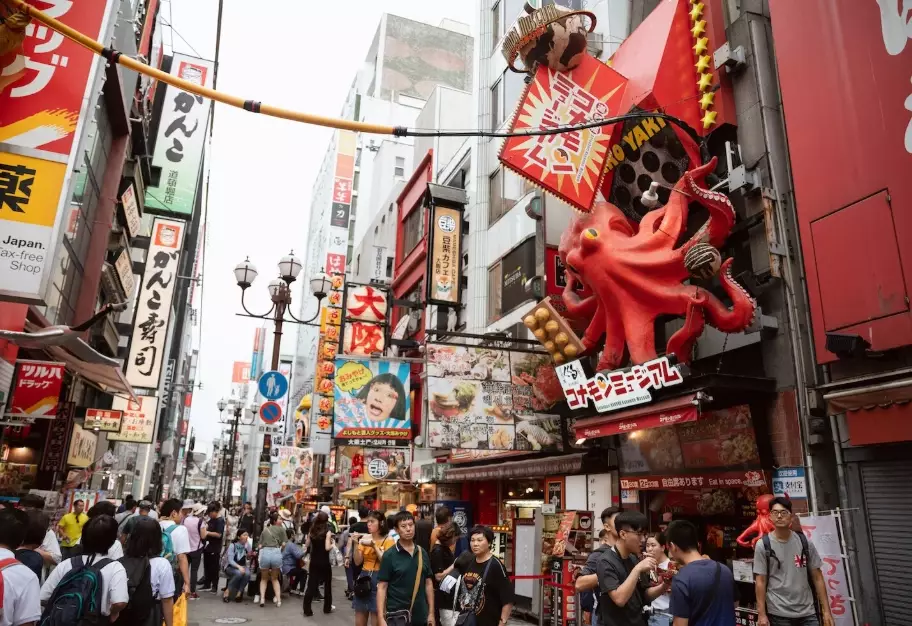
The Heart of the Storm: Dotonbori, Osaka's Most Famous Food Street
Dotonbori is the poster child. It's the one you've seen in every travel show and Instagram post. The canal lined with massive, animated signs, the constant hum of a thousand conversations, the thick, delicious air smelling of grilling meat, frying dough, and simmering broth. Calling it a single "street" is a bit misleading. It's more of a district, with the main drag along the canal and a warren of narrow side streets (called "yokocho" or "shotengai") branching off it.
The energy here is electric, but it can also be a tourist trap if you're not careful. The key is to understand the landscape.
Think of Dotonbori as having distinct layers.
The canal front is for the spectacle. You get your photo with the Glico Running Man sign, you watch the giant mechanical crab claws move, you soak in the madness. The restaurants here are often large, famous, and cater heavily to tourists. They're not necessarily bad—some are institutions for a reason—but they can be pricier and have long queues.
The real magic, in my opinion, happens when you peel back a layer. Head into the covered shopping arcades like Dotonbori Arcade or, even better, dive into the network of tiny alleys on the south side of the canal, like Dotonbori Shinchi. These narrow lanes are packed with tiny, standing-only bars (tachinomi), yakitori joints, and okonomiyaki stalls. The prices drop, the proportion of locals increases, and the atmosphere gets more intense.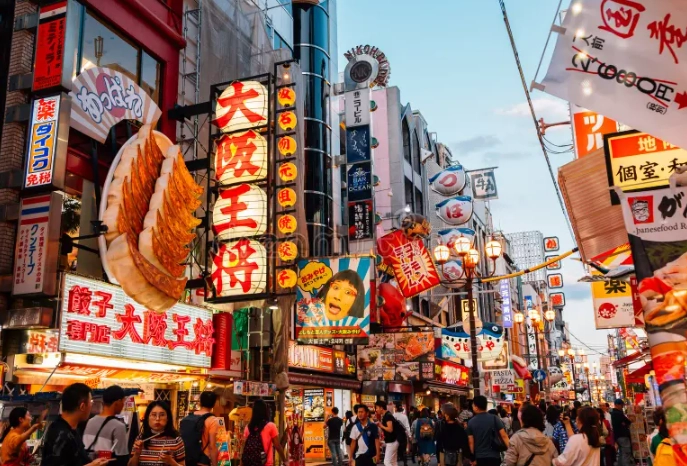
My Dotonbori Strategy: I use the main strip for a walk-and-grab snack (like takoyaki from a stall), then I head into the side alleys for a proper, sit-down meal. The contrast is half the fun.
What You Absolutely Must Try on Dotonbori
You can't try everything. Don't even attempt it. Focus on the classics that this specific Osaka famous food street does best.
- Takoyaki: The quintessential Osaka street food. Little balls of batter with a piece of octopus inside, slathered in sauce, mayo, and bonito flakes. They're served blisteringly hot. Pro tip: Let them cool for a minute unless you enjoy burning the roof of your mouth. A famous spot is Kukuru (look for the octopus sign), but honestly, you'll do fine at most stalls. The difference is often subtle.
- Okonomiyaki: Osaka's savory pancake. You'll find dedicated restaurants for this. The style here is "Kansai-style," where all the ingredients (cabbage, batter, pork, seafood, noodles if you want) are mixed together and grilled on a teppan (iron griddle) in front of you. Chibo or Mizuno are famous institutions right on the strip, but be prepared to queue.
- Kushikatsu: Deep-fried skewers of meat, seafood, and vegetables. The rule is absolutely no double-dipping your skewer in the shared sauce pot. You'll see signs everywhere reminding you. Daruma is a legendary, no-frills chain with several branches in the area. It's cramped, smoky, and fantastic.
I made the mistake once of having a full meal at one of the giant crab places on the main strip. It was fine, but it cost triple what a similar meal would have cost two streets over. The premium is for the view and the sign, not always the food.
The Kitchen of Osaka: Kuromon Ichiba Market
If Dotonbori is the flashy entertainer, Kuromon Ichiba is the skilled craftsman. Known as "Osaka's Kitchen," this is a 600-meter-long covered market that has been supplying the city's restaurants and households for over a century. In recent years, it's become a major destination for food-loving tourists, but it still maintains a gritty, working-market feel in many sections.
Here, the Osaka famous food street vibe is less about neon and more about pristine seafood displays, mountains of pickles, and the sound of butchers cleaving meat. You can absolutely come here just to eat—and you should—but you can also see where the city's chefs shop.
The market is linear and easier to navigate than Dotonbori's maze. Start at the south end (closest to Nippombashi station) and work your way north.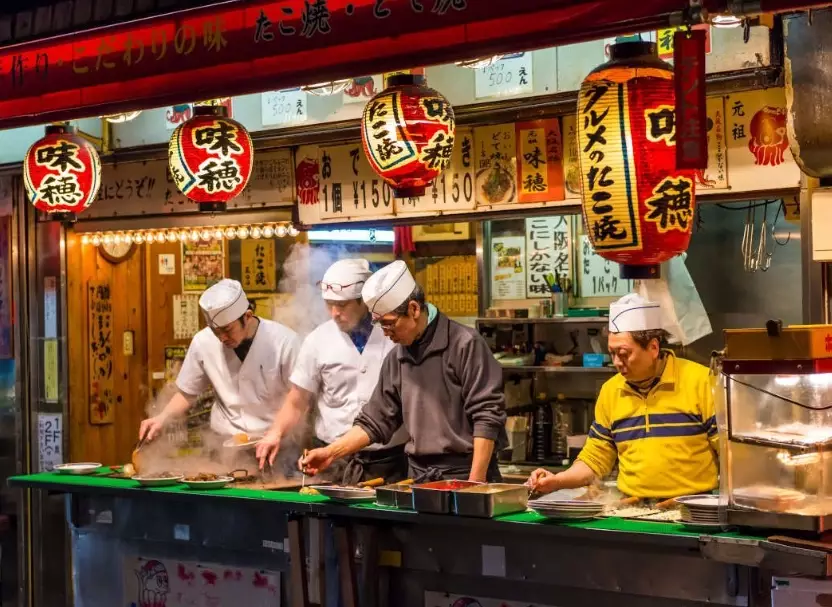
Insider Tip: Go hungry and think of it as a progressive lunch. Buy small portions from multiple vendors. Share a few oysters here, a skewer of grilled scallops there, a piece of tuna sashimi from a fishmonger. It's the best way to experience the variety.
Kuromon Ichiba Must-Eats & How to Shop
The star here is seafood. The quality is incredibly high, and because you're buying from the source, it can be surprisingly affordable for what you get.
- Fresh Oysters (Kaki): Grilled or raw, they're huge, creamy, and delicious. A couple of vendors specialize in them.
- Grilled Crab Legs & Scallops: Often cooked on little grills right at the stall with a dab of soy-based sauce. Simple and spectacular.
- Tuna (Maguro) Sashimi: Some fishmongers will sell you a small tray of freshly cut sashimi for a few hundred yen. Eat it on the spot. It doesn't get fresher.
- Strawberries: In season, look for vendors selling perfect, giant Japanese strawberries. They're a sweet palate-cleanser.
A word of caution. The central walkway gets extremely crowded, especially around midday on weekends. It's a slow shuffle. If crowds bother you, try to arrive right when it opens (most stalls open around 9 am). Also, while many vendors are used to tourists, it's still a market. Pointing and simple phrases like "kore, hitotsu" (this, one) work perfectly. Don't handle the produce unless it's clearly meant for self-service.
I find Kuromon to be more of a genuine culinary experience than Dotonbori. You're closer to the food's origin. But it's less about sitting down for a meal and more about grazing your way through.
Beyond the Giants: Hidden Food Streets & Local Haunts
If you only hit Dotonbori and Kuromon, you've seen the highlights, but you've missed the soul. Osaka's food culture thrives in its neighborhoods. Here are a couple of areas that offer a more local, less polished version of an Osaka food street.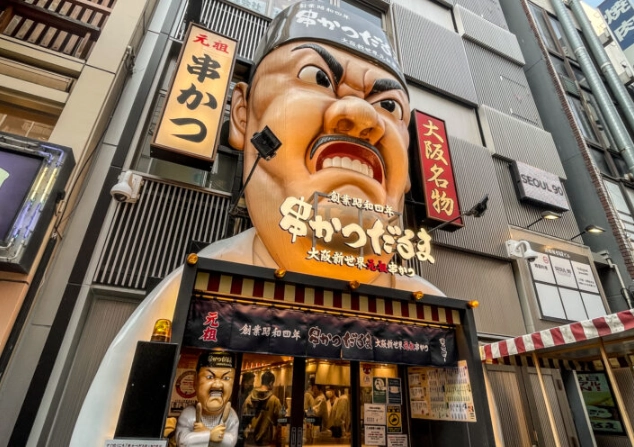
Shinsekai & Janjan Yokocho
Shinsekai is a wonderfully retro, slightly rough-around-the-edges district centered around Tsutenkaku Tower. It feels frozen in the Showa period. Running underneath the tower's legs is Janjan Yokocho, a narrow, covered alley crammed with tiny kushikatsu and kushiage (a more refined version of kushikatsu) restaurants.
This is where you go for an authentic, no-nonsense kushikatsu feast. The shops are often just a counter with a few stools. The atmosphere is loud, friendly, and local. It's less about gourmet innovation and more about perfecting a simple, delicious thing. The prices are very reasonable. After eating, wander Shinsekai for a surreal, old-school Osaka vibe.
Hozenji Yokocho
This is my personal favorite hidden gem. It's a stone-paved alley, just a minute's walk from the chaos of Dotonbori, but it feels like a different world. It's quiet, lantern-lit, and lined with traditional restaurants and izakayas, many specializing in fugu (pufferfish) or crab.
It's more upscale than Janjan Yokocho, but not prohibitively so. This is where you come for a slightly more refined sit-down meal after the sensory overload of Dotonbori. At the entrance is Hozenji Temple, covered in moss, where people splash water on the statue for good luck. The contrast is pure Osaka.
Finding these spots is what turns a good food trip into a great one. It shows you the layers of the city.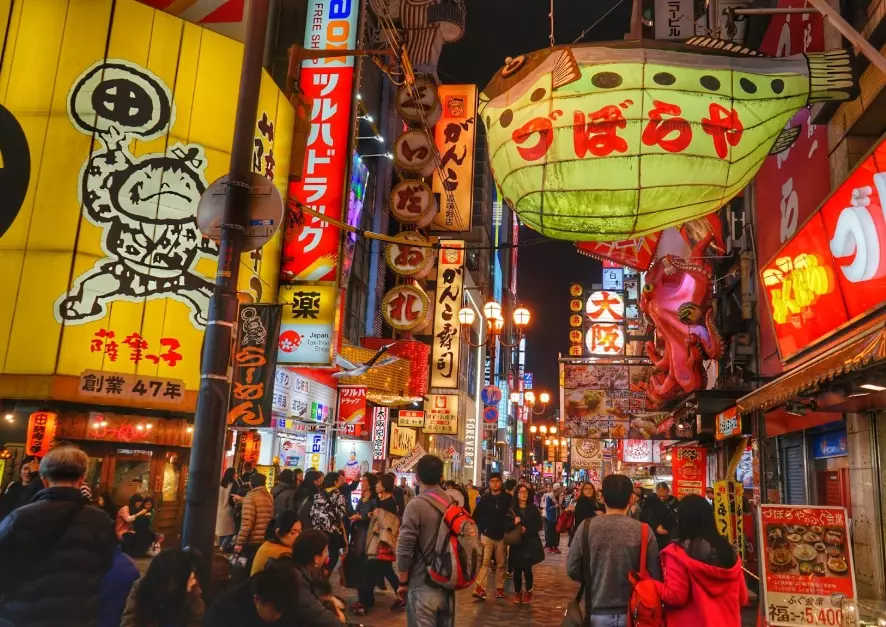
Your Practical Osaka Food Street Survival Guide
Alright, let's get down to brass tacks. How do you actually do this?
Budgeting: How Much Cash to Bring?
Osaka street food is generally affordable, but costs can add up quickly, especially if you're drinking. Most small stalls and market vendors are cash-only. Many smaller restaurants in the alleys are too.
| Item / Meal Type | Estimated Cost (Yen) | Notes |
|---|---|---|
| Takoyaki (6-8 pieces) | 500 - 800 | A perfect snack. |
| Okonomiyaki (one serving) | 1,000 - 2,000 | More if at a famous sit-down restaurant. |
| Kushikatsu (per skewer) | 100 - 250 | You'll easily eat 5-8 skewers. |
| Market Seafood (e.g., 2 oysters) | 700 - 1,200 | Price varies by type and size. |
| Izakaya Meal (food & a few drinks) | 3,000 - 5,000 per person | In the side alleys; main strip can be higher. |
My rule of thumb: For a serious half-day of grazing on an Osaka famous food street, bring at least 5,000-7,000 yen in cash per person. You might not spend it all, but you won't be caught out.
When to Go & How to Navigate
- Timing is Everything: Dotonbori is best experienced from late afternoon into the evening. That's when it truly comes alive. Kuromon Market is a daytime activity (typically 9 am - 6 pm, but many stalls start closing around 5 pm). Go to Kuromon in the late morning, then head to Dotonbori later.
- Avoid Peak Mealtimes: Try to hit popular sit-down restaurants just before or after the standard lunch (12-1) or dinner (7-8) rush. Queues can be 30-60 minutes long otherwise.
- Embrace the Queue (Sometimes): A long line of Japanese people is usually a very good sign. But use your judgment. Is it a famous place worth the wait for you, or is it just a social media hype machine? For takoyaki or kushikatsu, I rarely wait more than 10 minutes—there's always another great option nearby.
- Getting Lost is Good: On the side streets, put your map away. Wander. Look for places that are busy with locals. If there's salarymen smoking outside, it's probably a good spot.
Important Etiquette Note: This isn't a "walk and eat" culture in all areas. On Dotonbori's main strip, it's accepted because it's designed for it. In the market or on smaller streets, it's polite to eat your purchase at the stall or in a designated standing area. Never walk and eat in a nice shopping arcade or a quiet residential street. When in doubt, watch what the locals do.
Answering Your Osaka Food Street Questions (FAQ)
I get asked these questions all the time. Let's clear them up.
Is Dotonbori too touristy? Is it still worth it?
Yes, it's touristy. Unapologetically so. But that doesn't mean it's not worth it. The energy, the spectacle, the history—it's a core part of Osaka's identity. The key is to use it as a launchpad. Experience the main strip, then immediately get off it into the side alleys. The touristy part and the local part exist side-by-side.
What's the best way to find authentic places and avoid tourist traps?
Avoid restaurants with large plastic food displays out front and menus in 5 languages on the main drag. Look for places with handwritten Japanese menus, ones that are cramped and loud, or ones located down a flight of stairs or on a second floor. Check the crowd. A mix of locals and tourists is ideal. The official Osaka Tourist Information website is also a surprisingly good resource for reputable, well-established restaurants, not just hype.
I have dietary restrictions (vegetarian, halal). Is Osaka street food friendly?
This is a real challenge. Traditional Osaka street food relies heavily on dashi (fish stock), meat, and seafood. Takoyaki batter often contains dashi. Okonomiyaki sauce usually contains fish. Even vegetable kushikatsu might be fried in the same oil as meat. That said, awareness is growing. Some okonomiyaki restaurants now offer a vegetarian dashi option if you ask. Do your research beforehand. Websites like HappyCow are essential for vegetarians/vegans. For halal, look for certified restaurants; the options are limited but increasing.
How do I communicate if I don't speak Japanese?
You'll be fine. Pointing is a universal language. Many stalls have pictures or plastic food models. Learn a few key phrases: "Sumimasen" (excuse me), "kore" (this), "hitotsu" (one), "futatsu" (two), "oishii" (delicious). A smile and a sense of adventure go a very long way. Most vendors in these areas are used to foreign customers.
What's the one thing I shouldn't miss?
If I had to pick one quintessential Osaka famous food street experience, it's eating hot takoyaki from a stall on Dotonbori while watching the river of people go by. It's simple, it's messy, and it's the heart of the Osaka food spirit. For a sit-down meal, it's a counter seat at a tiny kushikatsu joint in Shinsekai or a back-alley Dotonbori izakaya.
So there you have it. A map to the chaos. Osaka's food streets aren't just places to eat; they're a form of entertainment, a cultural immersion, and a test of your appetite. Go with an empty stomach, a full wallet of cash, and a willingness to get a little lost. You might stumble upon a disappointing overpriced crab, but you're just as likely to find that perfect, smoky yakitori skewer in a alley you can't even find on a map the next day. And that's the whole point.
That's the real magic of Osaka.


Share Your Thoughts