Essential Highlights
- Before You Even Arrive: Setting the Stage
- The Arrival & Check-In Ritual: First Impressions
- Your Ryokan Room: A Tatami Sanctuary
- The Art of the Yukata
- Onsen (Hot Spring) Etiquette: The Sacred Bath
- Dining Etiquette: The Kaiseki Experience
- Common Areas and General Conduct
- The Check-Out Process
- Ryokan Etiquette FAQ: Your Quick Questions Answered
- Final Thoughts: Embrace the Experience
Let's be honest. The first time you book a stay at a traditional Japanese inn, a ryokan, a mix of excitement and mild panic sets in. You've seen the pictures—the serene tatami rooms, the steaming outdoor baths, the multi-course feasts. It looks incredible. But then your brain starts asking questions. What exactly is the etiquette for staying at a ryokan? What are the rules? What if I mess up and look like a clueless tourist?
I've been there. My first ryokan experience was in Hakone, and I spent the first hour terrified of doing something wrong. I fumbled with the yukata (the casual kimono), I wasn't sure about the onsen (hot spring) bathing procedure, and I definitely bowed way too much. But you know what? The staff were incredibly kind and patient. The experience was so profoundly relaxing and culturally immersive that it became my favorite way to travel in Japan.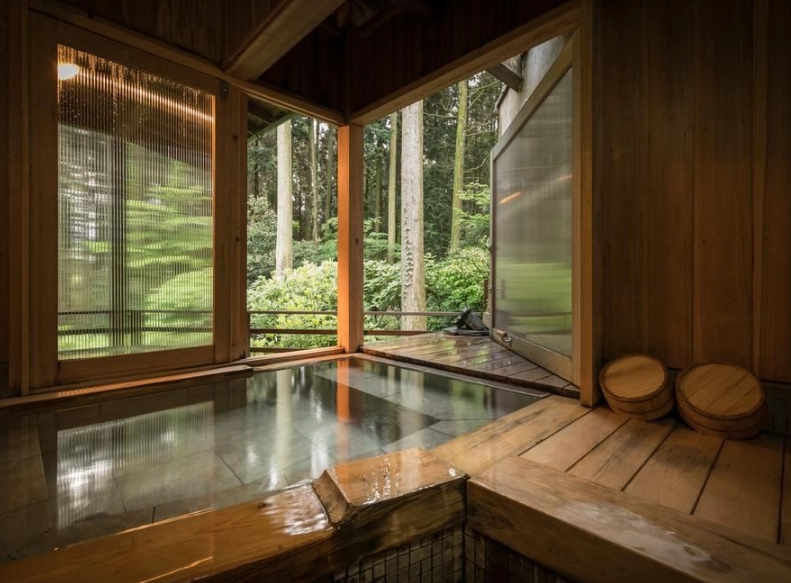
So, I'm writing this guide to save you that initial anxiety. Consider this your friendly, detailed cheat sheet. We're going to break down what is the etiquette for staying at a ryokan into simple, actionable steps. This isn't about rigid, scary rules. It's about understanding the "why" behind the customs, which makes following them feel respectful and natural, not stressful. By the end, you'll feel confident and ready to fully embrace one of Japan's most treasured travel experiences.
Before You Even Arrive: Setting the Stage
Good ryokan etiquette starts before you walk through the door. A little preparation goes a long way.
Booking and Communication
Many ryokans, especially the smaller, family-run ones, aren't like giant hotels with instant online booking. They often value direct communication. When booking, be clear about your party size, meal preferences (like dietary restrictions—crucial for kaiseki dinners), and check-in time. If you're running late, a quick phone call is appreciated. I learned this the hard way after getting stuck in train delays; a simple call smoothed everything over.
Also, understand the pricing. It's usually per person, inclusive of dinner and breakfast, and often requires a non-refundable deposit. Cancellation policies can be strict, so read the fine print.
What to Pack (and What Not To)
Pack light. Seriously. You'll be provided with a yukata to wear around the premises, slippers, and toiletries. Bringing a giant suitcase isn't just impractical; it can scuff the delicate wooden floors and tatami mats. A small overnight bag is ideal.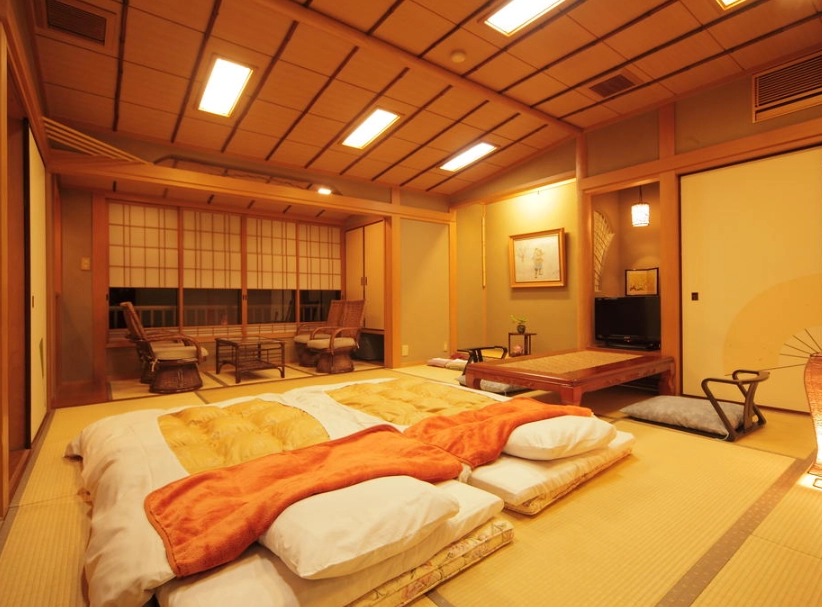
Essentials to bring include:
- Modest sleepwear: You can sleep in your yukata, but some people prefer their own PJs.
- Small towel: For the onsen, though the ryokan provides these too.
- Cash: Some older ryokans may not take credit cards, especially for small incidentals.
Leave your street shoes' mindset at the door. Literally.
The Arrival & Check-In Ritual: First Impressions
This is where the cultural immersion begins. The process is part of the experience.
You'll be greeted with a bow and a warm "irasshaimase" (welcome). A bow in return is polite. You'll then be escorted to your room, not a front desk. The check-in is often done seated on cushions around a low table in your room, over a welcome tea and sweet. It's calm and personal.
This is when the staff (often called "okami-san" or "nakai-san") will explain the house rules, meal times, and onsen hours. Pay attention. They might seem shy speaking English, but they are trying their best. A smile and patience work wonders.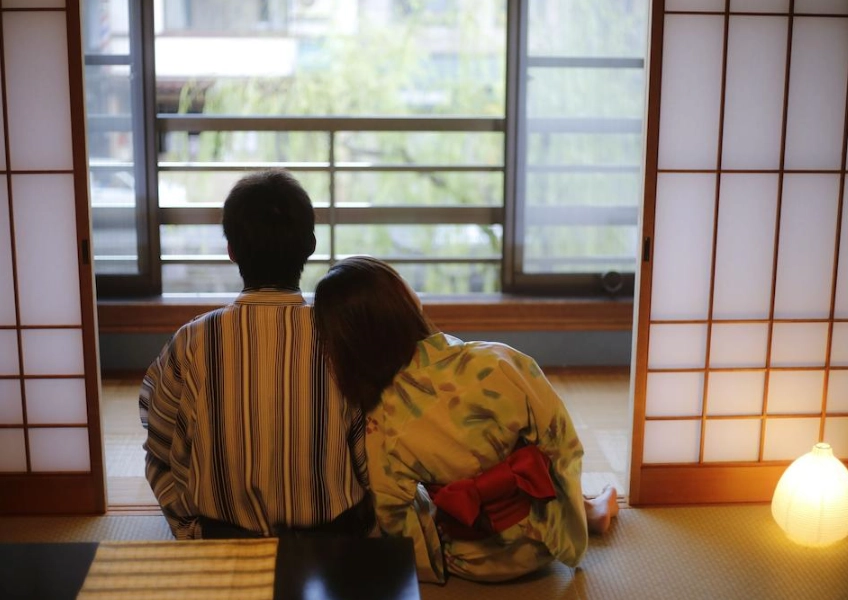
Your Ryokan Room: A Tatami Sanctuary
The room is a masterpiece of minimalist design. Understanding how to interact with it is key to ryokan etiquette.
The Tatami Mat Dance
Those beautiful, fragrant straw mats are delicate. Never drag luggage or furniture across them. Place your bag on the wooden perimeter or the provided luggage rack. Never wear shoes, slippers, or even socks with hard soles on the tatami. It's bare feet or socked feet only.
During the day, your room will have a low table and cushions (zabuton). In the evening while you're at dinner, staff will magically transform the space—clearing the table and laying out plush futon bedding on the tatami. It's one of the charming rituals of a ryokan stay.
The Slipper Shuffle - A System of Zones
Ryokans operate on a slipper hierarchy. It's confusing at first, but you'll get the hang of it.
- Room Slippers (スリッパ): These are for walking in the hallways and common areas only. You leave them at the entrance to your room (on the wooden floor, not the tatami) when you enter.
- Tatami = No Slippers: As said, bare/socked feet only in the room itself.
- Toilet Slippers (トイレスリッパ): Inside the private toilet room, there will be a separate pair of slippers, often in a different color. This is critical: You swap your room slippers for these toilet slippers *inside* the toilet room. You must never, ever walk out of the toilet room wearing the toilet slippers. It's considered highly unsanitary. Swap them back at the door.
I once walked two steps into the hallway with toilet slippers on and got the gentlest, most mortifying correction from a passing staff member. Lesson permanently learned!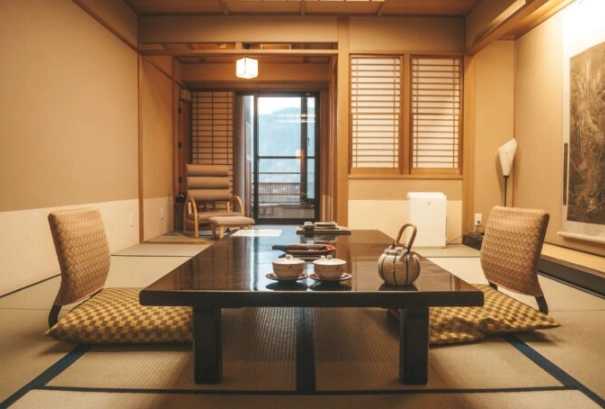
The Art of the Yukata
The provided yukata is your uniform for the duration of your stay. You can wear it to dinner, to the baths, to stroll in the garden. It's incredibly comfortable.
How to Wear a Yukata Correctly:
- Left over right: Always wrap the left side over your body first, then the right side over it. Wrapping right over left is how the deceased are dressed in traditional funerals. This is the most important rule.
- Tie the obi (belt): For women, tie it around your waist. For men, tie it around your hips. You can make a simple bow or knot at the front or side.
- What to wear underneath: You can wear underwear. Some people wear a t-shirt and shorts. The yukata is not meant to be worn naked underneath in public areas.
Don't be shy about wearing it everywhere. Seeing guests enjoy their yukata makes the staff happy—it shows you're engaging with the tradition.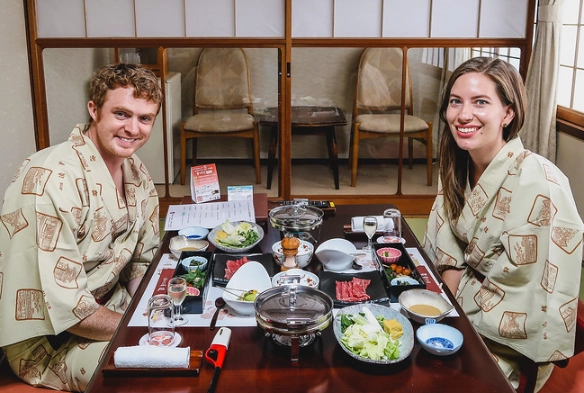
Onsen (Hot Spring) Etiquette: The Sacred Bath
This is the part that causes the most anxiety, especially regarding nudity and procedure. Let's demystify it. Understanding what is the etiquette for staying at a ryokan is incomplete without mastering the onsen.
Most ryokans have a large communal bath, separated by gender. Some have private family baths you can reserve. The rules are strict but logical—all about cleanliness.
The Step-by-Step Bathing Procedure
- Undress in the changing room. Nudity is mandatory in the actual bathing area. No swimsuits, no underwear. Bring only your small towel. Place all your clothes and your yukata in a basket or locker.
- Enter the washing area. Before you even think about getting into the main bath, you must wash thoroughly. Sit on one of the small stools in front of a shower faucet, basin, and mirror.
- Wash from head to toe. Soap up, shampoo, rinse every bit of soap off your body and hair. The goal is to enter the shared bathwater completely clean. This is the purity principle in action.
- Rinse your stool and area. Be considerate for the next person.
- Enter the bath slowly and quietly. The water is often very hot. Ease in. No splashing, no swimming. Just soak and relax. You can place your small towel on your head or on the side of the bath. Never let it touch the bath water.
- Exit, dry off in the changing room. Do not rinse off after the bath—the mineral-rich water is good for your skin. Put your yukata back on and enjoy the incredible feeling of relaxation.
No phones, no cameras, ever. It's a place of quiet contemplation. Talking is usually in hushed tones. The first time is nerve-wracking, but it becomes a profoundly meditative ritual.
Dining Etiquette: The Kaiseki Experience
Dinner and breakfast are events, not just meals. They are served in your room or in a private dining room. It's a multi-course, seasonal feast called kaiseki ryori.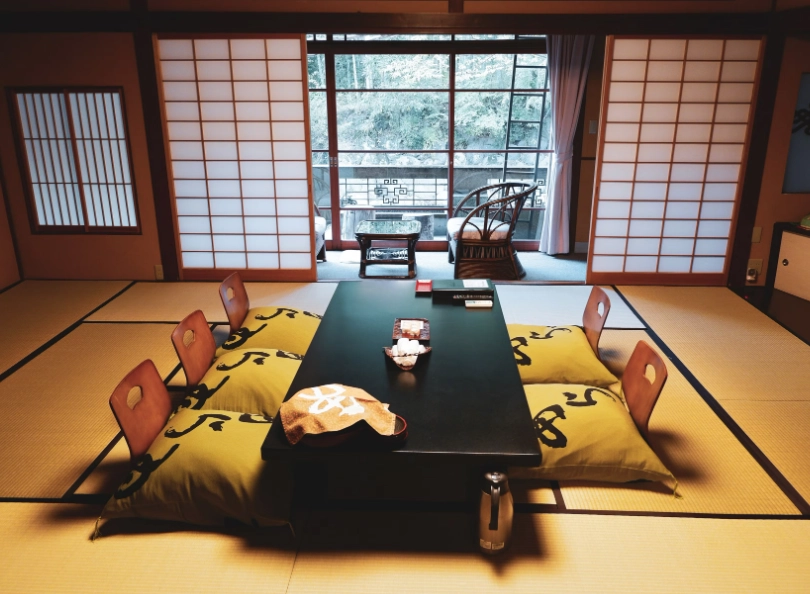
General Mealtime Manners
Your nakai-san will serve you and explain each dish. It's okay to ask questions! They love when guests show interest. Some basic tips:
- Say "itadakimasu" before eating (like "bon appétit") and "gochisousama deshita" after ("thank you for the meal").
- It's fine to pick up bowls to eat from them, especially for soup or rice.
- Don't stick your chopsticks upright in a bowl of rice (associated with funeral rites).
- Don't pass food from your chopsticks to someone else's (another funeral ritual).
The food is art. Take your time. It can last 1-2 hours. It's not a race.
Navigating the Unknown
You might get a whole small fish, or a mysterious gelatinous dish. It's okay to try things. It's also okay to leave a little if you genuinely don't like something. Just try to taste everything. The staff carefully watches what you enjoy, which is part of the personalized service.
Common Areas and General Conduct
Ryokans are places of peace. Keep noise to a minimum, especially in hallways at night. The walls can be thin. If you're in a group, remind everyone to use their "inside voices."
Respect the gardens and shared spaces. They are meticulously maintained for everyone's enjoyment.
The Check-Out Process
Check-out is usually by 10 AM. You'll settle the bill (often in your room) and retrieve your shoes. A final bow and thank you ("arigatou gozaimashita") is customary. It often feels like leaving a friend's home.
You are not expected to tip in Japan. However, if the service was exceptional, a small gift (omiyage from your hometown) or a heartfelt thank-you note is a beautiful and appreciated gesture that goes much further than cash.
Ryokan Etiquette FAQ: Your Quick Questions Answered
Final Thoughts: Embrace the Experience
Learning what is the etiquette for staying at a ryokan isn't about memorizing a punishing list of dos and don'ts. It's a key that unlocks a deeper, more respectful, and infinitely more rewarding experience. It transforms you from a spectator into a participant in a living tradition.
The staff aren't looking to catch you out. They are custodians of a centuries-old form of hospitality called "omotenashi"—selfless, anticipatory service. When you follow the etiquette, you show that you value their culture and their efforts. That respect is reciprocated tenfold in the warmth of their service.
So, take a deep breath. Book that ryokan. Step out of your shoes, wrap your yukata left over right, soak in the onsen, and savor every delicate bite of your kaiseki meal. Embrace the quiet, the slipper shuffle, and the unique rhythm of ryokan life. It might just be the most memorable part of your trip to Japan.
Trust me, once you get the hang of it, you'll dread putting your regular shoes back on.


Share Your Thoughts