Let's cut straight to it. The short, culturally-sensitive answer is: No, you should not enter a communal onsen while menstruating. If you're planning a trip to Japan and this is a concern, that's the rule you'll find posted (often with a pictogram of a woman with a red cross) and the expectation held by most Japanese bathers. But the real story—the one that matters for travelers—is more nuanced. It's not just about a rule; it's about understanding the why, the health considerations, and most importantly, the practical workarounds that let you enjoy this incredible part of Japanese culture without stress or disrespect.
Quick Navigation
Why the "No Period" Rule Exists
This isn't about modern hygiene shaming. It's deeply rooted in two things: traditional Shinto concepts of purity and practical public bath management.
In Shinto, blood is considered a form of kegare (impurity or pollution). Historically, this applied to childbirth, death, and wounds. While society has moved on, the residual cultural feeling persists around communal bathing—an activity seen as purifying. Introducing any blood, even microscopic traces, into shared water feels intuitively wrong within that framework.
The practical side is what many first-time visitors miss. An onsen isn't a chlorinated swimming pool. The mineral-rich water is often delicately balanced, and large, modern facilities recirculate and filter it. The Japan Ministry of the Environment and the Ministry of Health, Labour and Welfare have guidelines for maintaining bath water quality. The concern from a management perspective is about maintaining clarity and preventing any potential biofilm contamination. While a properly used internal menstrual product poses a negligible risk, the perception of risk shapes the rule.
I once made the mistake of thinking it was just an old-fashioned taboo. A Japanese friend who manages a small ryokan corrected me. "It's less about the blood itself," she said, "and more about the absolute certainty of cleanliness we promise every guest. If someone sees even a hint of pink in the water, that trust is broken forever for them. The rule is for everyone's peace of mind."
Practical Solutions and Workarounds
So, you're on your trip, at a beautiful ryokan in Hakone, and your period arrives. Do you just miss out? Absolutely not. Here are your actionable options, ranked by discretion and practicality.
The Gold Standard: Menstrual Discs
Forget tampons for a moment. A menstrual disc (like Flex Disc, Softdisc, or reusable brands) is your best ally. It sits tucked behind your pubic bone, higher than a cup, collecting flow without relying on suction. This is critical because the water pressure in a deep bath can break a suction seal.
Why it works for onsen: No external strings. No stems. When inserted correctly, it's completely internal. You can soak, move, and relax with total confidence that nothing is visible or will fail. It’s the method that most aligns with the “leave no trace” ethos of onsen bathing. Purchase them before your trip, as they can be harder to find in standard Japanese drugstores.
The Stress-Free Option: Private Baths (Kazoku-buro or Kashi-kiri)
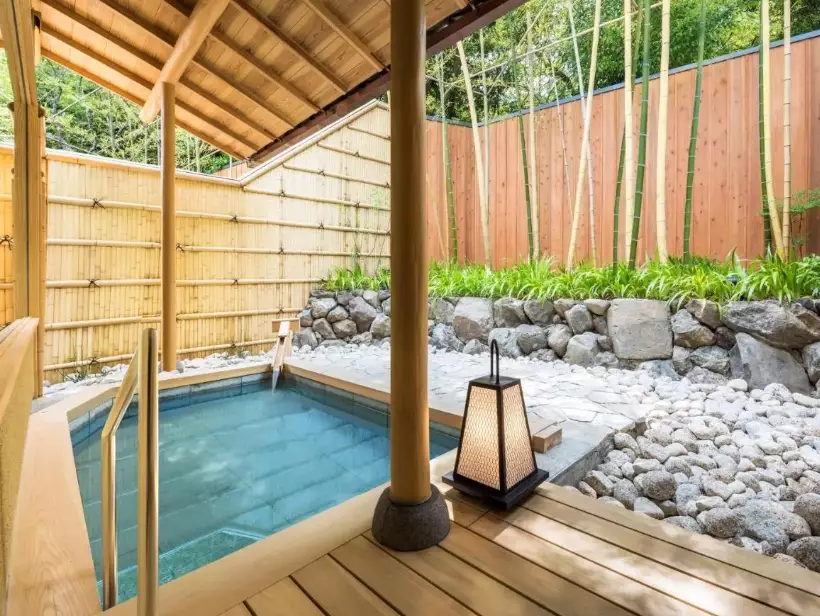
Many onsen facilities, especially ryokan and larger resort complexes, offer private family baths you can rent by the hour. The Japanese term is kashikiri-buro or kazoku-buro. This is your get-out-of-jail-free card.
You can use whatever protection you need without a second thought. It's just you (and your travel companions) in the tub. The water is changed after each session. This option is often cheaper than you think, especially if split between two people. When booking your accommodation, check their website or ask directly: "Do you have kashikiri-buro available?" It's a very common amenity.
Tampons: A Risky Choice
If a disc isn't available and you rely on a tampon, you must understand the risks. The water pressure can force water up along the string, potentially introducing bacteria. In a mixed-gender bath (konyoku), a visible string is a major social faux pas. If you must go this route, ensure the string is trimmed very short and tucked completely inside. Honestly, I don't recommend it. The anxiety of a potential leak or visible string can ruin the relaxing point of the bath.
Real-World Scenarios: From Ryokan to Public Baths
The application of the rule isn't uniform. Let's walk through three common situations.
Scenario 1: The High-End Ryokan. You're staying at a traditional inn with a small, beautiful communal bath for guests. The pressure to follow the rule is highest here. The bath is intimate, the clientele is often older and very traditional, and the staff expect discretion. Your best bet here is the private bath rental or a perfectly secured menstrual disc. Do not test the limits.
Scenario 2: The Large Public "Super Sento". These are sprawling bath complexes in cities. They have signs, but they can't police this. There's more anonymity. The risk here is less about social stigma and more about personal hygiene and the functionality of your chosen product in a busy, large-volume bath. Stick with the disc.
Scenario 3: The Remote, Outdoor Rotenburo. A stunning open-air bath in the mountains. The water may be free-flowing (かけ流し, kakenagashi), meaning it's constantly renewed from the source, not recirculated. From a hygiene perspective, this is the lowest-risk environment. However, the cultural rule still stands. If it's a truly secluded bath and you are alone, your personal risk assessment might differ, but you must be prepared to leave immediately if others arrive.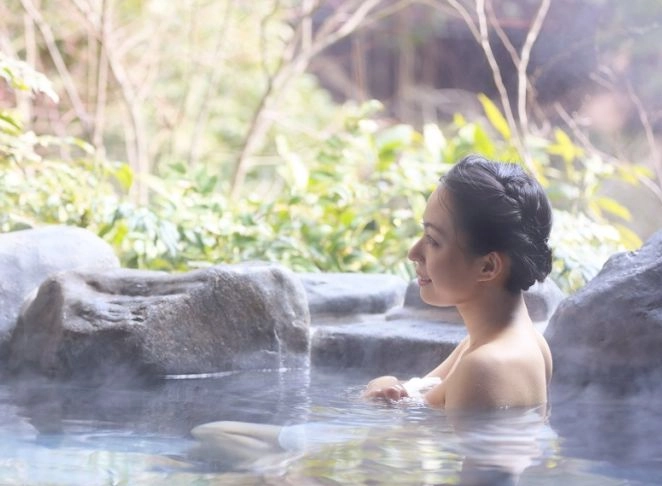
Expert Tips and Final Considerations
After years of traveling and countless onsen visits, here's what most guides won't tell you.
Plan your accommodation around your cycle. If possible, book a ryokan with in-room private baths (tsuki-buro) for the nights you expect your period. It transforms a potential hassle into a luxury feature.
The shower area is your friend. Even if you skip the main bath, you can still participate in the ritual. Wash and scrub thoroughly at the shower stations. Then, just sit on the little stool, pour warm water over your shoulders, and soak in the atmosphere. It's surprisingly relaxing and still feels culturally immersive.
Language helps. If you need to buy products, know the terms. Sanitary napkins are ナプキン (napukin). Tampons are タンポン (tampon). Menstrual cups/discs are 月経カップ (gekkei kappu). Larger drugstores like Matsumoto Kiyoshi or Sugi Pharmacy will have a selection.
Finally, view this not as a restrictive rule, but as a key to understanding Japanese culture's deep respect for shared space and collective comfort. By planning ahead with the right product or opting for a private bath, you remove all worry. You can then fully embrace the profound relaxation and beauty of the onsen experience, period or not.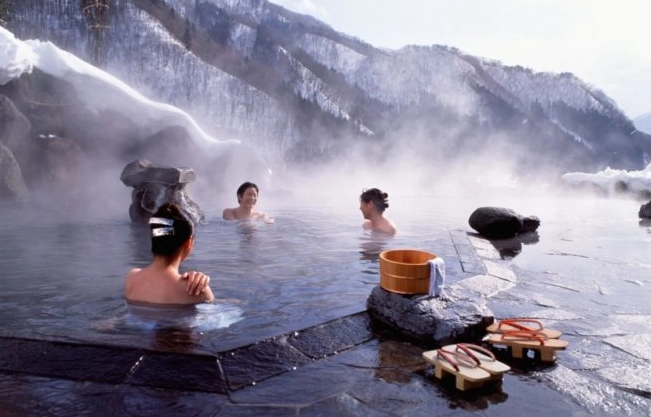
Frequently Asked Questions
What is the main reason Japanese onsen etiquette discourages bathing during menstruation?
The primary reason is rooted in Shinto concepts of purity and impurity (kegare), where blood is traditionally considered a source of ritual impurity. While modern hygiene practices have evolved, the cultural norm persists as a matter of public bathing etiquette and respect for shared facilities. It's about maintaining absolute perceived cleanliness for all users.
Is it safe to use a tampon and then enter a mixed-gender onsen?
I would strongly advise against it. The water pressure can compromise the tampon's seal, and the visible string in a mixed bath (konyoku) is a serious breach of etiquette. It draws attention to a private bodily function in a space where complete neutrality is the norm. It's uncomfortable for others and risky for you.
What is the most discreet and effective solution for onsen use during a period?
Hands down, a menstrual disc. It sits higher than a cup, has no suction seal that water pressure can break, and has zero external parts—no string, no stem. When inserted correctly, it's entirely internal and undetectable. This aligns perfectly with the onsen principle of leaving no trace in the communal water. Bring them from home.
Do all onsen establishments strictly enforce a 'no period' rule?
Enforcement is almost entirely based on the honor system. Large public baths don't have period police. The enforcement is social and cultural. In a small ryokan bath, fellow guests or staff might say something if there's an issue. The strictest "enforcement" you'll see is the pictogram sign at the entrance. Your compliance is a sign of respect for that shared social contract.

Share Your Thoughts