In This Guide
So you're dreaming of Japan. Temples in Kyoto, the buzz of Tokyo, maybe some sushi that'll ruin all other sushi for you. But then you look at your bank account and that big question pops up: is $2000 enough for 2 weeks in Japan? I've been there, staring at flight deals and hostel prices, trying to make the math work. Let's cut through the Instagram fantasy and talk real numbers.
The short, honest answer? It's tight, but it's possible. It won't be a luxury trip, but it can be an incredibly rewarding one if you plan smart. You won't be staying in ryokans every night or eating Kobe beef daily, but you can absolutely experience the magic of Japan. The real question isn't just "is $2000 enough," but "what kind of trip does $2000 buy you?"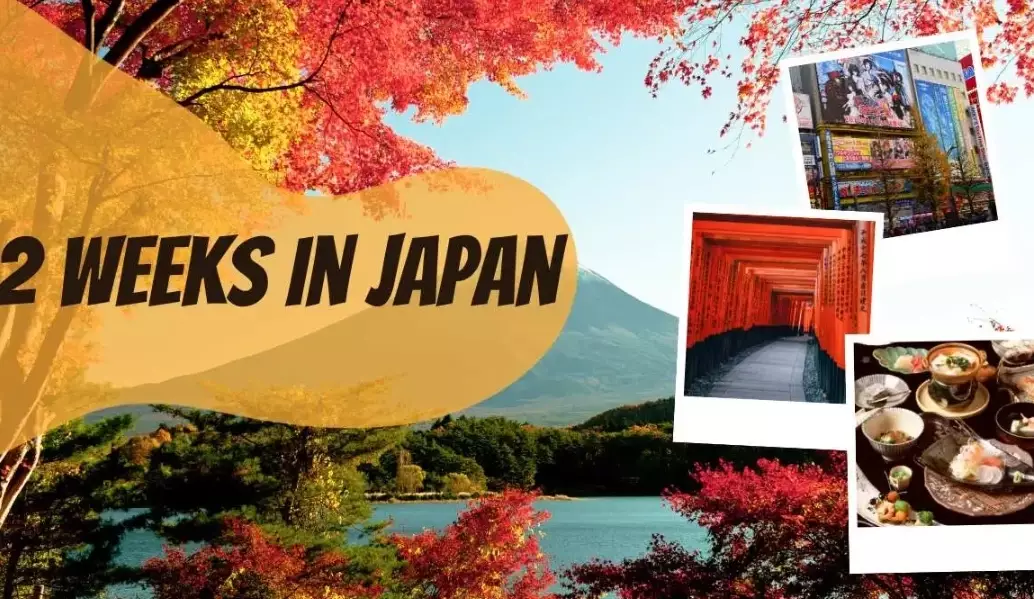
The Core Truth: For a solo traveler, $2000 for 14 days in Japan translates to about $143 per day. After you remove the big fixed costs (flights, maybe a rail pass), that daily budget dictates everything—where you sleep, what you eat, and how freely you can explore.
Breaking Down the $2000 Budget (Before You Even Land)
Right off the bat, we need to clarify something crucial. When people ask "is $2000 enough for 2 weeks in Japan," they often mean $2000 on the ground. But for a full trip cost, international flights are the elephant in the room. A round-trip flight from the US or Europe can easily eat $800-$1200 of that total if you're not careful.
For this breakdown, let's assume the $2000 is your post-flight spending money. If your total all-in budget is $2000 including flights, well, you're going to have a much more challenging time unless you find a miraculous deal. I once snagged a $650 round-trip from LA to Tokyo by being flexible with dates, but that's not the norm. Check sites like Google Flights and set up alerts.
Let's visualize where that $2000 needs to go. It's not just about daily spending; some costs are upfront and huge.
| Budget Category | Estimated Cost (USD) | Notes & Impact on Your Trip |
|---|---|---|
| Accommodation (14 nights) | $500 - $850 | This is your biggest variable. Capsule hotels & hostels vs. business hotels. |
| Transportation (Internal) | $300 - $600 | Heavily depends on if you get a JR Pass, do regional travel, or mostly stay put. |
| Food & Drink | $400 - $600 | You can eat well cheaply, but convenience store meals add up, and you'll want to try things. |
| Activities & Sightseeing | $200 - $400 | Temples, museums, gardens (entry fees are often modest). Skipping paid attractions saves money. |
| Sim Card / Pocket WiFi | $40 - $80 | Essential for navigation. A non-negotiable for most travelers. |
| Souvenirs & Misc. | $100 - $200 | Forget fancy ceramics, but you'll want some kit-kats and maybe a t-shirt. |
See the problem already? The low end of those estimates is already $1540, and the high end is $2730—blowing past your $2000 budget. That's why planning is everything. You'll be constantly making trade-offs.
The Big Ticket Item: The Japan Rail Pass Dilemma
Ah, the JR Pass. It's iconic, it's convenient, and as of late 2023, it got a lot more expensive. A 7-day ordinary pass is now around $335. For a 14-day trip, is it worth it? Honestly, for a tight $2000 budget, maybe not.
Here's my take: if your plan is Tokyo -> Kyoto -> Osaka -> Hiroshima -> back to Tokyo, the pass might still pay off. But you need to crunch the numbers for your specific itinerary using the official Japan Rail Pass calculator or a tool like Japan Travel's fare calculator. If you're mostly staying in one region (e.g., just Kansai with Kyoto, Osaka, Nara), regional passes or paying for single Shinkansen tickets might be cheaper. I made the mistake once of buying a pass for a trip where I mostly stayed in cities and used subways—it was a waste of money.
Budget Killer Alert: The JR Pass is a massive upfront cost. Dropping $335 on day one of a $2000 trip is a psychological and financial hit. If your goal is making $2000 work for two weeks, consider designing an itinerary that minimizes long-distance Shinkansen travel.
The Real Cost of Key Expenses
Let's get granular. What do things actually cost on the street in Japan? This is where your daily choices make or break your budget.
Accommodation: Your Biggest Battle
Finding a clean place to sleep for under $60 a night is the core challenge of the "is $2000 enough for 2 weeks in Japan" question. In major cities, budget options exist, but they book up fast.
- Capsule Hotels: $30-$50/night. Great for a night or two for the experience, but privacy is minimal and storing luggage can be a hassle. Not ideal for 14 nights straight.
- Hostels (Dorm Bed): $25-$40/night. The bedrock of budget travel. Japanese hostels are often incredibly clean and well-organized. Look for ones with curtains for privacy. Booking.com and Hostelworld are your friends.
- Business Hotels: $60-$90/night. Think APA Hotel, Dormy Inn. You get a tiny but private room with an ensuite bathroom. This is the sweet spot for many budget-conscious travelers who want privacy. If you can snag these for around $70, you're doing well.
- Budget Guesthouses / Ryokans: $50-$80/person/night if sharing. Sometimes you can find amazing family-run places, especially in smaller towns.
My strategy? Mix and match. Do a few nights in a hostel to save, then treat yourself to a business hotel to recharge. Avoid peak seasons (cherry blossom, autumn leaves, Golden Week) like the plague—prices double or triple.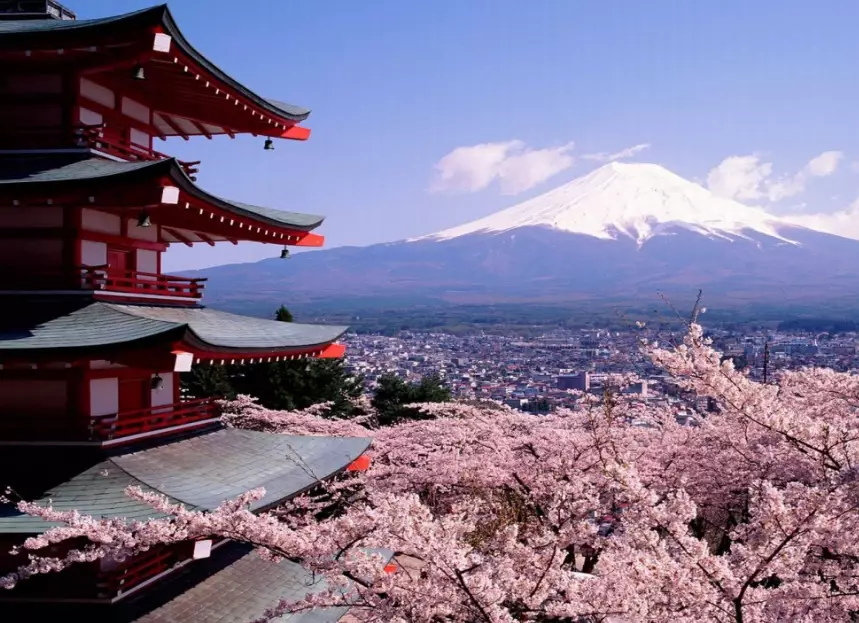
Food: Where You Can Save (and Where You Shouldn't)
Food in Japan can be shockingly affordable if you know where to look. You do NOT need to live on cup ramen.
Pro-Tip: Lunch is your best friend. Many sit-down restaurants, even nice ones, offer fantastic "teishoku" (set meal) deals for lunch that are 30-50% cheaper than the dinner menu. Have your big meal at noon.
Here’s a realistic daily food budget breakdown for a frugal but satisfying diet:
- Breakfast: $3-$5. Combini (convenience store) is king. Onigiri (rice ball), banana, yogurt, coffee. Or grab a pastry from a bakery.
- Lunch: $8-$15. Ramen bowl, curry rice, katsu-don bowl, or a gourmet bento from a department store basement (depachika).
- Dinner: $10-$20. Gyudon (beef bowl) at Sukiya/Matsuy, a hearty udon, or conveyor belt sushi (like Sushiro).
- Snacks/Drinks: $5-$10. Vending machine drinks, ice cream, the occasional taiyaki fish cake.
That's about $30-$50 per day on food. You can go lower, but why would you? The food is half the reason to go to Japan! The key is avoiding the tourist trap restaurants in places like Tokyo's Ginza or Kyoto's Gion at dinner time. Walk a few blocks away, look for places filled with locals.
And water—tap water is perfectly safe to drink across Japan. Carry a bottle and refill it. Saves you $2-$3 every time you'd buy a bottle.
Transportation Within Cities
Forget taxis. Just don't. A short ride can cost $10-$20. The subway and bus networks are excellent and confusing at first. Get a rechargeable IC card (Suica or Pasmo) immediately. It works on almost all local transport in all major cities.
In cities like Kyoto, consider a one-day bus pass (usually around $6). If you're taking the bus more than 3 times in a day, it pays for itself. For Tokyo, sometimes a Tokyo Metro 24-hour ticket is worth it if you're doing a massive sightseeing day. Calculate based on your plan.
Can You Do Japan on $2000? It Depends…
Let's paint two very different pictures of what a $2000 trip (post-flight) looks like.
Scenario 1: The Ultra-Budget Backpacker (The "Yes, It's Enough" Trip)
- Accommodation: 14 nights in hostel dorms: $35 avg/night = $490.
- Transport: No JR Pass. Uses overnight buses between cities (Tokyo-Kyoto bus ~$60), local trains/IC card: $350.
- Food: Strict budget, lots of combini and budget chains: $35/day = $490.
- Activities: Focuses on free sights (temples with free grounds, parks, wandering neighborhoods): $150.
- Other: SIM card, souvenirs, misc: $120.
- TOTAL: ~$1600. You'd even have a $400 buffer for a splurge or two.
This trip is totally doable. It requires discipline, booking things far in advance for the best prices, and being comfortable with hostels. You'll see amazing things, but you'll be saying "no" to a lot of paid experiences.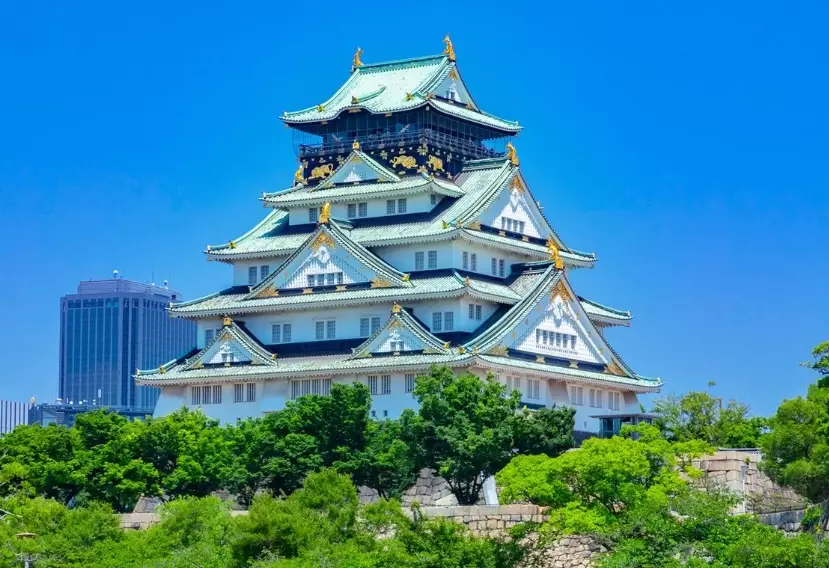
Scenario 2: The Comfort-Seeking Traveler (The "It's Really Tight" Trip)
- Accommodation: Mix of business hotels and a few hostel nights: $65 avg/night = $910.
- Transport: Gets a 7-day JR Pass for one key week of travel: $335 + local transport: $150 = $485.
- Food: Wants to try a variety, includes a few nice meals: $45/day = $630.
- Activities: Pays for key museum entries, a tea ceremony, maybe a day trip: $300.
- Other: SIM, souvenirs, the occasional beer: $200.
- TOTAL: ~$2525. You're already over budget by $525.
This is the reality for many people. The desire for a private room and the freedom to take the fast train pushes the budget over $2000 quickly. So, is $2000 enough for 2 weeks in Japan for this style? Not really, unless you find exceptional deals or cut back elsewhere significantly.
Actionable Tips to Make Your $2000 Go Further
Okay, so you're committed to making it work. Here are my hard-earned, non-obvious tips beyond "stay in hostels."
Top Money-Saving Hacks for Japan
- Travel in the Shoulder Seasons. Late autumn (November, after fall colors) and early spring (late February/early March, before cherries) often have decent weather and lower prices than peak times. Avoid late March-April and late October-early November.
- Use Overnight Buses. They save a night's accommodation and transport cost. Willer Express is a major operator with English site. It's not the most comfortable sleep, but it's a classic budget move.
- Leverage Free Attractions. Japan has an abundance. Tokyo: Senso-ji Temple, Meiji Shrine, wandering Akihabara or Harajuku. Kyoto: Fushimi Inari Shrine (free to climb), Gion district, Philosopher's Path. Osaka: Dotonbori, Kuromon Ichiba Market (just to look!).
- Eat at Department Store Food Halls (Depachika) for Lunch. Around 1-2 pm, they discount their amazing prepared bento boxes significantly. You can get a high-quality feast for $5-$8.
- Stay in one city longer. Base yourself in Tokyo or Osaka and do day trips. This saves on the hassle and cost of moving accommodation constantly. From Osaka, you can day trip to Kyoto, Nara, Kobe, and Himeji easily.
- Check for Free WiFi. While a SIM/pocket WiFi is recommended, many cities offer free tourist WiFi (like Japan Connected-free Wi-Fi). Conbinis (7-Eleven, FamilyMart) also often have free WiFi. You can sometimes get by with strategic connectivity.

Frequently Asked Questions (FAQ)
Let's tackle some specific worries that pop up when you're asking "is $2000 enough for 2 weeks in Japan?"
It's significantly harder. While you can share some costs (like a private room is often cheaper per person than two hostel beds), your core expenses like transport, food, and attraction entries double. $4000 for two people is a more realistic target for a similar style of trip. Trying to do it on $2000 total as a couple would mean extreme budgeting and missing out on a lot.
Frankly, that's extremely challenging for a first-time visitor unless you're an expert budget traveler, willing to work-stay, or are incredibly minimalist. $1000 would mean almost exclusively hostels, very limited long-distance travel, and a very basic diet. You'd have almost no room for error or any paid activity. I wouldn't recommend it if you want to actually enjoy and experience the country rather than just survive in it.
Japan is still largely a cash society, especially outside major cities and for small shops, temples, and restaurants. You must carry cash. Use your debit card at 7-Eleven ATMs (they have English menus and accept foreign cards) to get yen. Inform your bank you're traveling. Use credit cards where accepted (hotels, large stores, some restaurants) to save your cash. Don't rely on cards alone.
A few! Tourist Tax: Some cities (like Tokyo) have a small nightly accommodation tax (usually $1-$2). Luggage Shipping: If you take shinkansen, large suitcases need reservations or need to be shipped via takuhaibin (like Yamato Transport). Shipping a suitcase across the country can cost $15-$25. Gacha Gacha & Vending Machines: Those little toy capsule machines and drink vending machines are everywhere and will tempt you to spend small change constantly. It adds up!
The Final Verdict
So, after all that number-crunching and reality-checking, what's the final answer to "Is $2000 enough for 2 weeks in Japan?"
For a solo traveler who is flexible, books in advance, is happy with hostel life, enjoys street food and budget eats, and designs a smart itinerary that minimizes costly long-distance travel... yes, $2000 is a viable on-the-ground budget. You'll need to be mindful, but you can have an unforgettable trip.
For a traveler who wants a private room every night, the convenience of the Shinkansen to zip around, the freedom to try any restaurant, and entry to every museum... no, $2000 will feel restrictive and you'll likely go over budget. You'd be better off saving a bit more for comfort, or adjusting your expectations downward.
The best advice I can give? Make your own budget spreadsheet. Price out your ideal hostels/hotels on Booking.com (with free cancellation). Use the Jorudan Navitime website or app to check train fares between cities. Add a realistic daily food and activity allowance. See what the total is. That exercise will give you a much clearer picture than any generic article.
Japan is worth every penny, even on a tight budget. The efficiency, the cleanliness, the kindness of people, and the sheer depth of culture are accessible at almost any price point. With $2000 and a good plan, you can absolutely make it work. Just go in with your eyes open, ready to prioritize, and prepared to be amazed by what you can experience without spending a fortune.
Happy planning!


Share Your Thoughts