Your Quick Guide to Navigating Japan
- Understanding the Legal Landscape and Mindset
- Navigating the Lifeline: Public Transport Access
- Where to Stay: Finding Truly Accessible Hotels
- Experiencing the Sights: Attractions and Cultural Sites
- Essential Tools and Resources for Your Trip
- Facing the Realities: Common Challenges and Solutions
- Answers to the Questions You're Actually Asking
- Putting It All Together: A Sample Day with Access in Mind
Let's be honest right from the start. Planning any trip involves a mix of excitement and anxiety. But when you're navigating travel with a mobility challenge, sensory disability, or any other access need, that anxiety can spike. You hear conflicting things about Japan. Some paint it as a futuristic utopia of seamless accessibility. Others tell horror stories about endless stairs and narrow doorways. So, what's the real story of Japan with disabilities access?
Having spent considerable time there and spoken to many travelers who navigate Japan with various disabilities, I can tell you it's a land of fascinating contradictions. The reality isn't a simple thumbs up or down. It's a patchwork of world-class innovation sitting right next to historical barriers—sometimes literally on the same city block.
The good news? Japan is trying, and in many areas, succeeding brilliantly. The not-so-great news? There are still gaps, and knowing where they are is half the battle. This guide isn't a glossy brochure. It's a practical, from-the-ground look at what you can realistically expect, the tools at your disposal, and the strategies that make the difference between a stressful ordeal and an incredible journey.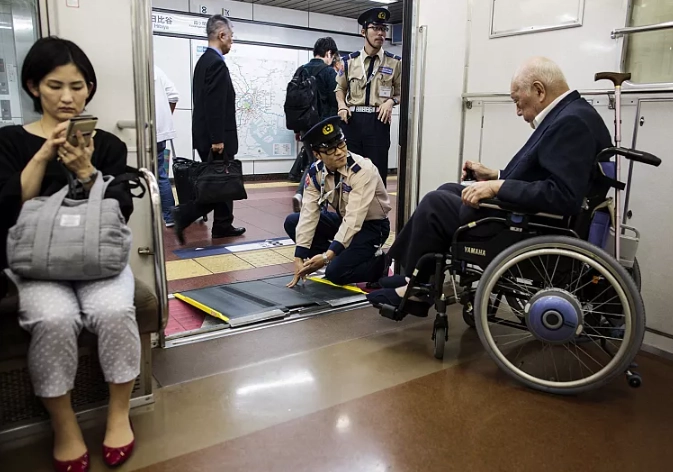
Understanding the Legal Landscape and Mindset
Before diving into trains and toilets, it helps to know the backdrop. Japan's push for better accessibility isn't just about tourism; it has deep domestic roots. An aging population means a significant portion of Japanese citizens themselves face mobility challenges. This has driven national policy.
The key law is the Act on the Elimination of Discrimination against Persons with Disabilities, which came into full effect in 2016. It mandates "reasonable accommodation" and prohibits discrimination based on disability. In practice, this has accelerated the installation of tactile paving (those yellow bumpy tiles you see everywhere), ramps, and accessible facilities in public buildings and transport hubs.
But here's the cultural nuance: the Japanese approach to disabilities access in Japan is often deeply service-oriented. Even if the physical infrastructure is occasionally lacking, the human willingness to help is frequently extraordinary. Station staff will go to great lengths to assist. Shopkeepers might improvise a ramp. This doesn't excuse poor infrastructure, but it's a crucial part of the experience.
Sometimes, the service is almost too meticulous, which can feel infantilizing to some travelers from Western cultures. It's a different style of interaction.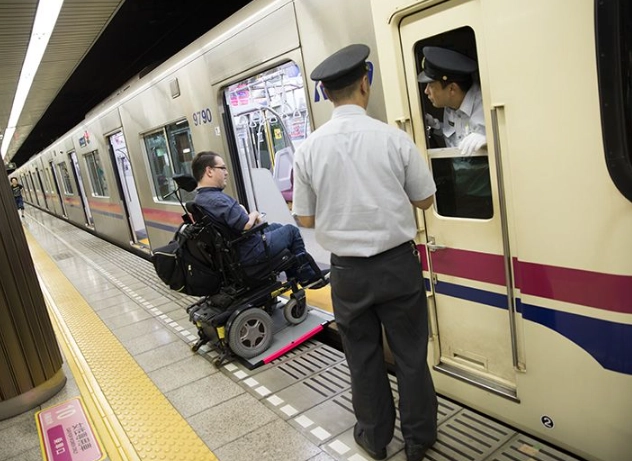
Navigating the Lifeline: Public Transport Access
This is where most questions—and anxieties—cluster. Can you get around? The short answer is yes, but with planning.
Trains and Subways (The Good, The Bad, The Crowded)
Major stations in Tokyo, Osaka, Kyoto, and other large cities are generally excellent. Look for the universal access symbol. You'll typically find:
- Elevators and Ramps: Clearly marked, though sometimes tucked in a corner. In huge stations like Tokyo or Shinjuku, follow the signs with the wheelchair icon—they form a coherent network.
- Accessible Gates: Wider automated gates for wheelchairs.
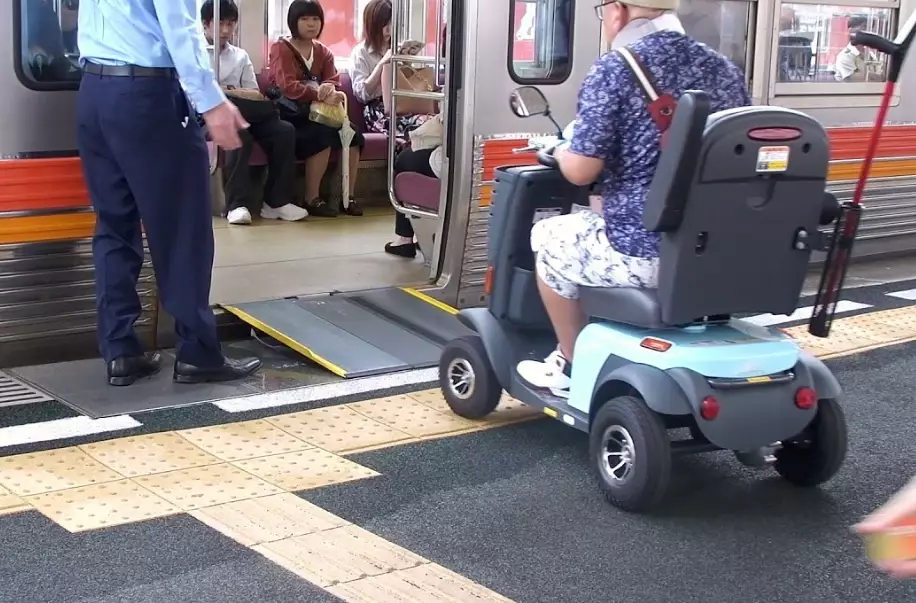
- Platform Gaps: This is a big one. Shinkansen (bullet train) platforms are perfectly flush. Older local train platforms can have scary gaps. The solution? Use the "Station Staff Assistance" service. At any station gate, show your wheelchair or ask for help. They will place a portable metal ramp over the gap. You need to do this for both boarding and alighting. It's a standard, smooth procedure.
- Crowds: Rush hour is no joke. Even with accessibility features, the sheer density of people can be overwhelming for anyone with mobility or sensory issues. I'd strongly advise avoiding peak commuting times (7:30-9:30 AM, 5:30-7:30 PM).
Watch Out: Not all subway exits are created equal. A station might have one beautifully accessible exit (usually the main one), while other exits are stairs-only. Always check the station map at the ticket gate or on an app like Google Maps, which often marks which exits have elevators.
Buses
Buses are a mixed bag. Many, especially in major cities, are now low-floor buses with kneeling functions and space for one or two wheelchairs. However, the driver needs to activate the ramp/kneeler, and you'll need to board at the middle or rear door. Non-low-floor buses are still common in rural areas and smaller cities.
A key phrase is "Subarashii seki wo arigatō gozaimasu" (Thank you for the wonderful seat). Not really. Just be prepared to communicate your need. Pointing to the wheelchair symbol and saying "daijōbu desu ka?" (is it okay?) usually works.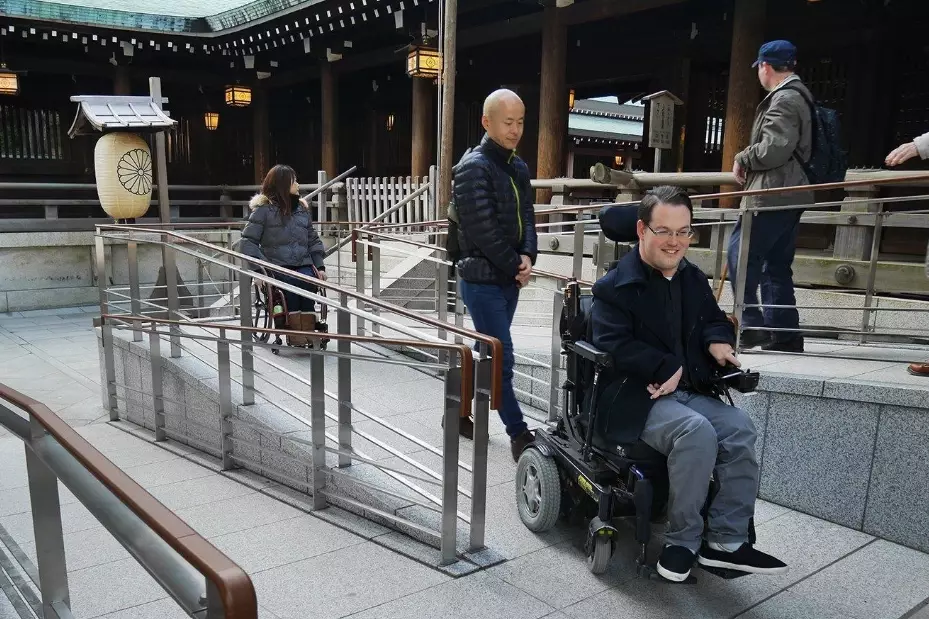
Taxis
Standard Japanese taxis are small sedans, terrible for anything but a folded wheelchair. The solution is to book a "Welfare Taxi" or "Universal Design Taxi." These are minivans with ramps or lifts. They must be booked in advance, often a few hours or a day ahead. Your hotel concierge is your best friend for this. Apps like "JapanTaxi" sometimes have a filter for these vehicles, but it's not always reliable.
Where to Stay: Finding Truly Accessible Hotels
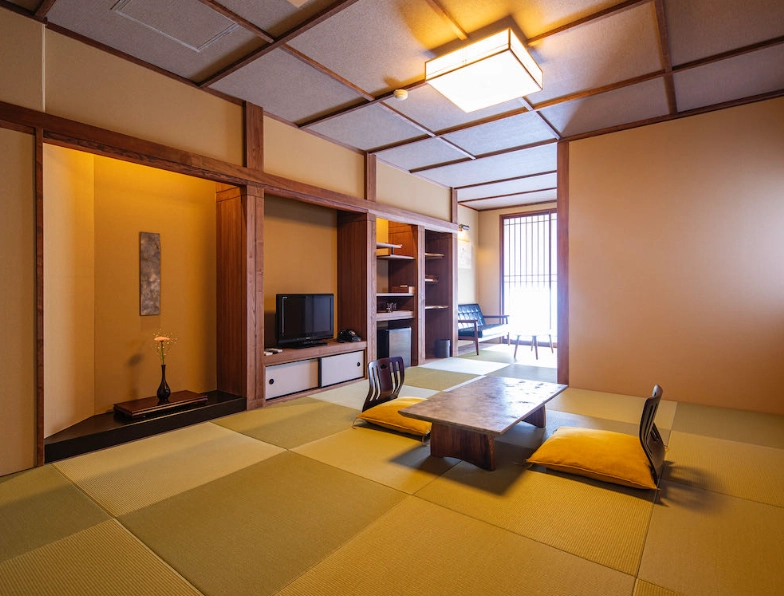
This is a major pain point. Many hotels in Japan claim to be "barrier-free" or have "universal rooms," but the standards can vary wildly. A "barrier-free" room might just mean a slightly wider doorway and grab bars in the bathroom, but the bed could be too high to transfer from a wheelchair, or the shower might still have a lip.
What should you look for? Don't just trust the label. Dig into the specifics.
| Feature to Verify | What "Good" Looks Like | What "Might Be Problematic" Looks Like |
|---|---|---|
| Doorway Width | Minimum 80cm (31.5 inches), ideally 85cm+. | Just under 80cm, requiring a tight squeeze. |
| Bathroom | Roll-in shower with a fold-down seat, handheld showerhead, and level floor (no step). | Shower over bathtub with grab bars, or a shower with a small step. |
| Bed Height | Close to the height of a standard wheelchair seat (around 45-50cm). | Very high Western-style bed or very low traditional futon. |
| Room Space | Clear turning space (150cm diameter) for a wheelchair, especially in front of the bed and bathroom. | Furniture arranged such that a wheelchair can't maneuver easily. |
| Alarms & Controls | Visual fire alarms, lowered light switches/thermostats. | All controls at standard height. |
My advice? Contact the hotel directly by email before booking. Ask specific questions with measurements. Reputable international chains (like Hilton, Marriott) often have consistent global standards for their accessible rooms, which can be a safer bet. Also, check the hotel's location relative to a train station with good access. A 10-minute "short walk" on a map can be impossible if there are no curb cuts.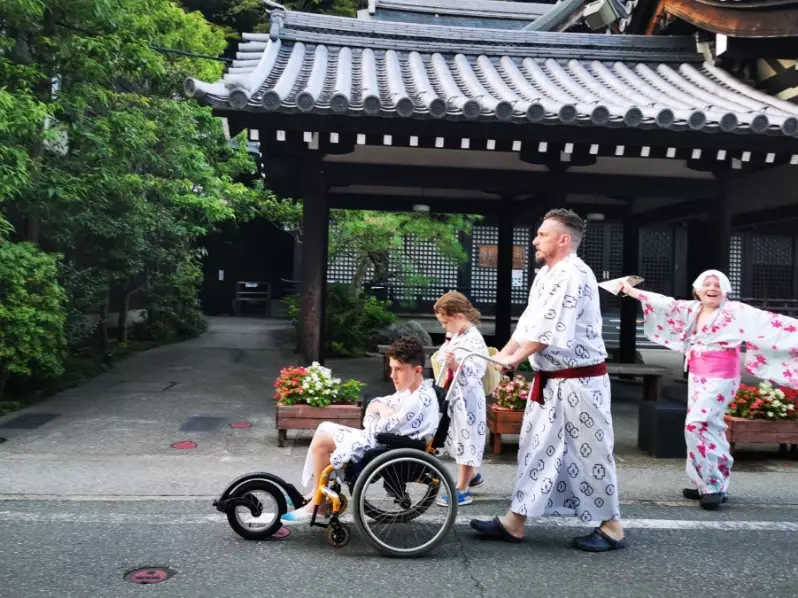
Experiencing the Sights: Attractions and Cultural Sites
This is where the contradiction between old and new Japan becomes most apparent. Modern museums, galleries, and government buildings are almost universally fantastic for access in Japan for disabled visitors. Think Tokyo's National Museum of Emerging Science and Innovation (Miraikan) or the Ghibli Museum—designed with inclusivity in mind.
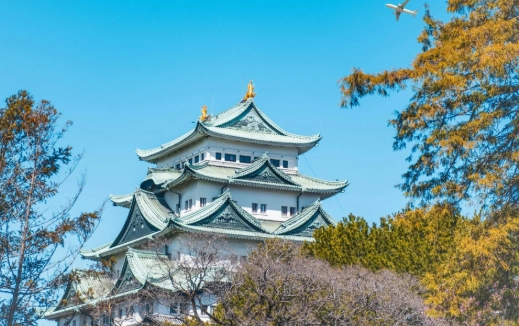
The challenge lies with historical sites: temples, shrines, castles, and traditional gardens. Many are centuries old, built on hillsides with stone steps, gravel paths, and narrow entryways. Preservation laws often restrict modifications.
So, are they all off-limits? Not necessarily. Here’s a realistic breakdown:
Top Accessible Modern Attractions in Tokyo
- teamLab Planets/Borderless: Seamless, immersive digital art experience with excellent access.
- Tokyo Skytree & Tokyo Tower: Modern observatories with full accessibility.
- Odaiba: This waterfront area is flat, modern, and easy to navigate, with attractions like the Miraikan and Palette Town.
- Museums: The Tokyo National Museum, Edo-Tokyo Museum, and most others have excellent facilities.
Historical Sites Requiring Extra Research
- Senso-ji Temple (Asakusa): The main approach (Nakamise-dori) is flat and crowded. The main hall has a ramp at the side. However, some sub-temples in the complex have steps.
- Meiji Jingu Shrine (Harajuku): The forest path to the main shrine is compacted gravel, which can be tough for manual wheelchairs. Electric chairs manage better.
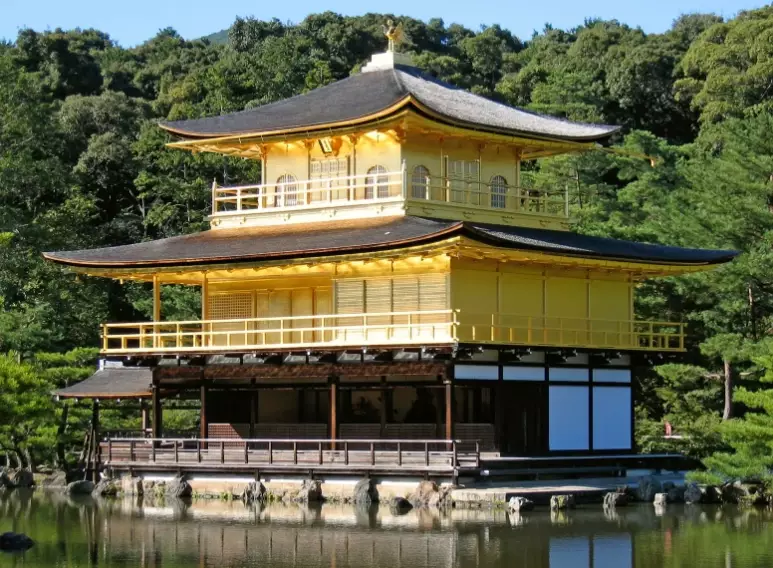
- Kyoto's Temples: Kinkaku-ji (Golden Pavilion) has a mostly accessible route to the viewing point. Kiyomizu-dera, famous for its wooden stage, is built on a steep hillside and is largely inaccessible for wheelchairs.
The key is to research each site individually. Many now have detailed accessibility pages on their official websites (use Google Translate). Look for phrases like "bariafurī" (barrier-free) or "shōgaisha tōjō" (disabled person entrance). Sometimes there is a separate, accessible route.
Essential Tools and Resources for Your Trip
You can't wing it. A successful trip hinges on these resources.
Must-Have Apps
- Google Maps (with a caveat): Generally good for marking accessible subway exits and step-free routes. Not perfect, but the best we have.
- Japan Official Travel App (by JNTO): Has some accessibility filters and information.
- Accessible Tokyo Map: A bit dated but still useful for finding accessible toilets and facilities.
- Translation Apps: Google Translate or DeepL. Use the camera function to translate signs instantly. Crucial for reading facility information.
Incredibly Useful Passes and Cards
- Japan Rail Pass: If you're traveling between cities, this is a no-brainer. For travelers with a disability and one companion, you can purchase the pass at a significantly discounted rate. You need to present a valid disability identification document (like a doctor's certificate or an official ID from your home country) at the time of purchase in Japan. The savings are substantial.
- Help Mark/Help Card: The Japanese Ministry of Internal Affairs promotes a "Help Mark"—a small, discreet keychain with a white cross on a blue heart. It indicates the bearer has an invisible disability or condition and may need assistance. You can often get them at station offices. A "Help Card" is a fill-in-the-blanks card you can use to explain your needs in Japanese.
Official Information Sources (The Good Stuff)
Don't rely on random blogs alone. Bookmark these authoritative sites:
- Japan National Tourism Organization (JNTO) Accessible Travel Page: This is your starting point. It provides overviews, PDF guides, and links to essential services. (https://www.japan.travel/en/plan/accessible-travel/)
- Tokyo Metropolitan Government: Barrier-Free Information: Incredibly detailed, down to the width of sidewalks and slope angles on specific streets. A goldmine for meticulous planners. (https://www.fukushihoken.metro.tokyo.lg.jp/english/barrier-free/)
- Accessible Travel Japan: While not a government site, this is run by Josh Grisdale, a long-term wheelchair user living in Japan. It's packed with first-hand, incredibly detailed reviews of hotels, attractions, and transport. It's the single most useful resource I've found. (https://www.accessible-japan.com/)
These links are your foundation. They provide verified, up-to-date information that goes far beyond generalities.
Facing the Realities: Common Challenges and Solutions
Let's not sugarcoat it. You will face hurdles. Here’s how to tackle the most common ones.
Challenge 1: The "Almost Accessible" Place. The restaurant has a step. The shop has a narrow aisle. The love hotel has... well, everything. Solution: The Japanese propensity for service. Often, staff will see the challenge before you do and will improvise. I've seen them bring out a makeshift wooden ramp for a single step, clear a path, or even help carry a lightweight wheelchair. It's okay to ask. Point and look hopeful. It usually works.
Challenge 2: Accessible Toilets (Multipurpose Toilets). Japan has them everywhere—in stations, department stores, parks. They are usually clean and well-equipped with grab bars, sinks at height, and emergency cords. However, they are also used by parents with strollers and people with large luggage. You might have to wait. Also, the control panels can look like the dashboard of a spaceship. Take a moment to figure out the buttons (often with pictograms) for flush, wash, and dry.
Challenge 3: Sensory Overload. Japan is busy, bright, and loud. For travelers with autism, PTSD, or sensory processing disorders, the constant stimuli in places like Shibuya Crossing or a packed train can be overwhelming. Plan quiet breaks in parks (Shinjuku Gyoen is a peaceful oasis), visit during off-peak hours, and don't feel pressured to keep up a frantic tourist pace. Noise-canceling headphones are a lifesaver.
Answers to the Questions You're Actually Asking
Is Tokyo or Kyoto better for accessibility?
Tokyo, hands down. It's newer, wealthier, and flatter in its central areas. Kyoto has more historical sites with natural barriers (hills, rivers) and older infrastructure. You can have a fantastic trip in either, but Tokyo requires less daily problem-solving.
Can I rent mobility equipment in Japan?
Yes, absolutely. Companies like “Matsuyu” or “Wheelchair Rental Japan” rent manual and electric wheelchairs, scooters, and even shower chairs. You can have them delivered to your hotel or the airport. Book well in advance, especially for power chairs. This is a fantastic option to avoid airline handling of your personal equipment.
What's the one thing I should absolutely pack?
Besides patience? A portable, foldable ramp. If you use a wheelchair, a lightweight ramp that can bridge a single step (15-20cm) can be the key to accessing countless restaurants, shops, and ryokans that would otherwise be closed to you. It's the ultimate tool for creating your own Japan with disabilities access where it doesn't officially exist.
Are people staring rude?
It can feel intense. In less international areas, you might get curious looks, especially from older generations and children. It's rarely malice—more often curiosity or a lack of everyday exposure. A smile usually turns a stare into a smile back. I find it more tiring than offensive, but it's something to be mentally prepared for.
Putting It All Together: A Sample Day with Access in Mind
Let's imagine a day in Tokyo, prioritizing smooth access for disabilities in Japan.
Morning: Start at Tokyo Station. Use the accessible exit maps to find the elevator up to street level. Take the (accessible) Marunouchi subway line to Akihabara. The main Electric Town exit has elevators. Explore the multi-floor electronics stores—most, like Yodobashi Camera, have spacious, elevator-equipped buildings.
Lunch: Head to a department store (like the one attached to Akihabara Station). Their restaurant floors (depachika) almost always have accessible, large restaurants with ample space between tables.
Afternoon: Take the Yamanote Line (using staff-assisted ramp) to Ueno. Ueno Park is largely flat with paved paths. The Tokyo National Museum in the park has superb accessibility. The park itself has wide, manageable paths.
Evening: Take a taxi (pre-booked welfare taxi) to Asakusa. Enjoy the flat approach to Senso-ji. Many of the nearby restaurants on the main streets have been modified with ramps. Look for pictures of food outside—it often indicates a more modern, and therefore more likely accessible, setup.
See? It's about connecting the dots between accessible nodes. The path exists. You just need the map.
The final word. Traveling Japan with a disability is an exercise in preparation meeting adaptability. The infrastructure is there in the places that count most—the transport between cities, the major stations, the modern attractions. The gaps are in the old, the small, and the side streets.
But those gaps are often bridged by a culture that takes service and hospitality seriously. Your trip might not be spontaneous in the way a backpacker's is. It will be a more curated, planned experience. But that planning can lead to a profoundly rewarding journey through one of the world's most fascinating countries. You'll see a side of Japan—both its cutting-edge ingenuity and its deeply human kindness—that many tourists miss.
So go. Plan meticulously. Ask for help freely. And get ready to experience Japan on your own terms.
Share Your Thoughts