Quick Guide Highlights
- What Actually Makes Mount Fuji Hard to Climb?
- Breaking Down the Difficulty by Trail
- Fitness Level: Are You Actually Ready?
- Gear: The Difference Between Miserable and Manageable
- Strategy: How to Outsmart the Mountain
- Common Questions About Mount Fuji Hiking Difficulty
- The Bottom Line on Fuji's Difficulty
Let's cut to the chase. You're thinking about climbing Mount Fuji. You've seen the pictures, the perfect cone, the sunrise from the summit – it looks incredible. But in the back of your mind, there's that nagging question: just how hard is it, really? Is it a casual hike or a grueling mountain climb? The short answer is it's much closer to the latter for most people.
I've done it. I stood at the summit, watched that famous sunrise (if you can call a view through fog and a crowd of shivering people a 'view'), and made it back down. And my legs felt like jelly for two days after. The Mount Fuji hiking difficulty isn't a myth. It's a very real combination of altitude, relentless terrain, and unpredictable weather that catches thousands of unprepared visitors off guard every summer.
This guide isn't here to scare you off. It's here to give you the honest, unfiltered lowdown on what you're actually signing up for. We're going to strip away the Instagram glamour and talk about the rock, the thin air, the crowds, and the sheer physical demand. By the end, you'll know exactly what makes the climb challenging and, more importantly, how to prepare for it properly so your Fuji story is a good one.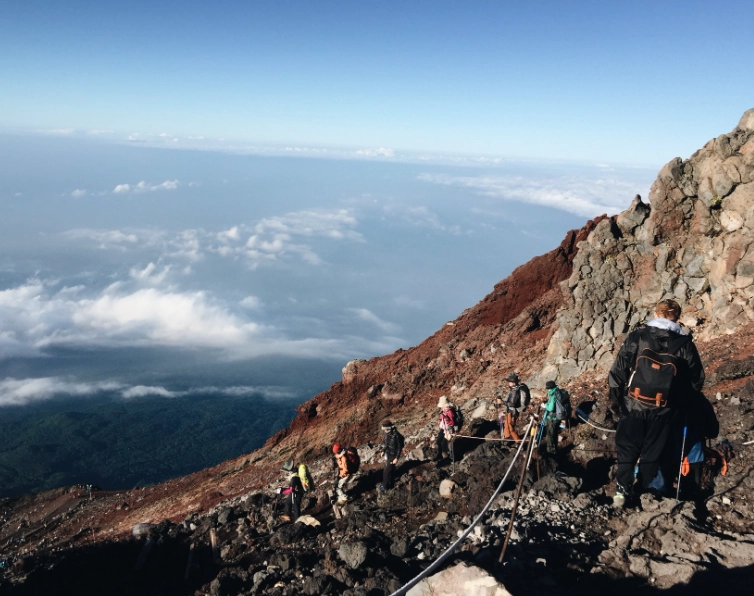
What Actually Makes Mount Fuji Hard to Climb?
It's not just one thing. It's a perfect storm of factors that stack up to create the challenge. If it were just a long walk, it wouldn't have the reputation it does. Understanding these pieces is the first step to conquering them.
The Altitude Factor: Your Biggest Unknown Enemy
This is the silent game-changer. The Yoshida Trail, the most popular route, starts at the 5th Station around 2,300 meters (7,500 feet). The summit is 3,776 meters (12,389 feet). That's an ascent of nearly 1,500 meters, all of it in the 'high altitude' zone where the air gets noticeably thinner.
Your body starts struggling to get enough oxygen. For many, this leads to Acute Mountain Sickness (AMS). Symptoms? Headache, dizziness, nausea, fatigue, and loss of appetite. It feels like a bad hangover combined with the flu. And it can hit anyone, regardless of fitness. I've seen marathon runners sidelined by AMS while older, slower-paced hikers acclimatizing properly chugged on past them.
The speed of your ascent is critical. The official climbing season is brutally short (July to early September), leading many to try a rushed, one-day ascent. This 'bullet climb' approach is a prime recipe for AMS. Your body simply doesn't have time to adjust. The Mount Fuji hiking difficulty spikes dramatically when you're fighting altitude sickness on top of everything else.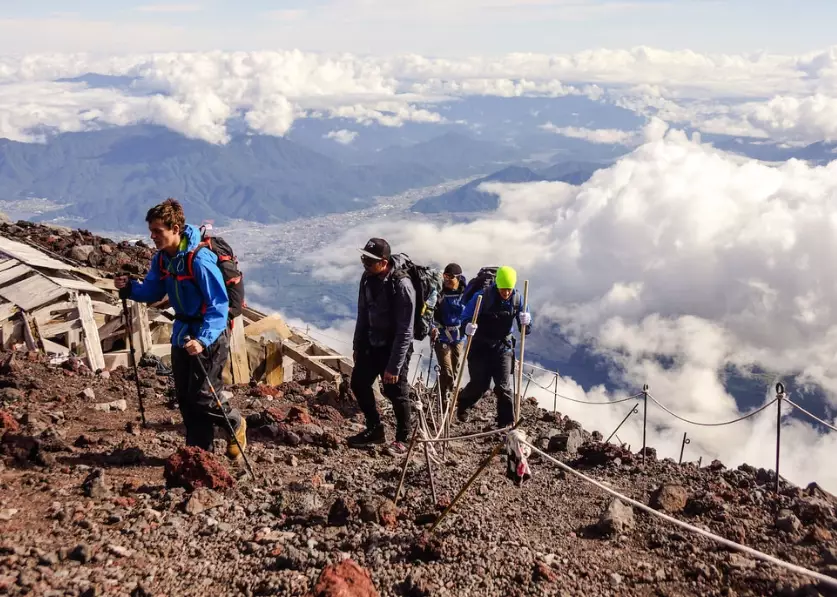
The Terrain: It's Not a Scenic Forest Path
Forget gentle, winding dirt trails. The upper slopes of Fuji are a vast, open volcanic landscape. You're hiking on 'scree' – loose, gravel-like volcanic rock that slips under your feet. For every step forward, you might slide half a step back. It's exhausting, frustrating work that engages muscles you didn't know you had (your stabilizers will be screaming).
Then there are the sections of larger, stable lava rock that require simple scrambling – using your hands to steady yourself. It's not technical climbing, but it adds a full-body element to the hike. The trails are also relentlessly steep in long sections. The switchbacks are long and unforgiving, offering little mental relief.
The descent, for many, is worse than the climb. That same scree becomes a slippery, knee-pounding nightmare. You'll see people 'skiing' down on their heels, creating mini avalanches of rock. It's hard on the joints and requires constant concentration to avoid a tumble. The difficulty of hiking Mount Fuji on the way down is a different beast entirely – one of endurance and joint preservation.
The Weather: Four Seasons in One Day
Mountain weather is fickle. Fuji is infamous for it. You can start in blazing sunshine at the 5th Station and be in howling wind, near-freezing temperatures, and driving rain or sleet by the 8th Station. The summit is often shrouded in cloud and wind. The temperature difference from base to summit can easily be 20-25°C (36-45°F).
This isn't just about comfort; it's a safety issue. Hypothermia and wind chill are real risks, even in summer. A sunny forecast at sea level means nothing up there. Proper layers – moisture-wicking base, insulating mid, waterproof/windproof shell – are non-negotiable items, not suggestions. Getting caught in a storm without them transforms the Mount Fuji climbing challenge from difficult to potentially dangerous.
Breaking Down the Difficulty by Trail
Not all routes are created equal. Your choice of trail has a massive impact on the overall Mount Fuji hiking difficulty. Here’s a no-nonsense comparison.
| Trail Name | Starting Point & Altitude | Ascent Time (Avg) | Key Difficulty Factors | Who It's For |
|---|---|---|---|---|
| Yoshida Trail | Fujiyoshida 5th Station (2,300m) | 5-7 hours | Most crowded, well-developed, many mountain huts. The 'standard' route. Descent path is separate and notoriously long/slippery. | First-timers, those who want facilities and the 'classic' experience (and crowds). |
| Subashiri Trail | Subashiri 5th Station (2,000m) | 5-7 hours | Less crowded lower section, merges with Yoshida near 8th station. Beautiful forested start. Descent is through ash/sand, which is fun but messy. | Hikers wanting a quieter start who don't mind joining the crowds higher up. |
| Gotemba Trail | Gotemba New 5th Station (1,400m) | 7-9 hours | LONGEST vertical gain (2,300m!). Least crowded, most barren/remote feeling. Very long stretches of loose scree. Minimal facilities. | Experienced hikers seeking a serious physical challenge and solitude. Not for beginners. |
| Fujinomiya Trail | Fujinomiya 5th Station (2,400m) | 4-6 hours | Shortest route from high start point. Steepest and most rocky/rugged terrain. Can be very crowded as it's accessible from the south. | Fitter hikers comfortable with steep, rocky paths who want the fastest ascent. |
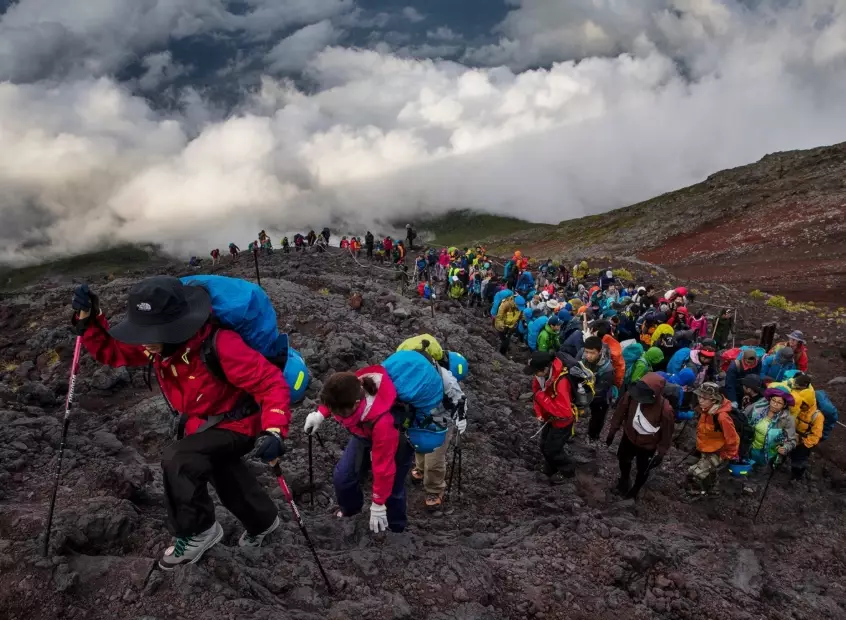
See that? The Gotemba Trail is in a different league. The Mount Fuji hiking difficulty on that route is significantly higher due to the sheer length and isolation. Meanwhile, the Yoshida Trail's difficulty often comes from the human traffic jams near the summit at sunrise, not just the terrain.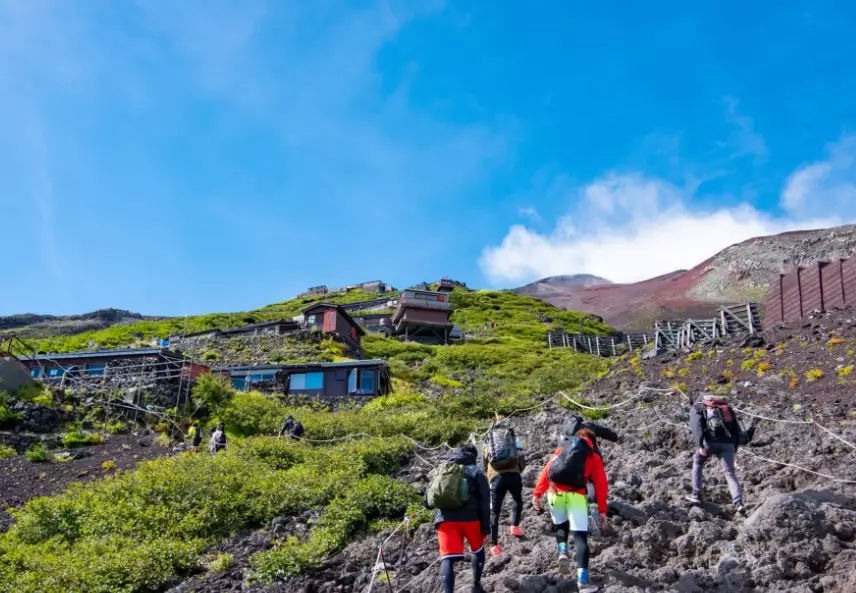
Fitness Level: Are You Actually Ready?
This is the question most people google but then ignore. Let's be blunt: general 'okay' fitness isn't enough. You need hiking-specific endurance.
Think of it as a 8-12 hour continuous workout, often through the night, on uneven, steep, unstable ground, with a heavy pack (water, food, layers), at high altitude. A good benchmark? Can you comfortably hike for 6-8 hours on hilly terrain with a 5-7kg pack at lower altitudes? If not, you need to train.
Here's a simple, effective pre-Fuji training plan to tackle the physical side of the Mount Fuji climbing difficulty:
- Cardio, 2-3 times a week: Running, cycling, stair climber, or brisk hiking. Build up to sustained effort for 60+ minutes.
- Leg Strength, 1-2 times a week: Squats, lunges, step-ups. Don't neglect your calves and ankles – they take a beating on the scree.
- Practice Hikes, weekends: This is non-negotiable. Get out on real trails with your hiking boots and a loaded pack. Find hills. Do back-to-back days to simulate fatigue.
- Downhill Training: Seriously. Find a hill and practice walking down it with control. Your quads and knees will thank you on Fuji.
Gear: The Difference Between Miserable and Manageable
Wrong gear amplifies the Mount Fuji hiking difficulty by a factor of ten. This isn't the place for cotton jeans and fashion sneakers.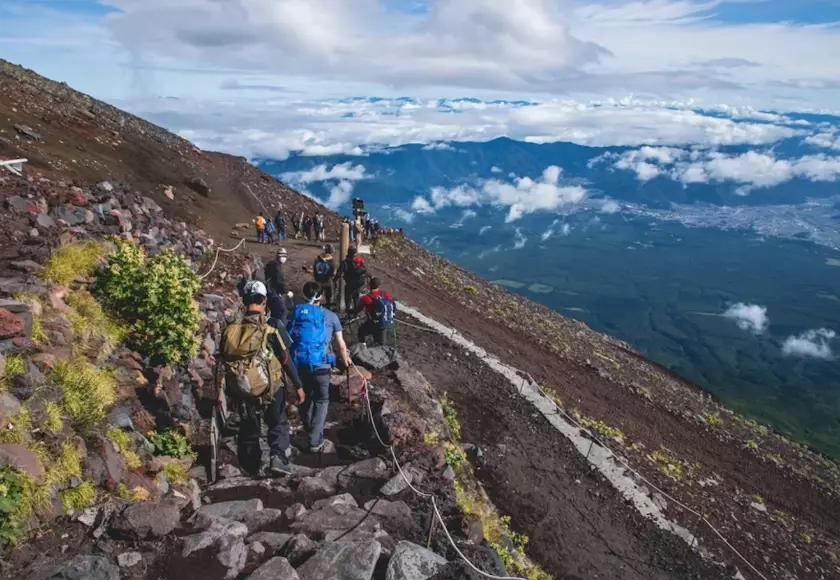
- Footwear: Sturdy, broken-in hiking boots with ankle support and good grip. Trail runners are risky due to the sharp rocks and lack of ankle protection on uneven scree.
- Layering System: Moisture-wicking base layer (no cotton!), fleece or down insulating layer, waterproof & windproof hard shell jacket and pants.
- Headlamp: With fresh batteries. Most ascents are at night to see the sunrise.
- Gloves: Lightweight for scrambling on cold rock.
- Water & Snacks: At least 1.5-2 liters of water. High-energy, easy-to-eat snacks (nuts, bars, chocolate, dried fruit). The mountain huts sell water and food, but it's expensive and lines can be long.
- Cash: For toilets (200-300 yen per use), hut drinks/snacks, and donation at the summit shrine.
- Trash Bag: There are NO trash cans on the mountain. You carry everything out.
For the official, comprehensive list, always refer to the official Mount Fuji Climbing website. It's run by the local authorities and has the most current, vital information.
Strategy: How to Outsmart the Mountain
Your plan is your best weapon against the Mount Fuji hiking difficulty.
The Mountain Hut Stay (Highly Recommended): Instead of the brutal 'bullet climb', take the bus to the 5th Station in the afternoon. Hike 3-4 hours to a mountain hut around the 7th or 8th Station. Have dinner, try to sleep for a few hours (it's noisy and cramped, but it's rest), then wake up around 1-2 AM to finish the ascent for sunrise. This splits the climb, gives your body some time to acclimatize, and is far safer and more enjoyable.
Pacing is Everything: Go slow. Embarrassingly slow. A good pace is one where you can hold a conversation without gasping. The Japanese phrase "登り詰め" (noborizume) means 'climbing slowly and steadily' – adopt this as your mantra. Let the speedy groups pass you. You'll likely see them again later, resting and struggling with AMS.
Hydrate and Eat Constantly: Even if you're not thirsty at altitude, drink. Nibble on snacks every hour to keep your energy levels steady. Dehydration and low blood sugar make everything harder and worsen AMS symptoms.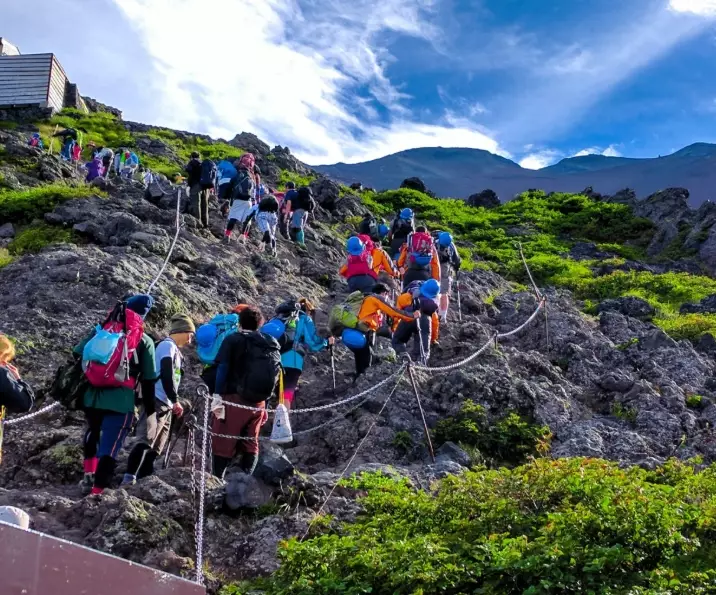
Common Questions About Mount Fuji Hiking Difficulty
Let's tackle the stuff people are secretly typing into search engines.
Can a beginner with no experience climb Mount Fuji?
Technically, yes. The trails don't require technical climbing skills. But 'can' and 'should' are different. A complete beginner who is very fit, prepares meticulously (gear, training, acclimatization plan), picks the Yoshida Trail, and goes during the official season can do it. A beginner who wings it will likely have a miserable, potentially unsafe experience. The difficulty of Mount Fuji for beginners is high, but not insurmountable with serious preparation.
What is the hardest part of the climb?
For most, it's the final push from the 8th Station to the summit. The altitude is highest, the terrain is often the steepest and most rocky, you're tired from the night's hike, and it's usually the coldest, windiest section. Mentally and physically, it's the peak of the challenge. The descent is physically punishing in a different way, but the hardest sustained effort is that last ascent.
Is the descent really harder than the ascent?
For your muscles and joints, often yes. The ascent is a cardiovascular and endurance challenge. The descent is a brutal, repetitive impact on your knees, quads, and toes (constantly jammed into the front of your boots). The loose scree requires constant micro-adjustments to stay upright. Many find the descent more painful and tedious. Good trekking poles are worth their weight in gold here.
How do I know if I'm getting altitude sickness?
Listen to the headache. A mild headache is common. A headache that gets worse despite rest, water, and painkillers, especially when combined with nausea, dizziness, or severe fatigue, is a red flag. The standard protocol is: if symptoms are mild, stop ascending, rest, hydrate, and see if they improve. If they worsen, or are severe from the start, descend immediately. Don't be a hero. The mountain will be there another time.
The Bottom Line on Fuji's Difficulty
So, what's the final verdict on Mount Fuji hiking difficulty? It's a serious, strenuous high-altitude hike that demands respect and preparation. It's not a walk in the park. The primary challenges are the rapid altitude gain, the unforgiving volcanic terrain, and the capricious weather.
But here's the thing: that's what makes it rewarding. Overcoming that challenge, standing on the roof of Japan (weather permitting!), is a feeling you earn. The key isn't to be an elite athlete; it's to be a smart, prepared hiker. Train specifically, invest in the right gear, plan a sensible itinerary with a hut stay, and prioritize acclimatization over speed.
Ignore the people who say "it's easy, anyone can do it." They either got lucky or have forgotten the struggle. Likewise, ignore those who make it sound like an Everest expedition. It's a tough hike, one of the toughest you'll likely do as a non-mountaineer, but it's absolutely within reach with the right approach.
Do your homework. Check the Fujiyoshida City official tourism page for trail access and bus info. Read recent accounts. Prepare for the challenge, and you'll have an incredible, unforgettable experience. Show up unprepared, and Fuji will quickly remind you why it's considered a sacred, formidable peak.
Good luck, climb safe, and pack out your trash.
Share Your Thoughts